
Highlights:
- Appeals court affirms Habba’s appointment violated federal vacancy laws.
- Judges say administration repeatedly bypassed proper confirmation procedures.
- Ruling creates uncertainty for ongoing federal cases in New Jersey.
- Similar appointment challenges are unfolding in Virginia.
- Decision marks another legal setback for Trump and Habba within the same week.
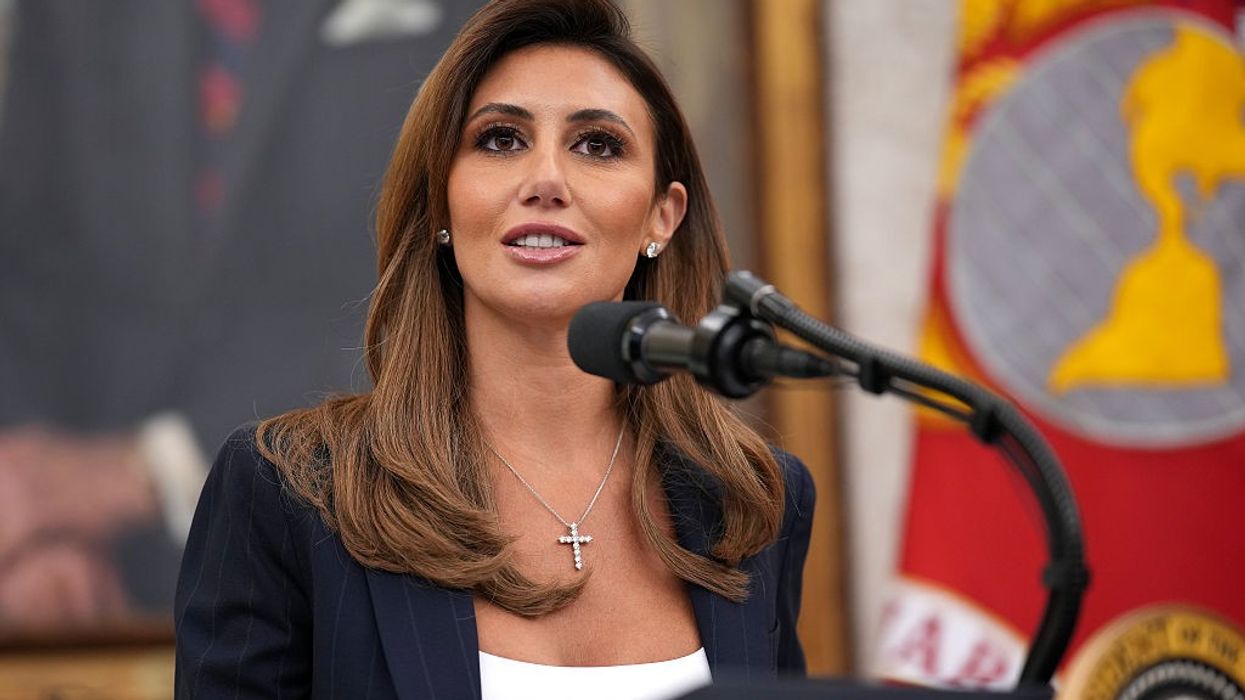
A federal appeals court delivered a significant setback to the Trump administration by ruling that Alina Habba had been serving unlawfully as the US attorney for the District of New Jersey.
The decision, issued by a three-judge panel of the Third Circuit Court of Appeals in Philadelphia, upheld an earlier district court finding that Habba lacked the legal authority to lead the office after July 1.
The ruling is expected to push the dispute toward the Supreme Court, given its implications for several ongoing federal cases and for the administration’s broader approach to appointing US attorneys.
Habba, a longtime civil attorney for Donald Trump with no prior experience in criminal prosecution, was originally appointed in March to a temporary 120-day term as the state’s top federal prosecutor. The administration then nominated her for the permanent position, but the appointment faltered when New Jersey’s Democratic senators, Cory Booker and Andy Kim, opposed her confirmation.
When her interim term expired in July, the district court judges responsible for selecting an acting US attorney chose veteran prosecutor Desiree Leigh Grace to lead the office instead.
In response, Attorney General Pam Bondi implemented a series of extraordinary maneuvers attempting to reinstall Habba. Bondi removed Grace, named Habba as the office’s first assistant, and asserted that this new position automatically elevated Habba to acting US attorney.
She also granted Habba the separate title of “special attorney” with jurisdiction throughout New Jersey. These steps became the focus of the legal challenge and ultimately the appeals court’s rebuke.
The judges determined that each of the administration’s tactics violated the Federal Vacancies Reform Act and other statutory requirements governing federal appointments. They emphasized that the first-assistant succession rule applies only at the moment a vacancy occurs, meaning the administration could not manufacture a retroactive justification for Habba.
They further concluded that the special-attorney designation was not a lawful substitute for Senate confirmation or judicial appointment. In blunt terms, the panel wrote that New Jersey’s residents and the career prosecutors in the office were entitled to stability and adherence to clear legal procedures, conditions the administration had ignored.
The ruling leaves the New Jersey US attorney’s office in a state of continued uncertainty. Because Habba’s status had already been contested for months, some criminal matters were slowed, and certain grand jury activities were paused. It remains unclear who will lead the office in the short term or how prosecutors will handle cases initiated under Habba’s tenure.
The attorneys who brought the challenge, Abbe Lowell, Gerald Krovatin, and Norm Eisen, argued that Trump had sought to bypass statutory safeguards meant to prevent exactly this type of unilateral executive appointment.
They described the administration’s actions as a “shell game” relying on shifting job titles and strained legal theories to keep Habba in control of the office.
The decision marks the second major legal setback for Trump and Habba in a single week. Days earlier, the 11th Circuit Court of Appeals affirmed nearly $1 million in sanctions against both of them for filing lawsuits that a lower court deemed frivolous and politically motivated.