
Highlights:
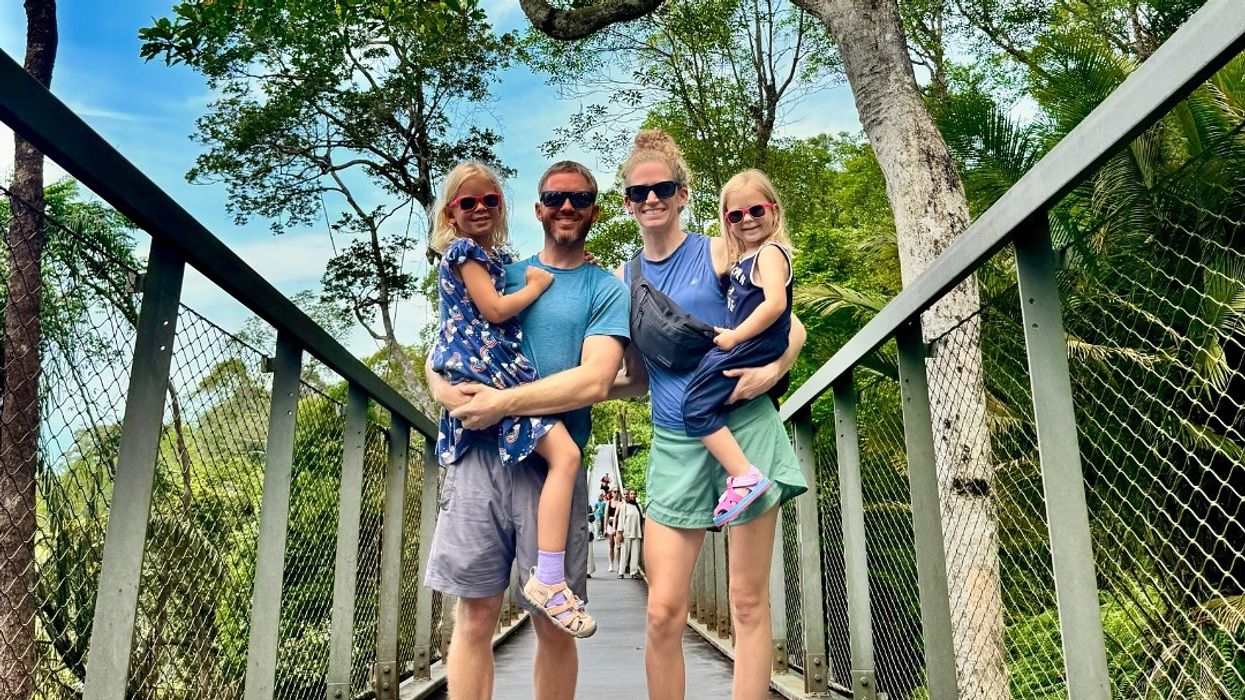
Travelling abroad often reveals how differently people live, eat, socialize, and navigate daily life across cultures. For an American family spending 2.5 months in India, these contrasts turned into a viral moment. Anna Haakenson, a US mother of two, shared her candid observations on Instagram, quickly reaching nearly four million views as users worldwide related to her experience.
Her reflections highlighted not only that one country is 'better,' but also that each it carries its own beauty shaped by history, climate, and community values.
Honking habits: A tale of two traffic cultures
Haakenson pointed out one of the first differences she noticed: honking. “In America, honking means someone is about to lose their mind,” she joked, “but in India, a honk means, ‘Hi, I’m here, look out, thanks.’”
Instead of signaling anger, Indian drivers use the horn as a friendly alert in densely packed streets. She described the traffic as “controlled chaos,” where cars, scooters, rickshaws, and pedestrians move fluidly with minimal strict lane discipline. Many commenters agreed, saying honks are simply communication, not confrontation.
Spice levels: A whole new definition of 'hot'
Food culture was another standout difference. What Americans often label as 'spicy' barely compares to India’s heat-packed meals. Haakenson loved the flavorful curries and street snacks but warned that the spice 'could cause some digestive issues, especially for foreigners.' She noted how India’s diverse regional cuisines use spices not only for flavor but for digestion and preservation, especially in warmer climates.
Strangers who feel like friends
Haakenson also observed a cultural shift in social interactions. In the US, she said, people often 'pretend you don’t exist,' but in India, strangers freely ask where you’re from, where you're going, and why. What might feel intrusive elsewhere felt warm and welcoming to her. One commenter echoed this: “In India, people care even if you are a stranger.”
Trash and cleanliness: A systematic contrast
When discussing cleanliness, Haakenson noted differences in waste management. In the US, trash typically goes straight into designated bins, while in India, it may end up wherever someone places it. She stressed that this isn’t about people being careless but about infrastructure challenges in rapidly growing cities. Many viewers appreciated her balanced take.
Weather, faith, and family life
She summarized India’s seasons as “hot, monsoon, and surprise extra heat,” though commenters pointed out that regions like the Himalayas have dramatically different climates.
Religion, she said, also feels different: the US tends to have quieter Christian gatherings, while India has temples everywhere and festivals that can engulf entire cities.
Family structure stood out too, American nuclear homes compared to India’s vibrant multigenerational households. “It is true that all generations live together,” she said, reflecting on the extended families she met.
Driving through the craze
Traffic in India, she noted, 'would not make sense' to outsiders. Where US driving emphasizes strict rules and ownership, India relies heavily on intuition, quick reflexes, and cooperation, whether weaving around cows or navigating rickshaws.
The internet reacts
The video sparked a flood of comments.
One user wrote, “Thanks for sharing the differences you’ve noticed! I knew about many of these from my visits.”
Another highlighted family traditions, while a third corrected her weather take: “Maybe you only experienced southern weather—try the Himalayan regions.”
Others simply praised her perspective: “Well captured! In India, people care even if you are a stranger.”
The viral moment ultimately celebrated cross-cultural curiosity—and the joy of discovering everyday life through new eyes.