
Bangladesh is set to sharply reduce its reliance on Indian cotton and instead source more raw material from the United States, following a newly signed US-Bangladesh trade agreement that Dhaka’s interim government has described as a 'game changer' for its export-driven textile industry.
Under the deal, finalized on Monday (9), the United States will cut tariffs on Bangladeshi garment exports to 19 percent, with a provision allowing duties to fall to zero if manufacturers switch to US-origin cotton or manmade fiber. The clause has immediately raised concerns among Indian apparel and yarn exporters, for whom Bangladesh is one of the most important overseas markets.
Speaking to The Hindu, Shafiqul Alam, information adviser to Chief Adviser Mohammed Yunus, said the agreement gives Bangladesh a clear competitive edge over rivals such as Cambodia and Indonesia. “We have got a tariff rate of 19 per cent in the new trade deal, which is good compared to our competitors,” Alam said. “But the real boost is the zero-tariff clause if our textile producers switch to U.S. cotton or manmade fiber.”
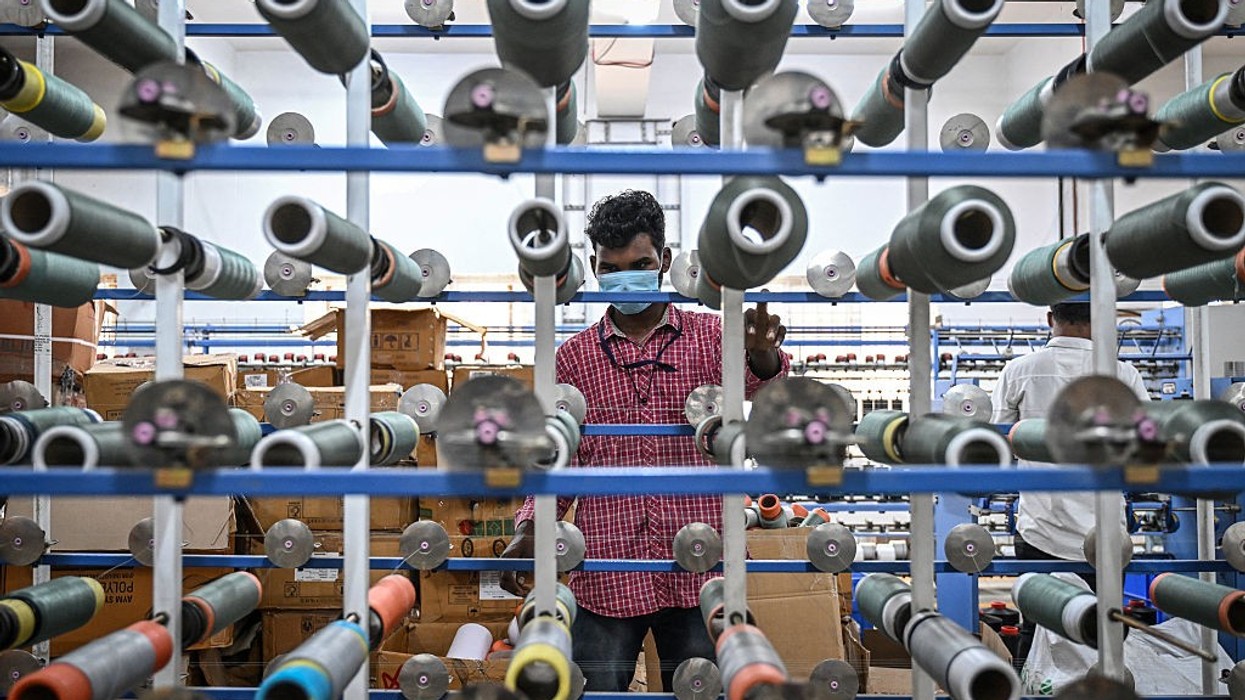
Bangladesh does not produce enough cotton or yarn to support its massive garment sector and has traditionally depended on imports from India and Central Asia. That dependence, Alam noted, also worked in Dhaka’s favor during negotiations. “We do not have a domestic cotton farmer lobby that could have pressured the government,” he said, allowing Bangladesh greater flexibility at the bargaining table.
The shift could significantly affect India. In 2024, India exported cotton yarn worth $1.6 billion to Bangladesh, along with nearly $85 million in manmade fiber yarn. Bangladesh is also among the largest buyers of Indian cotton, with a substantial share of trade moving through land ports.
Trade tensions between the two neighbors have already strained supply chains. In April 2025, Bangladesh restricted yarn imports from India through land ports, prompting retaliatory curbs from New Delhi on Bangladeshi goods, including ready-made garments. Since then, Bangladeshi manufacturers have increasingly looked toward the U.S. market as an alternative growth engine.
Economist Selim Jehan of BRAC University said the agreement has clearly made Bangladesh’s cotton market more attractive to American suppliers, but warned of long-term constraints. “The deal has undoubtedly created a market for U.S. cotton,” he said, “but it also restricts Bangladesh by limiting its ability to explore other cotton-producing countries.”
Jehan added that zero tariffs alone do not guarantee savings. Freight costs, transportation, and cotton quality will ultimately determine profitability. “In textiles, quality matters the most,” he said. “If US cotton does not match Indian or Egyptian cotton, even U.S. buyers may not like the final product.”
For now, the agreement signals a strategic realignment, one that could reshape regional textile trade and test how quickly manufacturers adapt to a new, U.S.-centered supply chain.





 Let’s stop shaming Genzfor switching jobsI see a lot of ‘career gurus’shaming 22-year-olds for switching jobs every year.But isn’t that exactly what the youth should be doing? 🤔Early in our… | Anupam Mittal | 561 comments