
India has formally joined the US-backed Pax Silica coalition, deepening strategic technology cooperation between the world’s two largest democracies and signaling a shared push to secure semiconductor and artificial intelligence supply chains amid rising geopolitical competition.
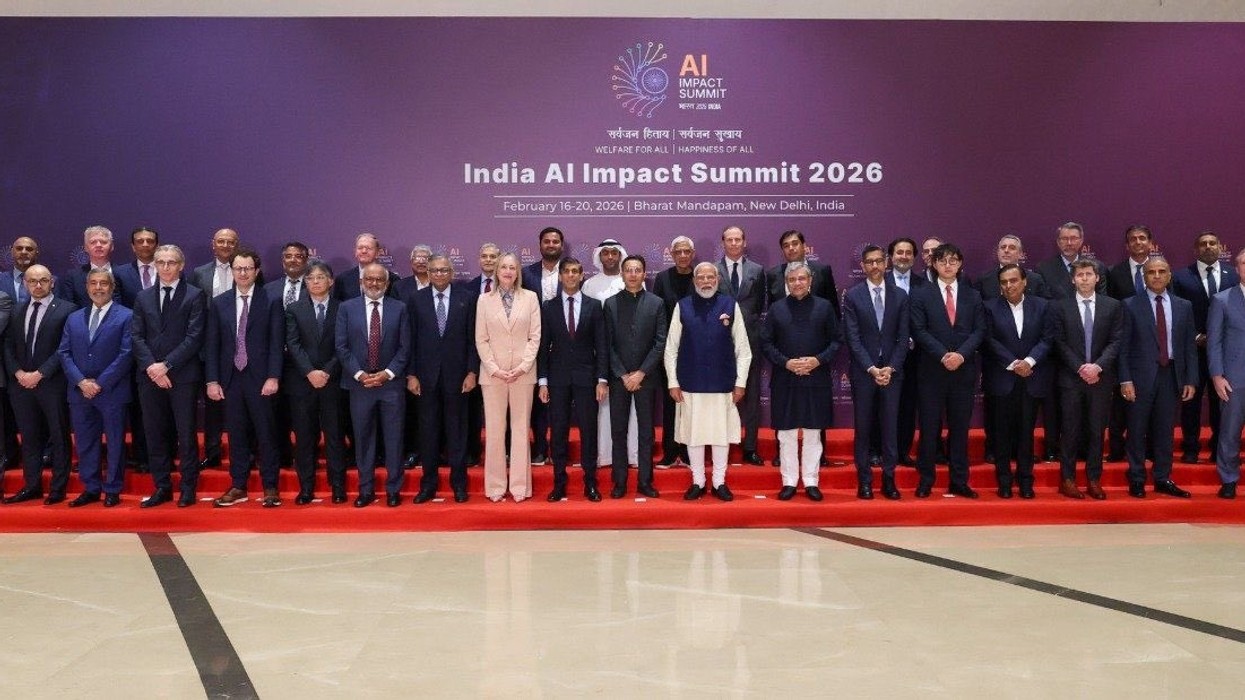
The announcement came on Friday (20) during the India AI Impact Summit 2026, where senior officials from both nations framed the agreement as a long-term commitment to building and protecting what they described as the 'silicon stack,' the full spectrum of technologies underpinning the AI-driven global economy.
Pax Silica is envisioned as a coalition of trusted countries working together to secure every layer of advanced technology production, from critical minerals mined from the earth to semiconductor fabrication, AI model development, and data center deployment. The initiative aims to reduce overreliance on concentrated supply chains, guard against economic coercion, and ensure that emerging technologies are developed and governed by open, democratic societies.
India’s Minister of Electronics and Information Technology, Ashwini Vaishnaw, described the signing as more than symbolic. “We are not just holding a summit; we are building the future,” Vaishnaw said, pointing to India’s rapid technological growth since independence in 1947 and the compounding effects of sustained development.
He emphasized India’s expanding role in semiconductor design and manufacturing, noting that Indian engineers are already contributing to advanced two-nanometer chip design. Vaishnaw projected that the global semiconductor industry will require roughly one million additional skilled professionals in the coming years, positioning India as a potential talent hub.
Representing Washington, Jacob Helberg, US Under Secretary of State for Economic Growth, Energy, and the Environment, called the agreement “not merely an agreement on paper, but a roadmap for a shared future.” He linked economic security directly to national security, underscoring bipartisan U.S. concerns about supply chain vulnerabilities in strategic technologies.
“Today, as we sign the Pax Silica declaration, we say no to weaponized dependency,” Helberg said. “We are securing the full stack of the future, the minerals deep in the earth, the silicon wafers in our labs and fabs, and the intelligence that will unleash human potential.”
US Ambassador to India Sergio Gor described India’s entry into Pax Silica as both “strategic and essential,” arguing that the coalition could shape the technological and economic order of the 21st century. He emphasized that the initiative is rooted in democratic values and long-term resilience.
Following the signing, a high-level discussion brought together government and industry leaders to explore how AI ambitions intersect with semiconductor resilience. Participants included Sanjay Mehrotra, CEO of Micron Technology, and Randhir Thakur, CEO and managing director of Tata Electronics.
Mehrotra characterized the partnership as a “shared commitment to building resilient, secure supply chains” and called it a “win-win ecosystem to advance AI for good.” Thakur described Pax Silica as a timely move, noting that semiconductor innovation has always depended on the interplay of materials, manufacturing capability, and computing power.
For American policymakers and industry leaders, India’s formal alignment with Pax Silica represents another step in Washington’s broader strategy to diversify technology supply chains and strengthen alliances in critical sectors. As competition intensifies over chips, AI systems, and access to raw materials, the coalition signals a coordinated effort to ensure that the technologies shaping the future remain anchored in democratic partnerships.