
Highlights:
- 71 per cent of Indian Americans disapprove of President Donald Trump’s job performance.
- 46 per cent identify as Democrats, 19 pee cent as Republicans, and 29 per cent as independents.
- Inflation and jobs rank as the top issues for 37 per cent and 33 per cent of respondents.
- 1 in 2 report experiencing discrimination in the past year.
- 68 per cent feel enthusiastic about Zohran Mamdani’s election as New York City mayor.
A new 2026 Indian American Attitudes Survey conducted by the Carnegie Endowment and YouGov shows that Indian Americans are deeply skeptical of President Donald Trump’s second term.
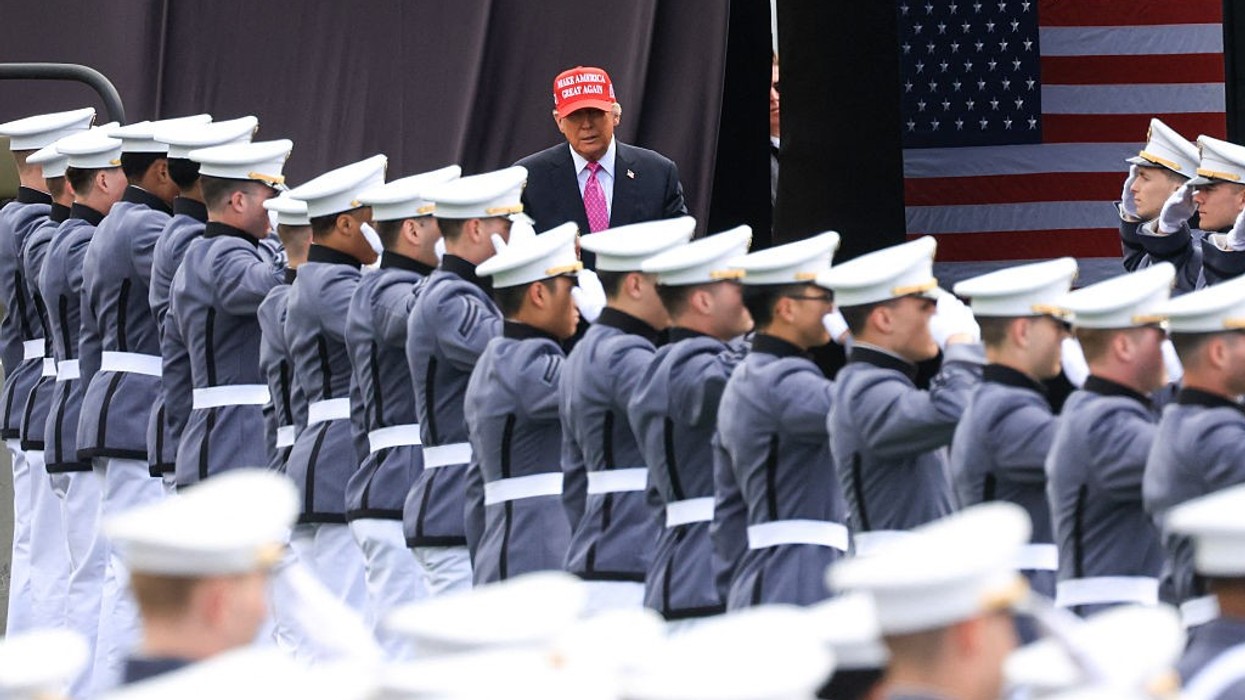
Seventy-one percent disapprove of the way Trump is handling his job, and more than half say they “strongly disapprove.” Only 29 per cent approve. His ratings among Indian Americans are significantly lower than among the general US population.
But dissatisfaction with Trump has not translated into stronger loyalty to Democrats. While Indian Americans still lean heavily Democratic, attachment to the party has weakened since 2020. Today, 46 per cent identify as Democrats, down from 52 per cent in 2020. Republican identification has risen modestly to 19 per cent, and nearly three in ten now call themselves independents.
Ideologically, the community clusters in the center. Thirty-two percent identify as moderate, the largest single group. Only small shares describe themselves as “extremely” liberal or conservative.
Indian American policy priorities: Inflation and jobs come first
Pocketbook concerns dominate.
When asked to name their most important issue, 21 per cent chose inflation and prices, followed by 17 per cent who picked jobs and the economy. Health care and immigration trailed behind. Foreign policy, including US-India relations, barely registered.
At the same time, large majorities disapprove of Trump’s handling of immigration (64 per cent), domestic economic policy (68 per cent), and international economic policy (70 per cent).
On specific immigration actions, such as ending birthright citizenship or imposing a $100,000 fee on new H-1B visas—strong majorities expressed opposition. The H-1B issue is particularly sensitive because Indian nationals account for most skilled-worker visa recipients.
Even so, Republican Indian Americans tend to support Trump’s immigration policies, though their backing softens when asked about specific proposals rather than broad principles.
Indian American voting patterns: Democratic edge narrows
The survey also revisited the 2024 election. In 2020, Indian Americans backed Democrat Joe Biden by a nearly 70–20 margin over Trump. In 2024, that margin shrank to roughly 60–30 in favor of Vice President Kamala Harris.
If the election were held again today, 57 per cent say they would vote for Harris and 25 per cent for Trump. Support for third-party candidates has doubled to 10%.
One striking shift involves young voters. In 2024, young Indian American men showed a sharp move toward Trump. By early 2026, his support among them had dropped by about 16 points. Support also fell among young women.
Still, Democratic gains have not fully rebounded to 2020 levels. The data suggest that 2020 may have been a high-water mark rather than a long-term baseline.
Indian American discrimination: Personal and online
Concerns about discrimination are widespread.
Half of respondents say they experienced discrimination in the past year. The most common reasons cited are skin color (36 per cent), country of origin (21 per cent), and religion (17 per cent).
One in four report being called a slur since the start of 2025. Smaller but troubling shares report physical threats, hate mail, property damage, or assault.
Online spaces are also a major source of hostility. Nearly half say they see anti-Indian racist content on social media somewhat or very often. Emotional reactions are strong: 50 per cent say such content makes them angry, while about one-third report feeling anxious or fearful.
Even more significant is how discrimination is shaping behavior. Nearly one-third say they have avoided discussing politics online to reduce risk. Others report avoiding travel abroad, political rallies, or wearing traditional Indian attire in public.
Yet despite these pressures, most are not planning to leave the United States. Only 14 per cent say they have frequently considered emigrating. Among those who have thought about leaving, frustration with US politics and the cost of living top the list of reasons.
Indian American identity and representation: Mamdani and Vance
The election of Zohran Mamdani as New York City mayor drew strong reactions. Sixty-eight percent of Indian Americans say they are enthusiastic about his victory.
Support appears driven more by ideology than shared background. Many back him because they see him as progressive. Critics, meanwhile, say he is “too liberal.” His Muslim faith and immigrant background also shape opinions, but less decisively than political ideology.
The survey also tested reactions to comments by Vice President JD Vance about hoping his Hindu wife might one day convert to Christianity. Large majorities say politicians should be careful when speaking publicly about their spouse’s religion. Two-thirds reject the idea that it is reasonable to expect a spouse to convert.
These findings suggest deep sensitivity around religious inclusion and pluralism.
Indian American outlook: Concern and opportunity
Overall, the survey paints a picture of a politically engaged but unsettled community.
Indian Americans remain strongly Democratic compared to the national average, yet their partisan intensity is cooling. Economic issues dominate their concerns, while foreign policy takes a back seat. Experiences with discrimination, both online and offline, are common and shape daily behavior.
Still, belief in opportunity endures. When asked whether they would recommend the United States to a student or professional from India, most said yes, especially for work.
One year into Trump’s second term, Indian Americans appear to be balancing anxiety about politics and identity with continued faith in economic mobility and professional success. Whether that balance holds in the years ahead remains an open question.