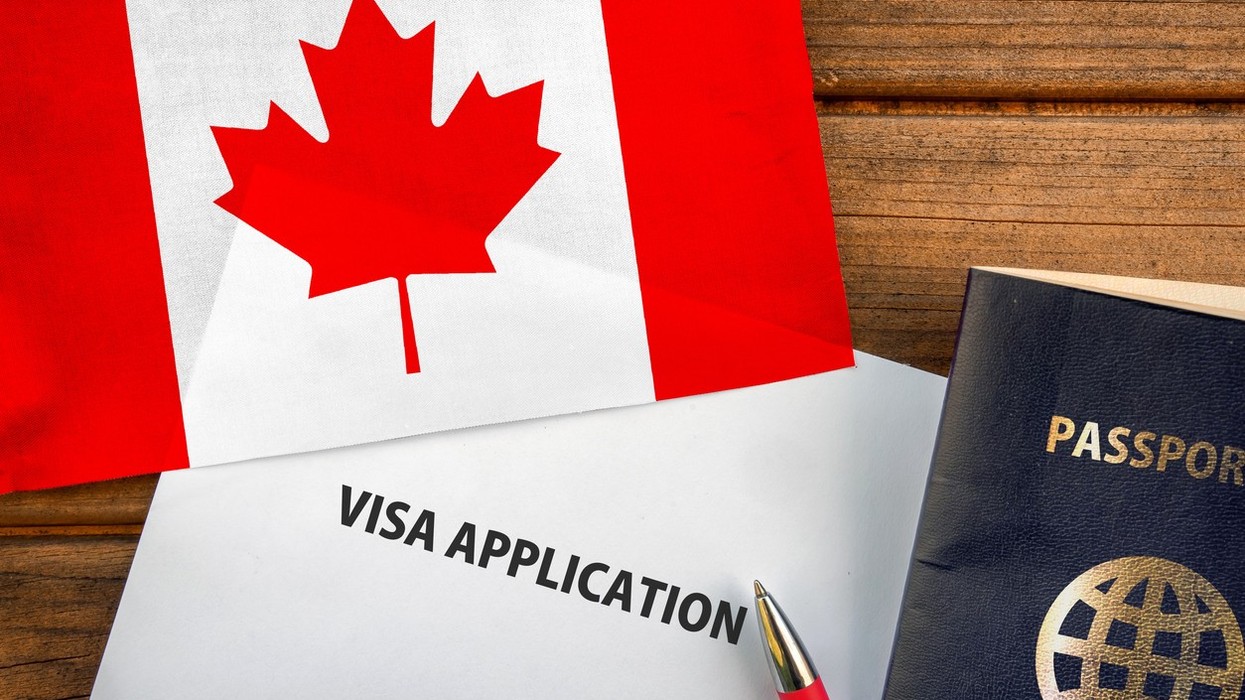
After years of stagnation in employment-based green card backlogs, Indian professionals in the United States are seeing an unexpected opening. The January 2026 US visa bulletin delivered one of the most significant advances in recent memory, particularly for Indian applicants in the EB-1 and EB-5 categories, prompting immigration experts to urge swift action.
The movement follows a December 2025 bulletin that had already shown modest progress across several employment-based categories. Together, the two updates signal a rare moment of momentum for applicants from heavily backlogged countries such as India and China.
Adding to the impact, US Citizenship and Immigration Services (USCIS) announced that applicants may file adjustment of status applications using either the Final Action Dates chart or the Dates for Filing chart. This flexibility significantly expands eligibility, allowing many individuals whose priority dates are not yet current under Final Action Dates to move forward with green card applications.
The January 2026 bulletin shows forward movement across almost all employment-based categories. EB-1 for Indian applicants advanced by close to a year, while EB-5, popular among investor visa applicants, moved ahead by nearly two years.
EB-2 and EB-3 categories also progressed, offering partial relief to professionals who have waited years, and in some cases decades, for permanent residency.
Immigration attorneys say the scale of advancement was unexpected. According to Michael Valverde, the changes may reflect USCIS efforts to increase application filings amid concerns that employment-based visas could go unused due to long processing times and higher denial rates.
“I would advise anyone who is now able to file their green card application to take advantage of the moment. Historically, big steps forward like this have often come with retrogression later in the year. You don’t want to miss the opportunity,” he said, as reported in the American Bazaar.
Lawyers caution that history suggests such advances can be temporary. Retrogression—when priority dates move backward later in the fiscal year—has frequently followed large forward jumps, abruptly narrowing eligibility again.
January is especially critical, as the filing window runs from January 1 through January 31. Applicants must also account for updated USCIS requirements, including submitting medical examinations at the same time as Form I-485, the application to register permanent residence or adjust status.
Sangeetha Mugunthan of Somireddy Law Group PLLC emphasized that the renewed momentum, particularly in EB-1 and EB-5 categories, places a premium on preparation.
“Individuals need to initially invest time in looking back at their professional trajectory, focus on their niche areas of expertise, and list out their key achievements and contributions. It is also extremely important to carefully document everything and strongly develop their EB-1A case.”
For many Indian professionals long caught in the green card backlog, experts say the message is clear: this window may be brief, and hesitation could mean waiting years longer.








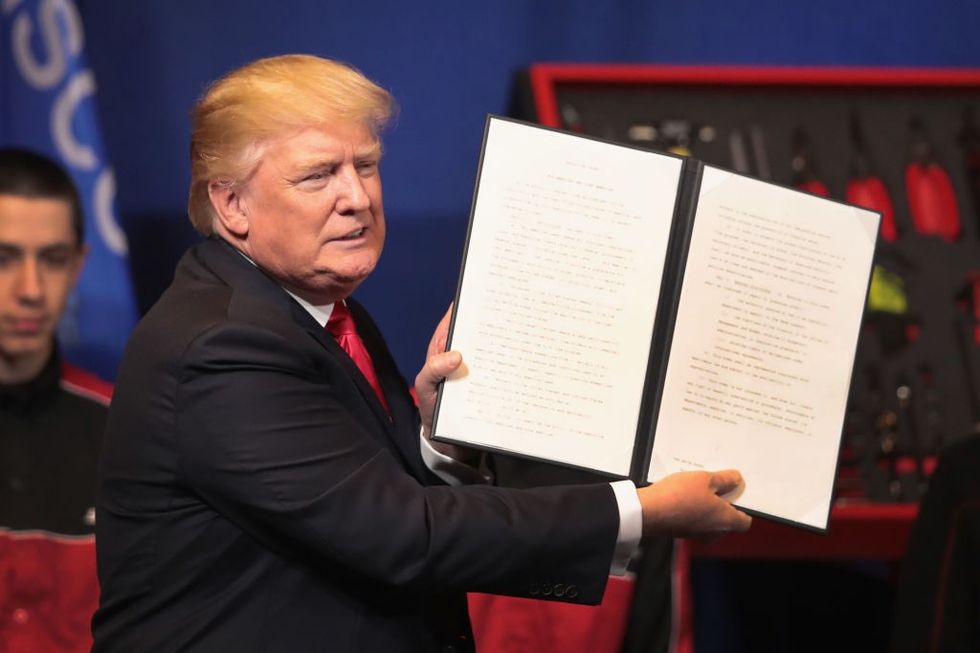 President Donald Trump signs an executive order to try to bring jobs back to American workers and revamp the H-1B visa guest worker program during a visit to the headquarters of tool manufacturer Snap-On on April 18, 2017 in Kenosha, Wisconsin. Getty Images