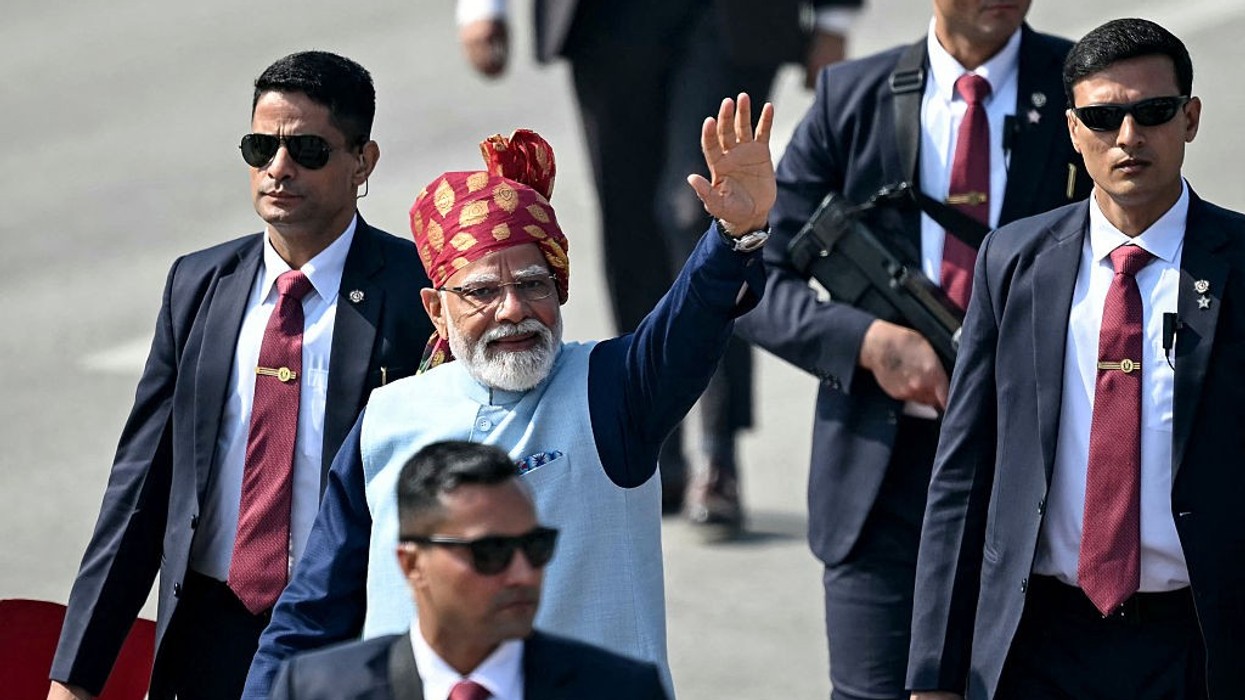

India’s 77th Republic Day celebrations at Kartavya Path were not just a showcase of military precision and cultural pride, they also sent a strong geopolitical message. European Commission president Ursula von der Leyen and European Council President Antonio Costa attended the parade as chief guests, marking the first time two top EU leaders jointly held this honor.
After witnessing the ceremony, von der Leyen described India as a stabilizing force in global affairs, stating that a successful India contributes to a more secure, prosperous, and stable world. Prime Minister Narendra Modi echoed this sentiment, calling their presence a reflection of the deepening India–EU partnership rooted in shared democratic values and strategic interests.
The visit coincided with the India–EU summit, where both sides were set to expand cooperation across trade, technology, climate action, and security. A visible symbol of this growing defense relationship was the participation of a small EU military contingent in the parade, carrying the flags of EU naval missions Atalanta and Aspides. According to von der Leyen, this display reflected strengthening maritime and security cooperation, which is expected to be formalized through a new Security and Defence Partnership.
Why Republic Day matters strategically
Since the early years of the Republic, India has used Republic Day as a platform for high-level diplomacy. Inviting a foreign leader as chief guest is not ceremonial alone, it signals diplomatic priorities and long-term strategic intent.
Over the decades, Republic Day has hosted leaders from across geopolitical blocs. US President Barack Obama’s attendance in 2015 highlighted the growing India–U.S. strategic partnership. French presidents Emmanuel Macron, François Hollande, Nicolas Sarkozy, and Jacques Chirac reflected India’s long-standing defense ties with France. Leaders such as Nelson Mandela, Vladimir Putin, Shinzo Abe, and ASEAN heads of state have similarly marked key phases in India’s global engagement.
The absence of chief guests during the COVID-19 years (2021 and 2022) further underlined how significant these invitations are in normal times. When leaders do attend, it often coincides with major agreements, renewed alliances, or strategic recalibration.
EU, India, and the global context
This year’s EU presence is especially significant as global power dynamics shift. India is increasingly viewed as a bridge between the Global South and advanced economies, while the EU sees New Delhi as a crucial partner in ensuring supply chain resilience, maritime security, and a rules-based international order.
By aligning the Republic Day visit with a summit and defense agreements, both sides reinforced the idea that India’s national celebration has become a stage for shaping international partnerships.