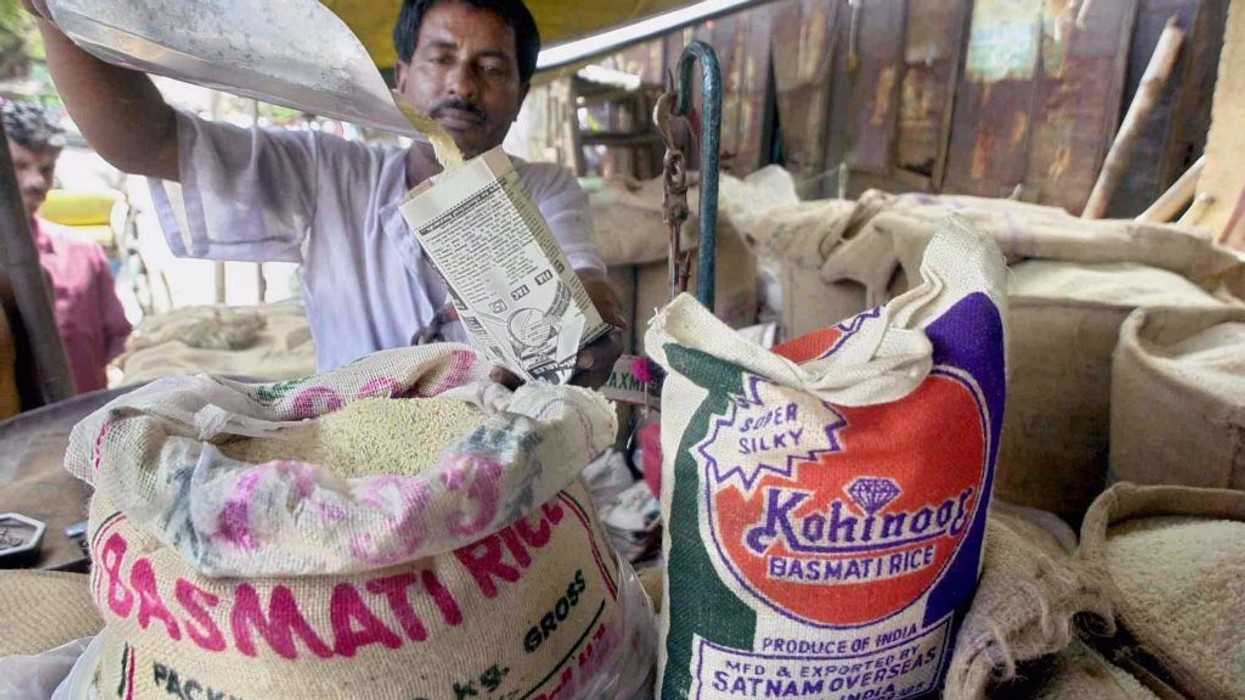

India's exports to Iran have taken a significant hit as escalating protests and civil unrest in the country disrupt trade flows, leaving consignments worth nearly $240 million stranded at Indian ports. Exporters and analysts warn that the situation could worsen further amid president Donald Trump's threat to impose a 25 per cent tariff on countries continuing to do business with Tehran.
According to trade sources, shipments of basmati rice, tea, and pharmaceutical products bound for Iran have been held back at major ports such as Kandla and Mundra in Gujarat. Traders say port operations and logistics in Iran have been severely disrupted due to the ongoing protests, forcing exporters to pause shipments amid uncertainty over payments and delivery.
Iran has traditionally been a key market for Indian agricultural exports, particularly basmati rice. However, the unrest has slowed payment cycles, weakened buyer confidence, and caused immediate ripple effects in domestic markets, which have softened sharply as consignments pile up with nowhere to go.
“Iran has historically been a pillar market for Indian basmati rice,” said Prem Garg, president of the Indian Rice Exporters’ Federation. “The current internal turmoil has disrupted trade channels and dented confidence. The impact is already visible in Indian mandis, where prices have declined.”
India exports roughly 1.2 million metric tons of basmati rice to Iran every year, valued at more than $1.5 billion, making Iran the second-largest buyer after Saudi Arabia. With shipments stalled and new contracts on hold, exporters fear prolonged disruption could lead to long-term market losses.
The crisis is also affecting pharmaceutical exports, another major component of India's trade with Iran. Industry executives say banking restrictions, currency volatility, and delays in clearing payments have made it increasingly difficult to execute existing contracts, prompting exporters to adopt a wait-and-watch approach.
Overall, India-Iran bilateral trade stands at under $4 billion annually, but analysts say the current turmoil could significantly reduce volumes in the near term. Adding to the uncertainty is President Trump’s warning that the US may impose a 25 per cent tariff on countries that continue trading with Iran. Indian officials have said they are awaiting clarity from Washington on the scope and implementation of the proposed levy.
The tariff threat has already unsettled global markets, pushing Brent crude prices above $64 per barrel, their highest level since November. Higher oil prices could hurt India, which imports the bulk of its crude oil and remains sensitive to energy price shocks.
Beyond exports, analysts caution that prolonged instability in Iran could also impact India’s strategic interests, including operations at the Chabahar port on Iran’s southwestern coast. India runs the port under a long-term agreement signed last year, and it serves as a vital gateway for trade with Afghanistan and Central Asia.
For now, exporters remain cautious, hoping for a diplomatic easing of tensions. But with protests continuing in Iran and trade policy uncertainty mounting, India’s exporters face an increasingly challenging outlook.











 Let’s stop shaming Genzfor switching jobsI see a lot of ‘career gurus’shaming 22-year-olds for switching jobs every year.But isn’t that exactly what the youth should be doing? 🤔Early in our… | Anupam Mittal | 561 comments