
Highlights:
- India and Canada sign a long-term uranium supply deal.
- Both leaders set a deadline to finalize a trade agreement by the end of 2026.
- The two countries will work together on critical minerals, AI, defense, and clean energy.
- The visit marks a reset after tensions under former Prime Minister Justin Trudeau.
- Both nations aim to reduce economic dependence on the US and China.
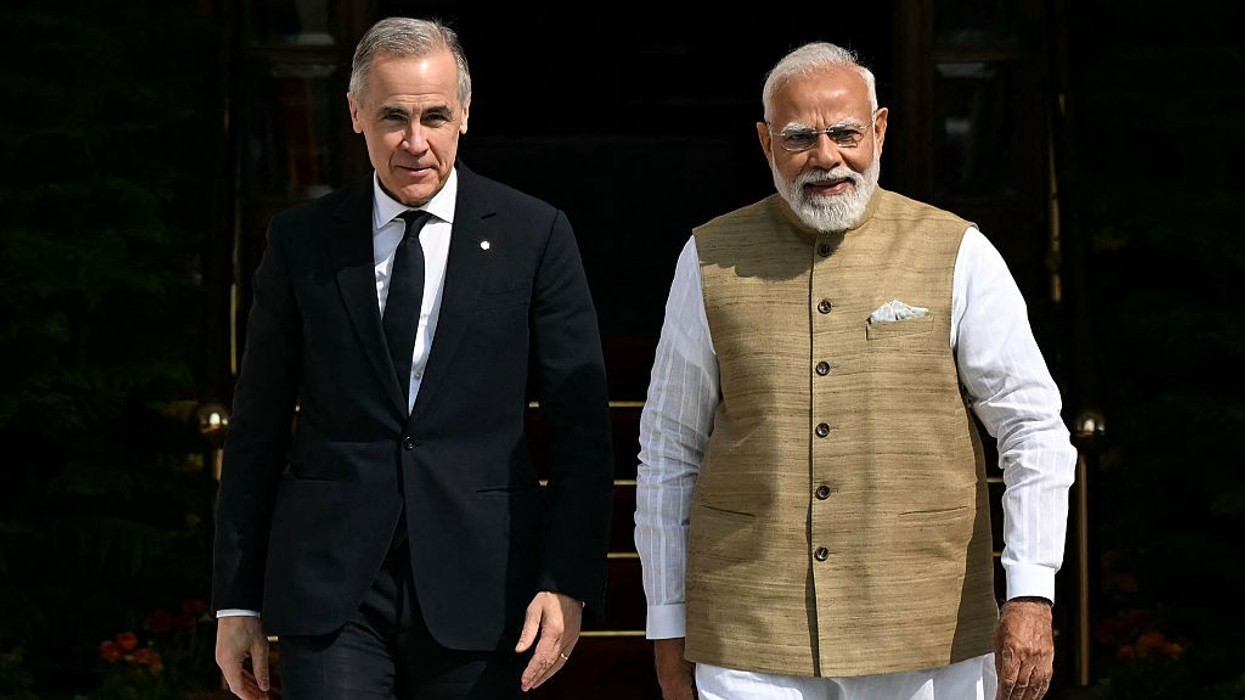
India and Canada have agreed to a series of major deals as Indian prime minister Narendra Modi and Canadian prime minister Mark Carney met in New Delhi to reset relations between their countries.
The most important agreement is a long-term uranium supply deal. Canada will provide a steady supply of uranium to support India’s growing nuclear energy program. Modi called the agreement 'a landmark' during a joint press statement. India’s energy demand is expected to double by 2050, and nuclear power is a key part of its plan to meet that demand. Canada, which has large uranium reserves, will benefit from billions of dollars in business and stronger ties with India.
Carney and Modi also agreed to finalize a long-delayed economic partnership agreement by the end of this year. India and Canada have discussed a trade deal for more than 16 years, but talks often stalled. Negotiations were paused after diplomatic tensions in 2023 and 2024.
Those tensions began when former Canadian prime minister Justin Trudeau said there were 'credible allegations' linking India to the killing of a Sikh separatist leader in Canada. The accusation caused serious strain between the two governments. Under Carney, Canada has worked to rebuild relations with India, especially as it faces tariff pressure from its largest trading partner, the United States.
During their meeting, the two leaders also agreed to cooperate in critical minerals, clean energy, artificial intelligence, space, defense, and higher education. Critical minerals are especially important for India’s semiconductor industry. India has depended heavily on China for these materials. By working with Canada, India hopes to secure more reliable supply chains.
Defense cooperation was another key topic. Carney mentioned stronger maritime collaboration in the Indo-Pacific region. This move is seen as a signal about concerns over China’s growing influence in the region. However, Canada is also trying to improve its relationship with China, so the full scope of this defense partnership remains unclear.
Artificial intelligence and innovation were also highlighted. Modi said an innovation partnership would help turn ideas into global solutions. Both countries want to work together in emerging technologies and expand research cooperation.
In his closing remarks, Carney quoted 19th-century Indian philosopher Swami Vivekananda, saying, “Arise, awake, and stop not till the goal is reached.” He noted that Vivekananda had traveled to Vancouver and Winnipeg, symbolizing a historic link between the two nations.
Carney described the visit as the 'end of a challenging period' and the beginning of a more ambitious partnership. Both leaders showed a practical approach, choosing cooperation over past disputes. With global economic uncertainty and shifting geopolitics, India and Canada appear ready to build a stronger and more strategic relationship.




 https://www.voteratlas.io/
 https://www.voteratlas.io/