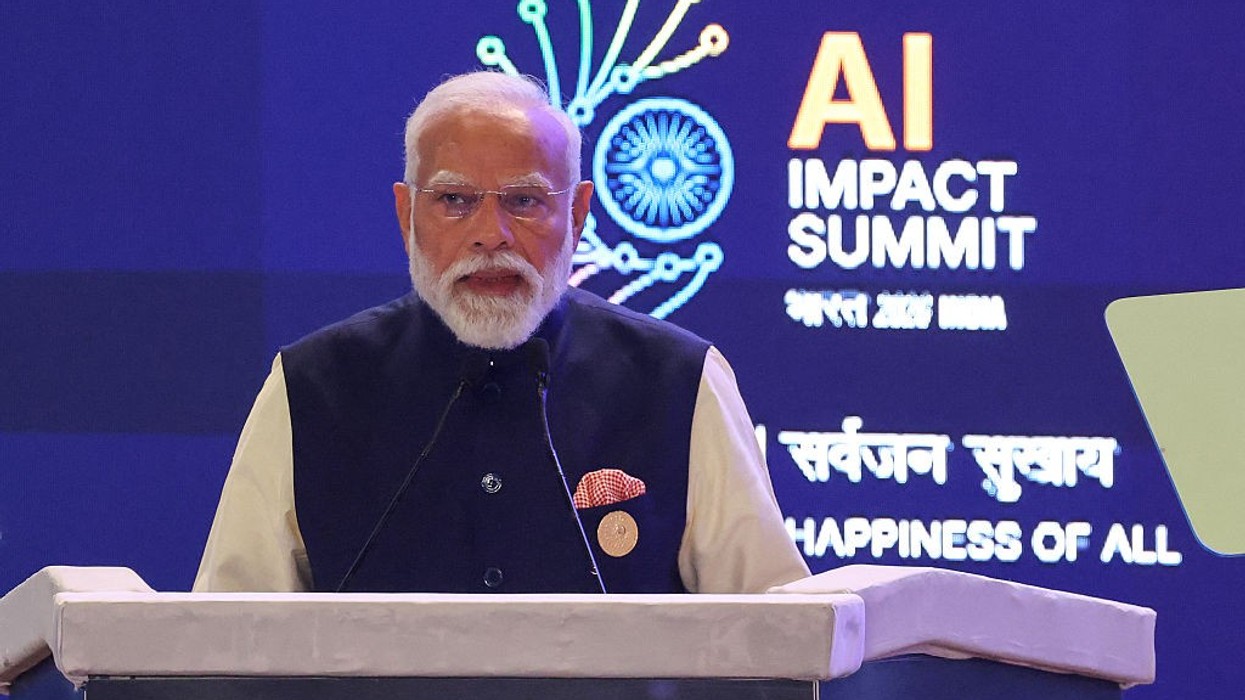

- Leaders and innovators from over 100 countries attended the AI Impact Summit 2026.
- India introduced the MANAV framework for human-centric AI governance.
- AI was compared to transformative inventions like electricity and the internet.
- India is expanding AI infrastructure under its India AI Mission.
- The Prime Minister called for global standards on AI transparency and watermarking.
At a pivotal moment in global technological evolution, leaders, innovators, and policymakers from more than 100 nations gathered in India's capital, New Delhi, for the AI Impact Summit 2026. For India, hosting the summit was both a point of national pride and a statement of intent: to help shape the global conversation around artificial intelligence in a way that prioritizes humanity.
The Indian prime minister Narendra Modi described AI as a technological shift on par with fire, writing, electricity, and the internet. However, he emphasized that AI’s pace of change is unprecedented; developments that once took decades can now unfold within weeks, influencing societies worldwide.
Yet the core message of the summit was clear: AI must remain human-centered, not machine-centered. “Technology must serve people, not the other way around,” he reiterated. Framing the discussion around the Sanskrit principle “Sarvajana Hitaya, Sarvajana Sukhaya”, meaning welfare and happiness for all, India urged the global community to ensure AI advances human well-being.
India showcased its own experience in using digital infrastructure to empower citizens. From the rapid scaling of digital payments through UPI to mass COVID-19 vaccination efforts, the country has emphasized an inclusive Digital Public Infrastructure. The same philosophy now guides its AI strategy.
Real-world applications demonstrate AI’s potential in India. “Sarlaben,” an AI-powered assistant developed by dairy cooperative AMUL, provides real-time advice to 3.6 million dairy farmers, most of them women, in their native languages. Another platform, Bharat VISTAAR, delivers multilingual insights to farmers on weather patterns, crop management, and market prices.
To translate its human-first vision into governance principles, India introduced the MANAV framework:
- M – Moral and Ethical Systems: AI must be grounded in ethical guidelines.
- A – Accountable Governance: Transparent regulations and strong oversight are essential.
- N – National Sovereignty: Countries must retain rights over their data.
- A – Accessible and Inclusive: AI should not become a monopoly controlled by a few.
- V – Valid and Legitimate: AI systems must comply with laws and be verifiable.
“MANAV,” meaning “human,” reflects India’s call to anchor AI development in shared human values.
The Prime Minister also raised concerns about trust in the age of generative AI. With deepfakes and misinformation posing risks to democracies, he proposed global standards for digital watermarking and source verification, similar to nutrition labels on food. India has already enacted legal requirements for labeling synthetically generated content.
Child safety was another key priority. AI systems, he said, must include safeguards to ensure responsible use, particularly for younger users.
India also emphasized openness and collaboration. Rather than treating AI as a guarded strategic asset, the Prime Minister advocated for open platforms that allow young innovators worldwide to contribute to safer, more inclusive technologies.
To support domestic innovation, India is expanding computing capacity under its India AI Mission. Thousands of GPUs have already been deployed, with more planned. A national AI repository is being built to democratize access to datasets and models, enabling even small startups to compete globally.
With one of the world’s largest youth populations and a rapidly growing tech sector, India believes it is uniquely positioned to help lead the AI era.
The message to the world was direct: design and develop in India, deliver to the world, and ultimately, deliver for humanity.
(This article is drafted by Indian prime minister Narendra Modi)