
Highlights:
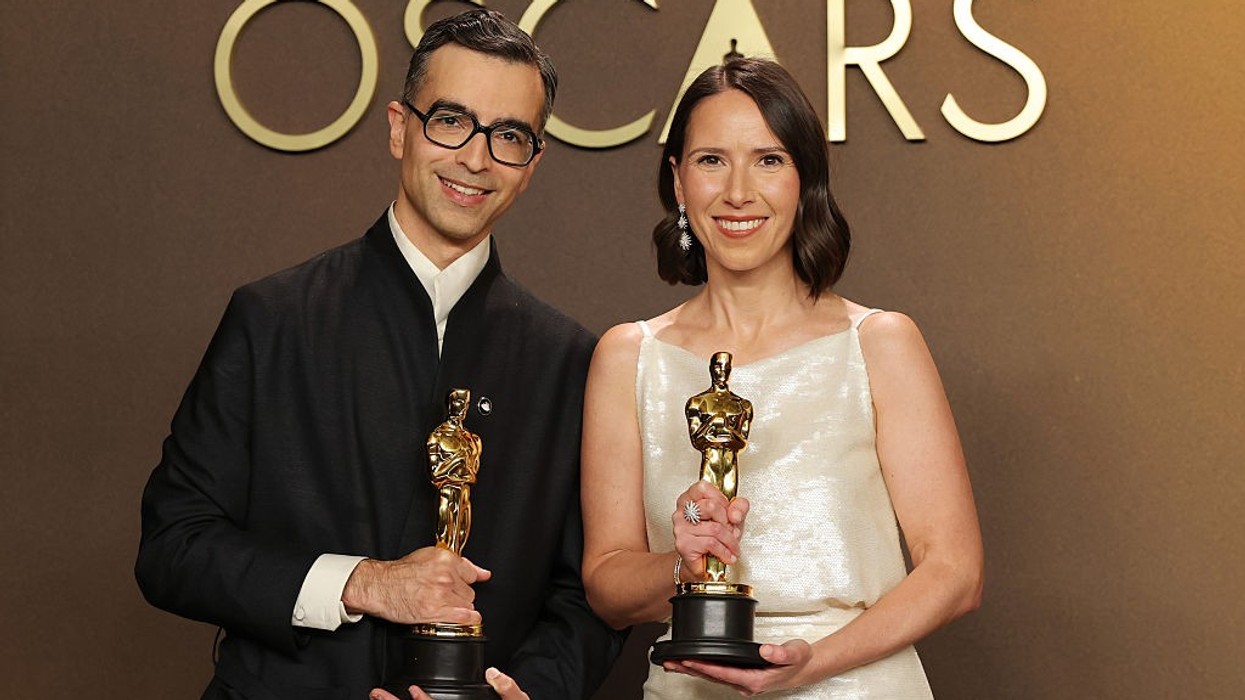
- Indian-origin filmmaker Alexandre Singh won an Oscar for Best Live-Action Short Film.
- His film Two People Exchanging Saliva was co-directed with Natalie Musteata.
- The award was shared with another short film in a rare tie at the ceremony.
- Singh’s background in visual arts strongly influences his filmmaking style.
- The filmmakers used narrative theory and digital tools to develop the project.
Indian-origin filmmaker Alexandre Singh has emerged as one of the breakout names from the 98th Academy Awards after winning the Oscar for Best Live-Action Short Film. His film, Two People Exchanging Saliva, co-directed and co-written with Natalie Musteata, secured the prestigious award in a rare tie with another short film, marking a major moment for the filmmaker on Hollywood’s biggest night.
The win has sparked widespread interest in Singh, whose career uniquely bridges the worlds of contemporary art and cinema. Known for his experimental approach to storytelling, Singh has built a reputation for blending visual artistry with narrative filmmaking, a style that has now earned him international recognition.
Born in 1980 in Bordeaux, France, Singh is the child of Indian parents. He initially gained recognition as a visual artist before expanding his creative work into filmmaking. His early projects often combined artistic experimentation with structured storytelling, reflecting his dual background in fine art and cinematic narrative.
Before his Oscar-winning film, Singh directed several short films that helped define his distinctive style. Among them were The Appointment and Plan Large, both of which explored unconventional narrative techniques and visual storytelling methods. These works gradually established Singh as a filmmaker interested in pushing the boundaries of traditional storytelling.
His collaboration with Musteata began more than a decade ago. The two filmmakers started working together in 2012 and developed a shared creative vision over time. Their partnership culminated in their first collaborative film, The Appointment, which was released in 2019 and helped shape the artistic approach they later refined in Two People Exchanging Saliva.
The Oscar-winning short film runs approximately 36 minutes and presents a carefully constructed narrative world. Rather than relying on direct exposition, the film allows its story and emotional context to unfold gradually. Characters and events are introduced in a way that encourages viewers to piece together the film’s internal rules and relationships as the narrative progresses.
To develop the project, Singh and Musteata turned to narrative theory for inspiration. One key influence was The Science of Storytelling by Will Storr, which explores how stories shape human perception and emotional engagement. The filmmakers used these ideas to craft a narrative structure designed to slowly reveal meaning and character motivations.
Technology also played a significant role in the film’s creation. The directors experimented with digital tools such as Polycam and Blender to design virtual environments and visualize scenes during production. These tools allowed them to plan complex visual sequences and experiment with spatial storytelling techniques.
During his acceptance speech at the Oscars, Singh reflected on the broader role of art and storytelling in society. He spoke about his belief that creative work—whether through cinema, literature, or visual art—can influence how people think and feel over time.
With the Academy Award now adding global recognition to his career, Singh’s work is drawing renewed attention from audiences and critics alike, highlighting how experimental storytelling and artistic vision can find a place on one of the world’s biggest cinematic stages.