
Highlights:
- Hindu Americans are the most highly educated religious group in the US.
- Median household income exceeds $126,000, among the highest nationwide.
- Indian-origin CEOs lead major US tech corporations.
- Diwali and Holi are celebrated at the White House and in major cities.
- Hindu advocacy groups are increasingly active in American politics.
Hindu Americans make up roughly 1 per cent of the US population, yet their impact across education, business, politics, religion, and culture far exceeds their numbers. While academic achievement is often highlighted, their success story is much broader. Here are seven key reasons Hindu Americans stand out in the United States today.
Brains and intelligence, on top-notch
According to research from the Pew Research Center, about 70 per cent of Hindu Americans hold a bachelor’s degree or higher — the highest rate among religious groups in the US
This educational attainment reflects immigration patterns shaped by skilled worker visas, particularly in science, technology, engineering, and medicine. Many Hindu Americans arrived through professional pathways such as H-1B visas, bringing advanced degrees and specialized expertise.
This strong academic foundation has translated directly into career mobility and economic success.
Hindu Americans set rules for 'standard of living'
Hindu Americans report a median household income exceeding $126,000 annually, nearly double the national median and significantly higher than the median income for White Americans.
Their economic contributions are equally significant. Though about 1 per cent of the population, Indian Americans, the majority of whom are Hindu, are estimated to contribute roughly 5-6 per cent of total US income taxes, according to various economic analyses.
Affluent suburbs such as Edison, New Jersey; Fremont, California; and Plano, Texas have large Hindu populations and reflect the community’s financial stability and entrepreneurial drive.
Several prominent Hindu American business leaders of Indian origin have built major fortunes in technology, cybersecurity, aviation, and venture capital.
Jay Chaudhry is the founder and CEO of Zscaler, a leading cloud cybersecurity firm. As of late 2025, his net worth is estimated at about $18 billion, making him one of the richest Indian-origin Americans. He lives in Reno, Nevada, and he and his family own around 40% of the Nasdaq-listed company.
Vinod Khosla, founder of Khosla Ventures, has a net worth of more than $11 billion. A graduate of IIT Delhi, he is an early investor in major tech companies such as OpenAI and DoorDash. He owns a 53-acre estate with a private beach in the San Francisco Bay Area and recently bought a minority stake in the San Francisco 49ers.
Rakesh Gangwal, co-founder of IndiGo Airlines and former CEO of US Airways, has a net worth of about $4.6 billion. He owns a large waterfront mansion on Indian Creek Island in Florida.
Romesh T. Wadhwani, founder of Symphony Technology Group, is worth around $5 billion. He lives in Los Altos Hills, California, and supports education and development projects through the Wadhwani Foundation.
CEOs and whatnot, ruling the industries
Hindu Americans have become synonymous with leadership in the tech industry.
Among the most prominent CEOs in corporate America are:
- Sundar Pichai, CEO of Google
- Satya Nadella, CEO of Microsoft
- Shantanu Narayen, CEO of Adobe
- Arvind Krishna, CEO of IBM
- Raj Subramaniam, CEO of FedEx
Indian-origin entrepreneurs have also co-founded more than 70 U.S. unicorn startups, generating billions in valuation and tens of thousands of jobs.
Chairing the political seats
Hindu Americans are increasingly visible in U.S. politics, both as voters and as candidates.
The Hindu American Foundation advocates for civil rights protections, religious freedom, and anti-discrimination efforts. Meanwhile, Americans 4 Hindus works to increase civic participation and political engagement among Hindu and Dharmic communities.
Diwali celebrations at the White House, a tradition since 2003 under President George W. Bush, symbolize this growing political recognition. Lawmakers across party lines now publicly recognize major Hindu festivals, signaling broader mainstream acceptance.
US can have its own Char Dham Yatra
The physical presence of Hindu Americans is increasingly visible across the country.
The BAPS Swaminarayan Akshardham, inaugurated in 2023 in Robbinsville, New Jersey, is the largest Hindu temple in the United States. Built across 185 acres with the help of 12,500 volunteers, it represents both spiritual devotion and organizational strength.
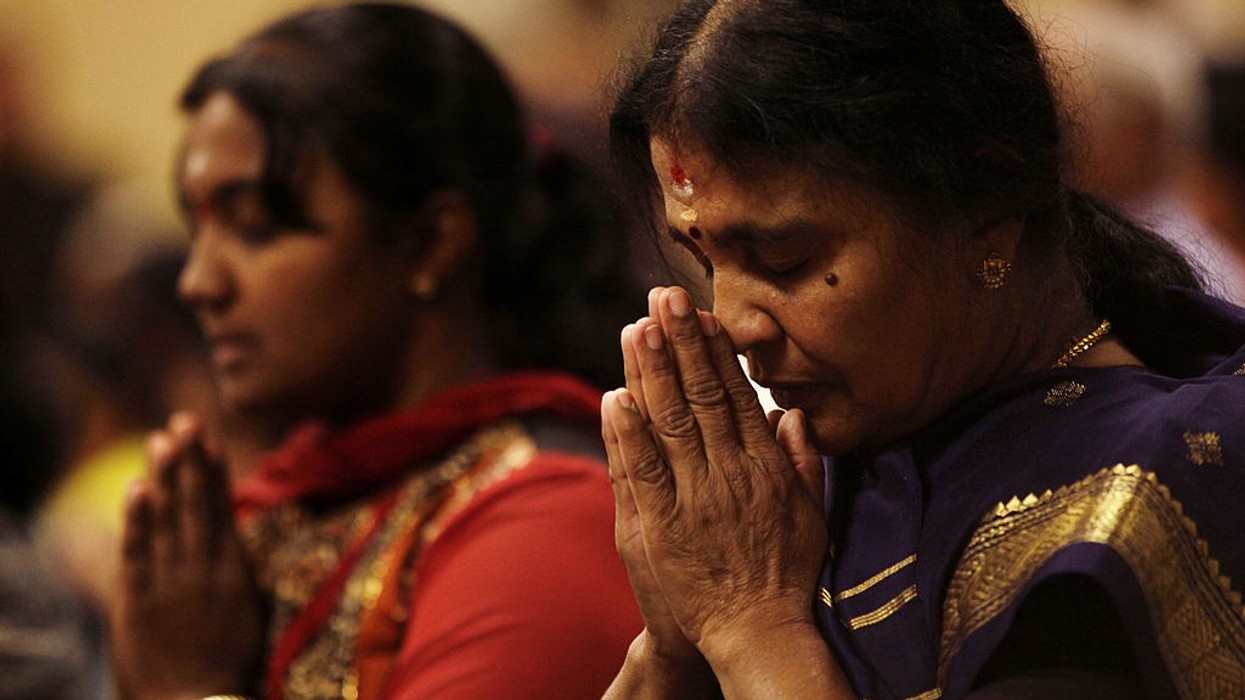
Nationwide, more than 1,100 Hindu temples serve communities across New York, California, Texas, and beyond, functioning not just as places of worship but as community centers offering language classes, youth programs, and charitable outreach.
Even Diwali made its way to White House
Hindu festivals have become mainstream cultural events in American cities.
Diwali, the Festival of Lights, is celebrated in major urban centers including New York City, Chicago, and Houston, often with large public gatherings, fireworks, and city-sponsored events. Holi festivals draw thousands of participants, both Hindu and non-Hindu, celebrating color, music, and spring.
These celebrations bridge cultural divides, blending Indian traditions with American civic life. They foster interfaith dialogue and promote multiculturalism in increasingly diverse metropolitan areas.
Medicos? You will definitely find an Indian doc there
Roughly 75 per cent of Hindu Americans work in professional sectors, including management, STEM fields, medicine, finance, and academia.
From Silicon Valley engineering teams to hospital leadership and university faculties, Hindu Americans are deeply embedded in industries that drive American innovation and economic growth.
Their presence in semiconductors, artificial intelligence, pharmaceuticals, and clean energy reflects not only personal success but national impact.
Unity in diversity, even in the US
Hindu Americans’ success is not limited to intelligence or test scores. It is rooted in educational attainment, entrepreneurship, civic engagement, cultural confidence, and religious organization.
They are building temples and tech giants, celebrating Diwali at the White House, leading Fortune 500 companies, and contributing disproportionately to America’s tax base and innovation economy.
In short, Hindu Americans are not just participating in the American story, they are helping write its next chapter.