
Highlights:
- Rice emissions have nearly doubled since the 1960s.
- Global emissions average about 1.1 billion tons yearly in the 2010s.
- Rice farming emissions equal about 239 million cars annually.
- One farming practice drives about 18 per cent of emission growth.
- Methane increases in flooded fields due to microbial activity.
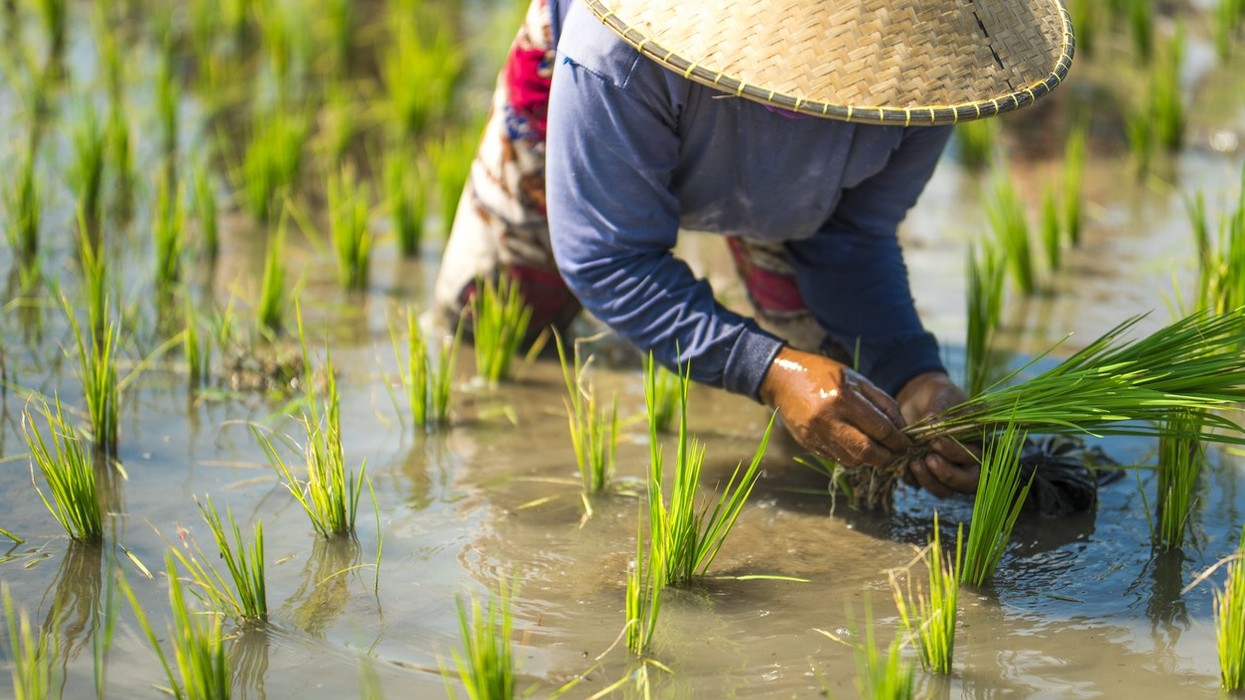
Rice is one of the world’s most important food crops, feeding more than half of the global population. It is grown in flooded fields across Asia, Africa, and other regions, where water helps crops grow but also creates conditions that produce greenhouse gases.
A new study by environmental and agricultural scientists found that greenhouse gas emissions from rice paddies have nearly doubled since the 1960s. In the 2010s, rice farming produced about 1.1 billion tons of carbon dioxide-equivalent emissions every year.
Researchers said this is roughly equal to the annual emissions from 239 million cars.
Rice farming is now the largest source of agricultural emissions outside livestock. At the same time, global demand for rice continues to rise, which may increase emissions further.
The study explains that flooded rice fields create low-oxygen conditions that allow microbes to produce methane, a strong greenhouse gas. This makes rice farming a significant climate concern.
Emissions have increased for two main reasons: expansion of rice-growing land and more intensive farming practices.
More than half of the increase comes from expanding farmland. In Africa, rice-growing areas have roughly doubled since the 1960s, leading to higher methane emissions.
Farmers are also using more fertilizers, manure, and crop residues to boost yields. They are planting more productive rice varieties and increasing planting density.
However, these practices also increase emissions.
A key finding of the study is that leaving rice stalks in fields after harvest and plowing them into the soil is responsible for about 18% of the increase in total emissions since the 1960s. The added organic matter is broken down by microbes, producing methane.
Another major factor is fertilizer use. Synthetic nitrogen use increased by about 76% after 2000. This led to higher emissions of nitrous oxide, another powerful greenhouse gas.
The study also found that irrigation methods affect emissions. Traditional flooding produces steady methane emissions, while intermittent flooding reduces methane but can slightly increase nitrous oxide.
Researchers used a combination of computer models, artificial intelligence, and more than 1,200 field studies to measure emissions from 1961 to 2020.
They found that changing farming practices could reduce global rice emissions by about 10% by midcentury without reducing yields.
Possible changes include reducing fertilizer use, improving water management, and limiting excessive crop residue use.
An unusual finding was that replacing chemical fertilizers with organic alternatives is not always better for the climate, despite common belief.
Another unexpected result was that reduced tillage does not always lower emissions. In some flooded systems, it can actually increase methane production.
The study also found that warming temperatures increase emissions because they speed up microbial activity in flooded soils.
Researchers concluded that no single solution works everywhere. The best methods depend on local climate, soil, and farming systems.