
Watch most contemporary Hollywood superhero films and a pattern emerges: bodies fly, punches land, buildings collapse, yet nothing feels heavy. Gravity appears optional. Impact is implied, not felt. This is often dismissed as a side effevct of visual effects-heavy filmmaking, but SS Rajamouli approaches the problem differently.
For Rajamouli, action is not a technical challenge to be solved by VFX. It is a physical language, rooted in ancient traditions where the body itself tells a story. That philosophy what his collaborators often call 'organic spectacle' is why a single punch in RRR or a sword swing in Baahubali can feel more convincing than an entire CGI-heavy battle elsewhere.
The Rajamouli method: Training before technology
SS Rajamouli's reputation as a perfectionist is not rooted in spectacle, but in preparation. Actors in his films do not simply learn fight choreography. They relearn how to stand, walk, breathe, and fall--often from the scratch.
“If the body language is wrong, nothing else works,” Rajamouli said during promotions for RRR, explaining why he prioritizes physical conditioning over visual effects. “You can add VFX later, but the weight has to come from the actor.
Rather than rehearsing action beats weeks before shooting, Rajamouli subjects his actors of physical retraining, much of it seemingly disconnected from individual scenes. The intent is deliberate: strip away modern habits, slouched shoulders, casual gait, gym-trained rigidity and replace them with something older, more primal, and archetypal.
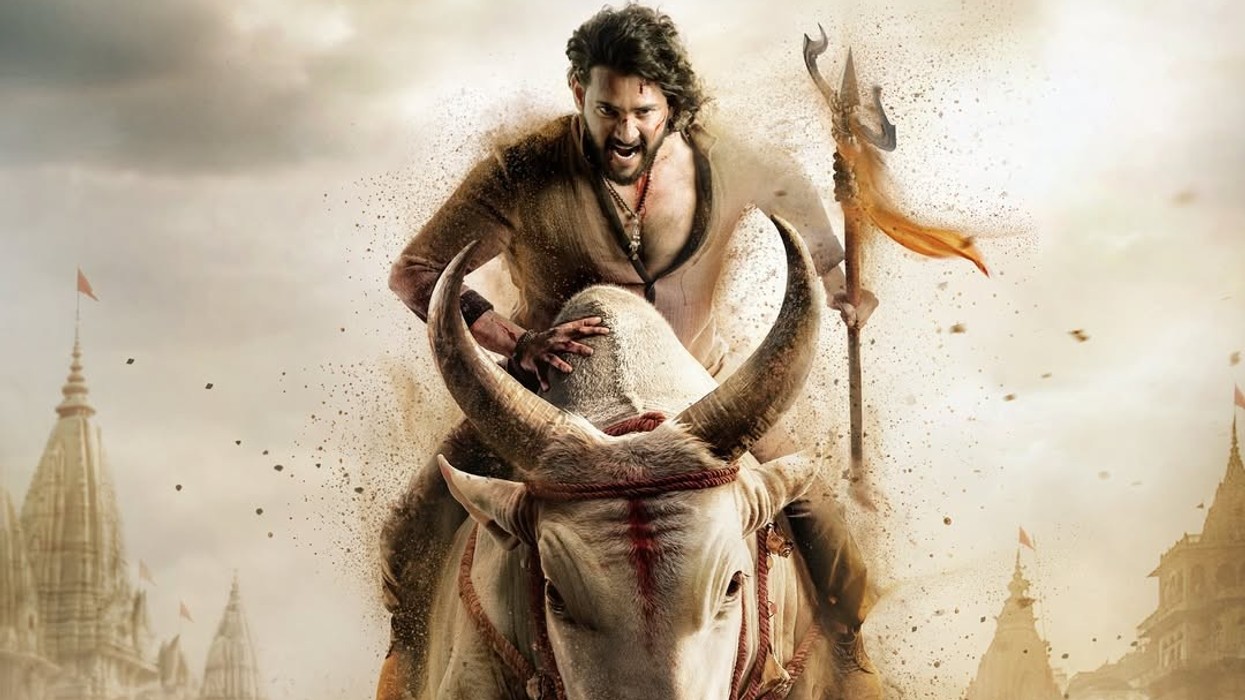
The philosophy reaches its most refined expression yet in his upcoming epic Varanasi (SSMB29), slated for release in 2027.
Varanasi (SSMB29)--Kalaripayattu from Kerala and Ashta Vadivus
For Varanasi, Rajamouli turned decisively to Kalaripayattu, the ancient battlefield martial art of Kerala, to shape Mahesh Babu's character Rudhra, a figure inspired by Lord Ram.
Mahesh Babu trained for 90 days under Hyderabad-based Kalaripayattu expert Hari Krish Kakani, with sessions conducted both at Rajamouli's office and the actor's residence. Notably, the training was not designed around fight choreography.
“It was never about teaching him how to fight,” Hari Krish Kakani said in an interview earlier this year. “The focus was on body agility—how he stands, how he turns, how his weight settles. Combat comes later.”
Mahesh Babu echoed this in a promotional interaction, revealing that Rajamouli's primary concern was posture. “He told me, ‘You shouldn’t look like someone from 2025 pretending to be a warrior,’” the actor said. “Kalari helped me unlearn modern movement.”
At the core of this training was Ashta Vadivu, the eight animal postures of Kalaripayattu, which became the physical grammar of Rudhra's movement.
Rajamouli's obsession with detail went further. Mahesh Babu also trained in track and field for six months to perfect a running style that may appear in just two shots of the final film.
“That run had to look timeless,” Mahesh Babu said in a 2026 interview. “Not athletic, eternal.”
Baahubali: The Beginning & The Conclusion: Weapon geometry and Urumi physics
In Baahubali, Rajamouli’s focus shifted from body conditioning to weapon-based martial discipline. Prabhas and Rana Daggubati trained extensively in sword combat, archery, and horse riding, working with Indian and international stunt coordinators. The most distinctive element, however, was the introduction of the Urumi, a flexible whip-sword rooted in Kalaripayattu traditions. Unlike conventional cinematic weapons, the Urumi obeys centrifugal physics. It cannot pause mid-motion. Rajamouli built entire action sequences around this principle.
“You can’t fake an Urumi,” a stunt coordinator from Baahubali 2 noted during a behind-the-scenes interview. “If the actor doesn’t understand circular motion, the weapon will expose it.”
Sathyaraj’s Kattappa was trained in a deliberately heavy, defensive style, reflecting decades of service as a royal guard. His movements are grounded and economical, no flourish, no excess. “Every move had to feel like survival, not showmanship,” Sathyaraj said during the film’s release cycle.
RRR: Animal power and functional strength
With RRR, Rajamouli pushed physical storytelling even further by assigning each hero a distinct animal logic.
NT Rama Rao Jr. (Bheem): His movement was designed arounf Varaha (Boar) and Gaja (Elephant) principles, low center of gravity, relentless momentum, and explosive strength. “Bheem doesn’t dodge,” Rajamouli said in an interview. “He absorbs.”
Ram Charan (Rama Raju): His physicality began rigid and upright, mirroring colonial discipline, before transitioning into fluid, myth-inspired archery movements drawn from depictions of Lord Ram.
The iconic long-take police station sequence works precisely because the actors’ bodies can sustain it. Rajamouli avoids fast cutting because, as he has stated, “If you cut too fast, it means you don’t trust the movement.”
Why Kalaripayattu beats Hollywood’s CGI logic
Hollywood often treats action as a digital puzzle, solved with wire-fu, motion capture, and rapid edits. Rajamouli treats action as a biomechanical truth.
Kalaripayattu’s foundational discipline, Meippayattu, turns the body itself into a weapon through flexibility, core strength, and balance. Every strike carries full body weight. Every landing respects gravity.
This grounding is why Rajamouli’s “impossible” feats feel paradoxically real. The audience senses effort. Muscles strain. Feet grip the earth.
Even his editing reflects Kalari philosophy. Borrowing from the concept of Marmam, vital points in the body, Rajamouli structures scenes around emotional pressure points. Long takes function as “healing points.” Sudden impacts become the “kill points.”
The secret: Organic spectacle
Rajamouli’s global appeal has little to do with scale alone. It lies in discipline before display.
Where Hollywood often layers realism onto fantasy, Rajamouli builds fantasy atop real, trained bodies. His heroes do not float through frames. They occupy space. They obey physics. They carry myth in their posture.
Indian cinema does not need to outspend Hollywood. As Rajamouli’s work demonstrates, it can out-think it—by tapping into a 3,000-year-old action language that modern blockbusters have forgotten.
At the center of that language stands Kalaripayattu: ancient, unforgiving, and perfectly cinematic.