
Highlights:
- Romantic comedy mixes modern hookup culture with 1990s-style Bollywood romance
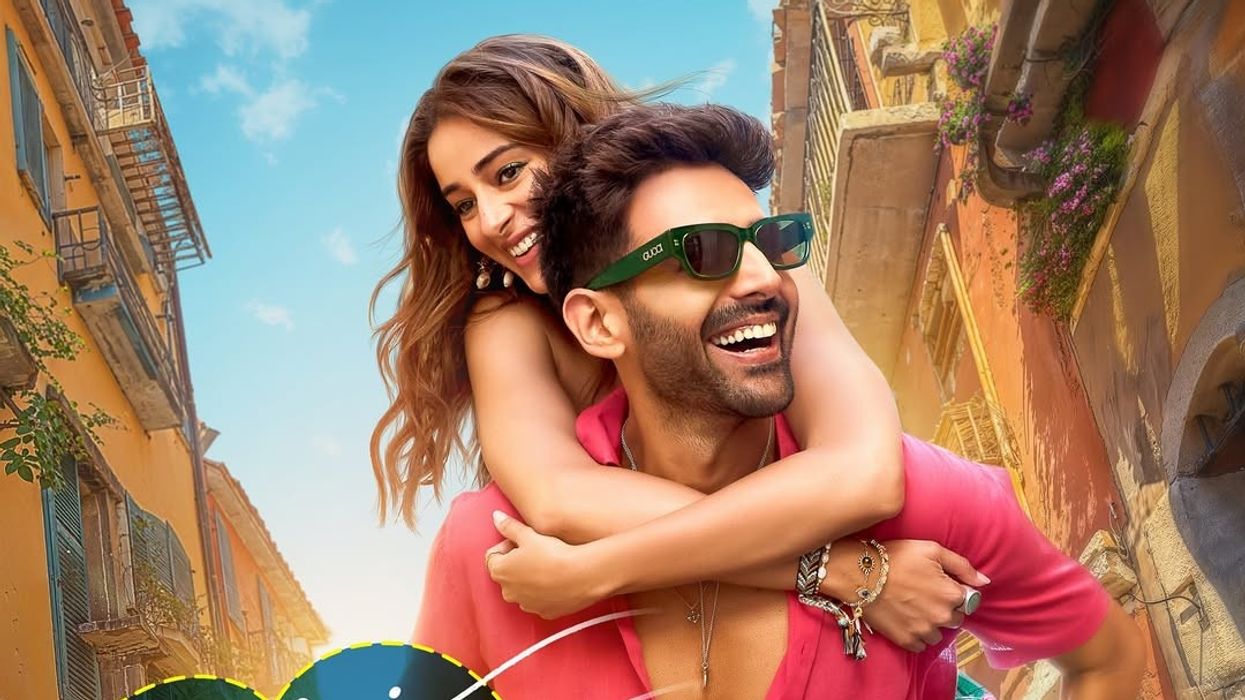
- Kartik Aaryan and Ananya Panday reunite after Pati Patni Aur Woh
- Film heavily references Dilwale Dulhania Le Jayenge
- Lavish Croatia visuals dominate much of the runtime
- Critics question its relevance for today’s audience
Tu Meri Main Tera Main Tera Tu Meri (often shortened to TMMT) arrives as one of the final major releases of 2025, positioning itself as a love story that bridges modern dating and old-school Bollywood romance. What it delivers instead is a glossy, overlong film that struggles to justify its emotional beats.
Written by Karan Shrikant Sharma and directed by Sameer Vidwans, the film follows Rehan Mehra (Kartik Aaryan), a Los Angeles–based wedding planner, and Rumi (Ananya Panday), a romance novelist from Agra. They meet during a vacation in Croatia—less through chance and more through a series of increasingly forced encounters that the film insists are charming. Rehan’s pursuit borders on aggressive, while Rumi’s initial resistance quickly fades, a familiar trope in older Hindi cinema that feels dated today.
The film openly describes itself as “2025 hook-up culture meeting 1990s-style Bollywood romance,” a line spoken aloud to make sure viewers don’t miss the point. That point, however, is muddled. While the film wants to celebrate traditional romance, it also mocks modern “wokeness,” resulting in dialogue that often sounds strained and self-conscious. Kartik Aaryan’s habit of shouting his lines does little to improve the writing.
Visually, the movie is polished to the point of distraction. Large portions feel like an extended tourism commercial for Croatia, with locations clearly labeled and framed for maximum postcard appeal. Another chunk resembles a wedding video, complete with elaborate songs and choreographed celebrations. What’s left is a story that takes far too long to find momentum in its 145-minute runtime.
The central conflict emerges late: Rumi refuses to leave her widowed father, Amar (Jackie Shroff), to move to the U.S. with Rehan. Amar, otherwise healthy and in his early 60s, conveniently falls ill, giving the film a reason to lean into melodrama and family duty—territory famously explored in Dilwale Dulhania Le Jayenge, which looms heavily over every emotional turn.
There are occasional bright spots. A chaotic drunk sequence provides brief energy, and Neena Gupta shines as Rehan’s single, free-spirited mother, Pinky, bringing warmth and humor that often eclipses the lead pair. Jackie Shroff lends gravitas, even when the patriotism-heavy dialogue feels exaggerated.
The biggest issue remains chemistry. Despite looking good together, Aaryan and Panday never convincingly sell the idea of lovers who can’t live without each other. Panday’s Rumi feels underwritten, wavering between devoted daughter and ambitious writer without conviction. Aaryan, meanwhile, is more comfortable playing a self-absorbed alpha male than a romantic hero capable of emotional depth.
In the end, Tu Meri Main Tera Main Tera Tu Meri reflects Bollywood’s ongoing struggle to modernize its idea of romance. By clinging to nostalgia without rethinking its values, the film raises an uncomfortable question: is this really the best version of a contemporary love story, or just a glossy echo of the past?