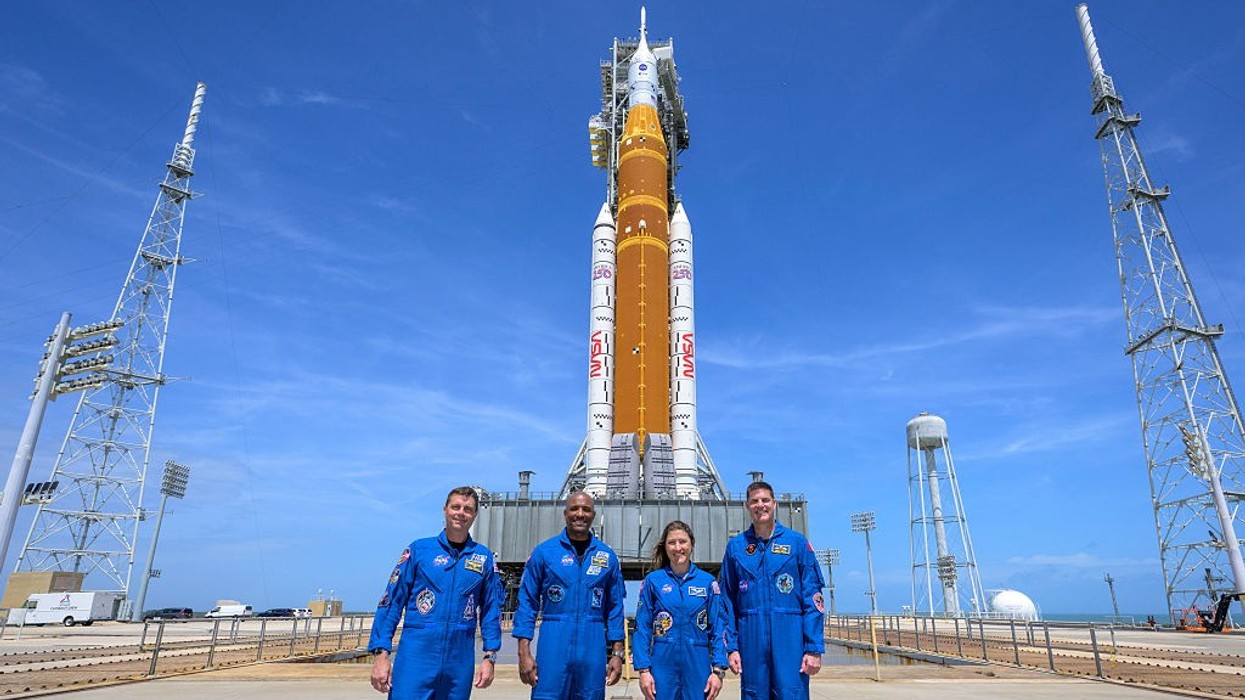

The recently launched NASA's Artemis II mission has officially begun, but it is to be noted that the astronauts are not yet on their way to the moon. After the launch on April 1 from the Kennedy Space Center, the crew is currently orbiting the Earth as part of early missions.
Currently, the Orion spacecraft is carrying the crew is staying in Earth's orbit. This phase allows the team to check systems and prepare for the major next step of the translunar injection burn. This maneuver will send the spacecraft out of the Earth's orbit and towards the moon.
The four astronauts onboard are Reid Wiseman, Christina Koch, Victor Glover, and Jeremy Hansen. After launch, the crew likely spent time resting before continuing with mission tasks.
The spacecraft is expected to begin its journey toward the moon soon, with a planned lunar flyby scheduled for April 6. During this part of the mission, the astronauts will travel farther from Earth than any humans in history.
This mission is also important for representation and milestones. Glover is set to become the first Black man to travel to the vicinity of the moon. Koch will be the first woman, and Hansen will be the first Canadian to reach that distance.
Artemis II is mainly a test mission. It is designed to prove that NASA’s Orion capsule can safely carry humans on a trip around the moon and back. The mission is expected to last about 10 days, ending with a splashdown in the Pacific Ocean around April 10.
This mission is a key step toward NASA’s long-term goal of returning humans to the moon. If successful, it will help prepare for future missions that aim to land astronauts on the lunar surface, possibly by 2028.