
Highlights:
A provocative statement by a Bangladeshi student leader has sparked widespread backlash and ridicule, adding to mounting diplomatic and political tensions between India and Bangladesh.
Musaddiq, identified as a student leader in Bangladesh, claimed that if Dhaka were to stop sending money to India, Indians would 'starve to death.' He further alleged that nearly one-fourth of India’s annual budget, about 1.2 trillion Bangladeshi taka, comes from Bangladesh. Economists and policy experts across the region swiftly dismissed the claim as factually incorrect and detached from economic reality.
Musaddiq also called on Bangladesh to approach the International Court of Justice against former Prime Minister Sheikh Hasina, who has been living in India since she was removed from power in August last year. His remarks included a provocative reference to cutting off India’s “seven sisters,” a phrase commonly used to describe India’s northeastern states.
The comments have raised alarm in India, where officials and analysts note that similar rhetoric has surfaced repeatedly in recent months. Several Bangladeshi figures, including interim Chief Advisor Muhammad Yunus, have made statements that critics say echo past periods when Bangladesh was accused of serving as a rear base for insurgent groups operating in India’s Northeast.
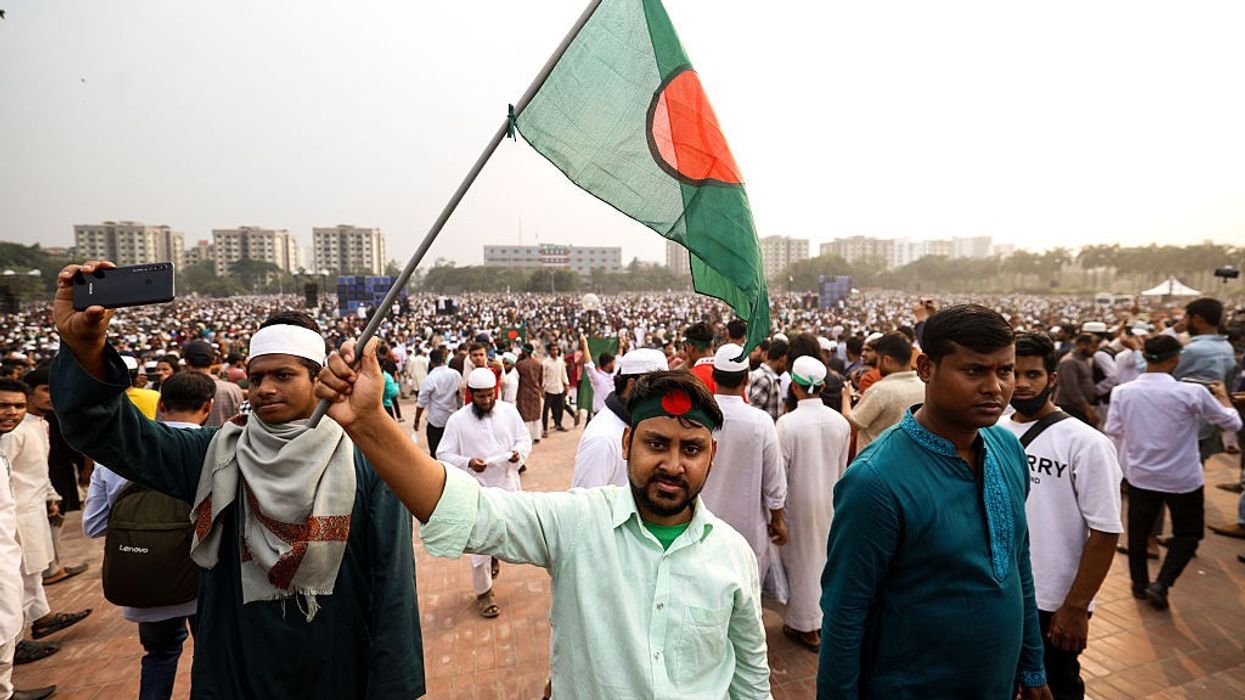
Musaddiq’s remarks come at a particularly volatile moment in bilateral relations. Ties between New Delhi and Dhaka have deteriorated following the killing of radical leader Sharif Osman Hadi, prolonged street unrest, and a rise in attacks on Hindu minorities in Bangladesh. India has also expressed concern over what it views as the interim government’s failure to curb Islamist mobilization, mob violence, and inflammatory anti-India rhetoric.
In India, Musaddiq’s statements were met with a mix of outrage and sarcasm. Economists pointed out that India is the world’s fifth-largest economy, while Bangladesh’s own economic growth is closely tied to Indian markets, power supplies, transit corridors, and regional connectivity. India is among Bangladesh’s largest trading partners and a major destination for its exports, in addition to being a key provider of electricity and infrastructure access.
Analysts emphasized that far from financing India, Bangladesh benefits substantially from economic cooperation with New Delhi. Trade access, energy sharing, and transit agreements remain central to Bangladesh’s economic stability, they noted.
Social media users were quick to mock Musaddiq’s claims. “He must have studied from WhatsApp University,” one user wrote, while another commented, “Two of our biggest entertainers, Pakistan and Bangladesh. They know the nuance of cracking dry humours.” Others questioned the credibility of the remarks amid Bangladesh’s ongoing protests and political uncertainty.
“How are they even surviving with all these endless protests?” one post read. Another added, “They live in a different world.”
Policy observers warn that the episode reflects a broader trend of irresponsible political grandstanding in Bangladesh’s current environment. With the interim administration struggling to consolidate authority, fringe voices are increasingly shaping public discourse through exaggerated claims and conspiracy theories about India.
While such rhetoric may resonate with certain domestic audiences, analysts caution that it risks deepening diplomatic isolation for Bangladesh and further destabilizing relations with its largest and most consequential regional neighbor.