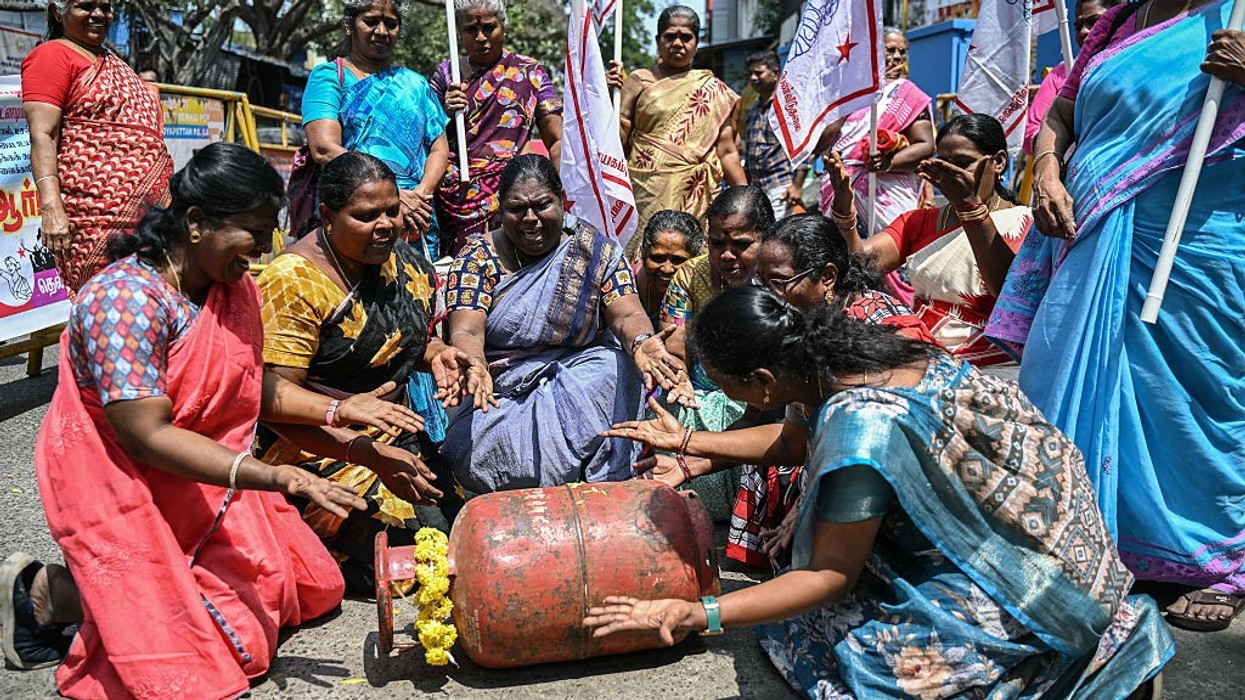

India has tightened controls on natural gas and cooking gas supplies after disruptions caused by the war in the Middle East, with restaurants and hotels warning that shortages could lead to closures.
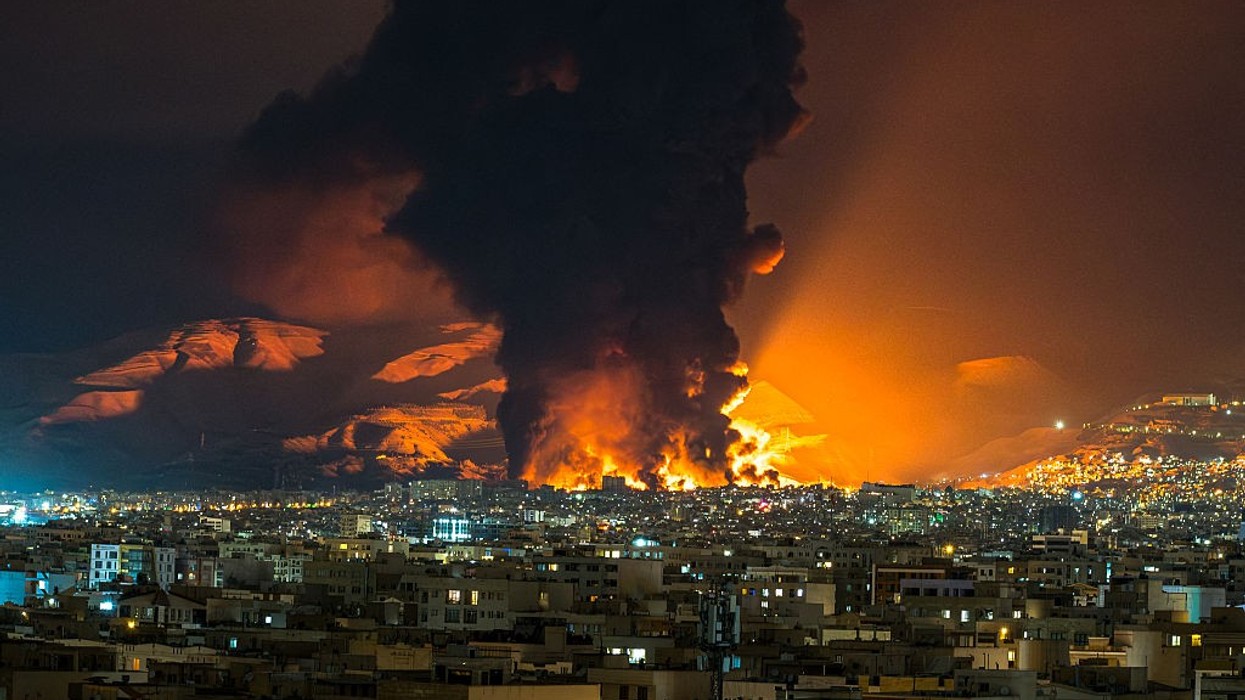
The government issued new orders to prioritize gas supplies after the conflict between the United States, Israel, and Iran disrupted shipments through the Strait of Hormuz, a key route for energy exports from the Gulf.
India is the world’s fourth-largest buyer of liquefied natural gas (LNG) and the second-largest importer of liquefied petroleum gas (LPG), which is widely used for cooking. Much of these supplies come from the Middle East.
“The ongoing conflict in the Middle East has resulted in the disruption of liquefied natural gas shipments through the Strait of Hormuz,” the Ministry of Petroleum said in an order issued on March 10.
The ministry said the new rules were intended to “ensure equitable distribution and continued availability for priority sectors.”
Under the new policy, LNG supplies will be prioritized for households, transport, and LPG production. Petroleum Minister Hardeep Singh Puri said the government was working to protect consumers.
“We are committed to ensuring an uninterrupted supply of affordable energy to our domestic consumers,” he said in a social media post, adding there was “no reason to panic”.
Other industries, including fertilizer plants and tea producers, will receive between 70 percent and 80 percent of their usual gas supply, depending on availability. In contrast, supplies to petrochemical facilities and power plants may be curtailed.
India meets about half of its daily gas consumption of 191 million standard cubic meters per day through imports. Around 60 million standard cubic meters of gas per day from the Middle East has been disrupted due to stalled tanker movements through the Strait of Hormuz.
The government has reprioritized the remaining LNG to meet 100 percent of demand for LPG production, compressed natural gas used in transport and piped cooking gas supplies. Commercial users will receive about 80 per cent of their requirements, while fertilizer plants will receive about 70 per cent.
The war has also halted ship traffic in parts of the Gulf, affecting exports from major producers including Qatar and Saudi Arabia. India’s largest LNG supplier, Qatar, halted production last week after Iranian strikes on Gulf countries in retaliation for US and Israeli attacks.
The supply disruption has already begun affecting several industries. Ceramics and tile manufacturers have reported reduced gas supplies that could affect production in the coming weeks.
Restaurants and hotels across India warned that cooking gas shortages could disrupt operations. The National Restaurant Association of India said suppliers across the country had indicated that LPG deliveries to eateries could be stopped.
“The restaurant industry is predominantly dependent on commercial LPG for its operations,” the association said. “Any disruption therein will lead to a catastrophic closure of majority of restaurants.”
In Bengaluru, PC Rao, head of a hotel industry association, said smaller establishments had only one to two days of gas stock left, while larger outlets had supplies for about 10 days.
“We have LPG stock for two days. We are working on contingencies,” said Bert Mueller, founder of the California Burrito chain. “We are conserving gas and installing induction stoves at certain stores.”
Industry representatives said many restaurants do not store large quantities of LPG due to safety concerns and depend on frequent deliveries, making them vulnerable to supply disruptions.
Prime Minister Narendra Modi has reviewed the energy situation with senior ministers including External Affairs Minister S Jaishankar, Petroleum Minister Hardeep Singh Puri, Finance Minister Nirmala Sitharaman and Commerce Minister Piyush Goyal.
Tthe prime minister has asked ministers to coordinate efforts to ensure Indian consumers do not face shortages or higher prices of petroleum products.
India has also diversified its energy procurement in recent years, sourcing fuel from countries including the United States, Russia, Venezuela, Australia and other Oceanic nations.