
Highlights:
- India disputes US Commerce Secretary Howard Lutnick’s account of trade talks
- Trump imposed 50 per cent tariffs on Indian goods after negotiations stalled
- Agriculture and energy remain major sticking points in the deal
- India says Modi and Trump spoke eight times last year
- Despite tariffs, Indian exports to the US rose sharply
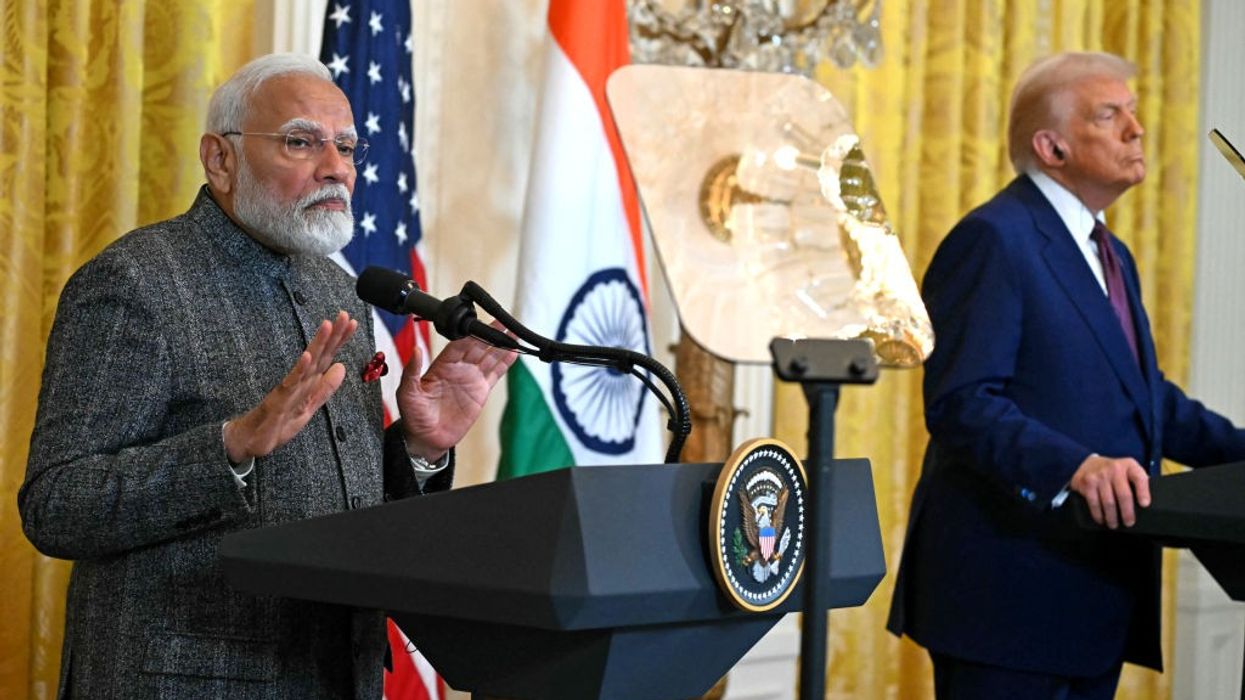
India has firmly pushed back against comments by US Commerce Secretary Howard Lutnick, who claimed that a stalled phone call between prime minister Narendra Modi and President Donald Trump led to the collapse of a nearly finalized trade agreement between the two countries.
Lutnick made the remarks on a podcast, suggesting that negotiations fell apart because Modi did not personally call Trump to close the deal. According to him, the agreement was essentially ready, but India hesitated to arrange the call, causing the opportunity to slip away. He likened Trump’s deal-making approach to a “staircase,” where early movers get the best terms, adding that India missed its window as the US moved on to agreements with other countries such as Indonesia and Vietnam.
India strongly rejected this characterization. On Friday (9), Indian foreign ministry spokesperson Randhir Jaiswal said Lutnick’s description of the discussions was “not accurate.” He emphasized that India and the US have been committed to negotiating a bilateral trade agreement since February last year and have held multiple rounds of talks aimed at reaching a balanced and mutually beneficial deal.
Jaiswal also noted that Modi and Trump spoke on the phone eight times last year, covering a wide range of issues related to the bilateral relationship. This directly contradicts claims that a lack of communication at the leadership level caused the negotiations to fail.
Trade talks stalled earlier this year, and in August, Trump imposed steep 50% tariffs on Indian goods, including additional penalties tied to India’s purchase of Russian oil. These tariffs further strained ties between the two countries, even as negotiators quietly resumed discussions. Several informal deadlines for an agreement have passed, and there is still no clear timeline for when a deal might be finalized.
Key sticking points remain unresolved, particularly agriculture. Washington has been pushing for greater access to India’s heavily protected farm sector, while New Delhi has consistently resisted, citing the livelihoods of millions of farmers. Energy has also emerged as a flashpoint, with Trump warning of further tariffs if India does not stop buying oil from Russia.
India significantly increased its imports of discounted Russian oil following the war in Ukraine, arguing that it must prioritize affordable energy for its large population. However, reports suggest Indian refiners have begun cutting back on Russian purchases since the tariffs were imposed.
Despite the tensions, US officials have previously acknowledged progress. In December, US Trade Representative Jamieson Greer told lawmakers that Washington had received what he described as India’s “best ever offer,” while also calling India a difficult negotiating partner.
The broader relationship has also been affected by political disagreements. India has repeatedly denied Trump’s claims that he helped broker a ceasefire between India and Pakistan earlier this year and has reaffirmed its long-standing position against third-party mediation on Kashmir.
Still, economic ties remain resilient. Even after the tariffs took effect, Indian exports to the US jumped more than 22% in November compared with the previous year, underscoring the deep interdependence between the two economies despite growing diplomatic strain.