
The Union government told Parliament on Thursday (11) that global air quality guidelines, including those issued by World Health Organization (WHO), are not binding on India and function only as reference values. Responding to a question in the Rajya Sabha from CPI(M) MP V. Sivadasan, Union Environment Minister Kirti Vardhan Singh emphasized that while WHO’s Air Quality Guidelines offer recommended benchmarks, they are not mandatory for any country.
Singh explained that the WHO values serve as a “guidance document” meant to help nations set targets for improving air quality. However, he noted that each country must develop its own standards by considering a wide range of factors such as geography, environmental conditions, background pollution levels, socio-economic realities, and national circumstances.
Global pollution rankings not official, says centre
Addressing concerns about India frequently topping global pollution charts, the environment minister clarified that the “global ranking of cities on pollution levels is not being conducted by any official authority.” His statement refers to international air quality assessments by private organizations, which often portray Indian cities as among the most polluted in the world.
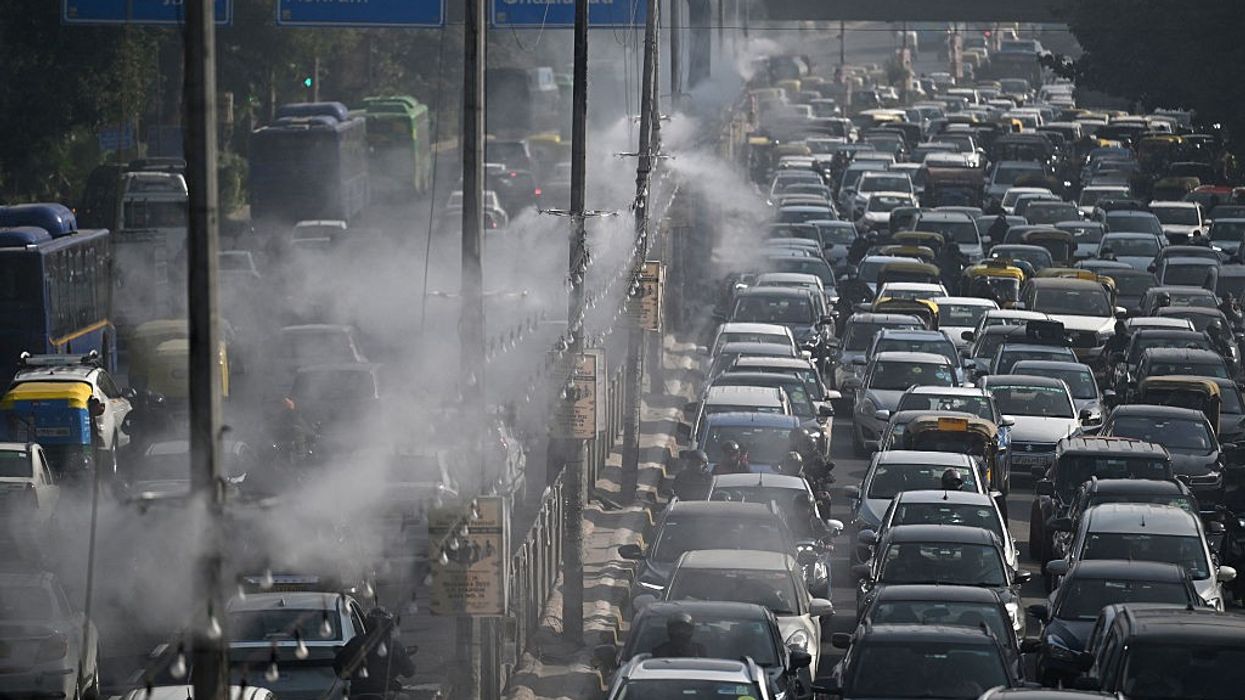
In the 2024 World Air Quality Report by IQAir, a Swiss-based air quality technology company, 13 of the world’s 20 most polluted cities were located in India. Meghalaya’s Byrnihat ranked as the most polluted city globally, while Delhi was named the world’s most polluted capital.
India conducts its own annual air quality ranking
The minister highlighted that the government conducts its own annual evaluation under the Swachh Vayu Survekshan, which assesses and ranks 130 cities covered under the National Clean Air Programme (NCAP). This ranking focuses on actual improvements in air quality and policy implementation rather than absolute pollutant levels.
Singh also said that India has already notified its National Ambient Air Quality Standards (NAAQS) for 12 pollutants to protect public health and environmental quality. These standards are periodically reviewed to reflect India’s environmental and demographic conditions.
Why India sets its own breakpoints
Singh stated that while WHO suggests methodologies for determining health-based “breakpoints” for pollutants, it does not prescribe fixed breakpoints for any country. India determines these thresholds based on population immunity, climatic adaptability, historical exposure levels, and other local environmental factors.
No conclusive data linking deaths exclusively to air pollution
Earlier this week, the Union government said there is currently no conclusive national data that directly links deaths or specific diseases solely to air pollution. Minister of State for Health Prataprao Jadhav told Parliament that air pollution is a contributing factor to respiratory and related ailments, but isolating it as the exclusive cause remains scientifically challenging.
As air quality remains a pressing public concern, the government continues to maintain that India’s environmental policies must be tailored to its unique national conditions rather than based on one-size-fits-all global benchmarks.