THE local elections were bound to make this a febrile week for political leadership. Mayors and councillors across England will discover their fate at the hands of the voters on Friday (3). Prime minister Rishi Sunak’s team in Downing Street will wait anxiously to find out how his MPs at Westminster react to difficult results. What was more surprising, with no elections taking place there, was for a leadership crisis to break out in Scotland first.
Humza Yousaf’s resignation as first minister after 13 brief months was largely a self-inflicted blow. The Scottish National Party (SNP) leader failed to anticipate that the consequence of his ending the coalition with the Greens last week would be to end his own time in office too. Yousaf ran largely as an SNP continuity candidate in difficult times that he failed to transcend.
Yousaf took pride in his historic achievement of becoming first minister. “People who looked like me were not in positions of influence,” when he had been growing up, he noted in his brief and emotional resignation statement. Yousaf was the first Muslim leader of a national government in western Europe. Because he combines being a Muslim with liberal positions on public policy issues, Yousaf’s faith proved considerably less contentious during last year’s leadership contest than how the Presbyterian faith of his rival Kate Forbes informs her more socially conservative views.
Yousaf also had a personal family connection to the crisis in Gaza, with his in-laws evacuated a month after the conflict began. Many Scots, with a range of political views, were sympathetic to how he sought to navigate this, though he regularly faces prejudiced comments online – including being called the “first minister of Gaza” and an “infiltrator in Scottish politics” by right-wing commentator Douglas Murray. He spoke with pride on Monday (29) of having the opportunity to lead “the only country I will ever call home”.
His resignation now ends a brief period when the UK had ethnic minority leaders in London, Edinburgh and Cardiff at the same time, largely by coincidence. Yet it is not impossible that recent advances in British Asian political leadership could be swept away over the next fortnight.
That would take a big shock in London, where Labour’s Sadiq Khan is bidding to become the first mayor to secure a third term. He is a strong favourite, but the Labour campaign is taking nothing for granted. Last time, Khan led Conservative Shaun Bailey by 40 per cent to 35 per cent on the first round, despite his double-digit lead in opinion polls. A change in the voting system, abolishing second preferences, removes a buffer zone too. Those transfers were worth 100,000 votes last time around, about four per cent of the overall votes cast. So, Khan’s campaign is seeking to persuade Green and Liberal Democrat voters not to believe that he is sure to win again against his rival Susan Hall.
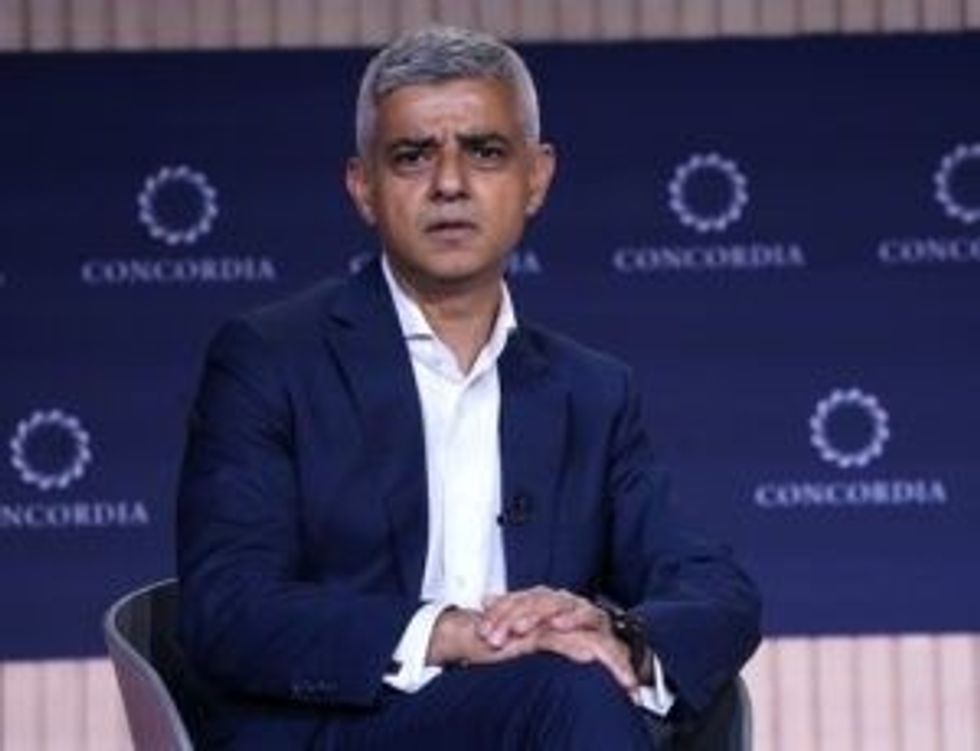 Sadiq Khan (Photo by John Lamparski/Getty Images for Concordia Summit)
Labour looks set to retain eight mayoral contests and win the Blackpool South by-election. Downing Street will be hoping the Conservative mayors in the West Midlands and Tees Valley will hold on, where Andy Street and Ben Houchen, respectively, are emphasising their independence from the national party. The West Midlands contest came down to fewer than four thousand votes out of the half-million cast in 2017.
There is much bluffing and counter-bluffing at Westminster about whether Sunak’s leadership will be under threat next week. It would take 52 letters from MPs to trigger a vote of confidence – but few MPs think that half of their colleagues would vote for a change of leader if such a ballot was called. That would take 173 votes from the 345 MPs. Some rebels wonder if Sunak might stand down if facing a vote, or if he won by a narrow margin. But the most likely outcome is that a confidence vote would damage Sunak without replacing him. To offer the British public a fourth prime minister in one parliament looks much too much like carelessness.
 Sunder Katwala
It has become possible – only recently – for ethnic diversity to become a new norm at the top of British politics. MPs, party members and voters now believe that minorities can represent everybody, rather than primarily being spokespeople for minority perspectives in public life. Yousaf’s downfall had as little to do with his ethnicity or faith as Liz Truss’s had to do with her gender. A good test of diverse leadership becoming normalised is that the parties, the media or the voters should not treat the performance in office of Yousaf, Sunak or Truss as any kind of guide to how well Anas Sarwar, Priti Patel or Penny Mordaunt would do if given the chance to lead. It is important that ethnic minority leadership is possible in our diverse democracy – but we should expect it to ebb and flow, depending how individuals cope with all of the pressures that leadership brings.
The author is the director, British Future