- Sunday, April 28, 2024

By: Shubham Ghosh
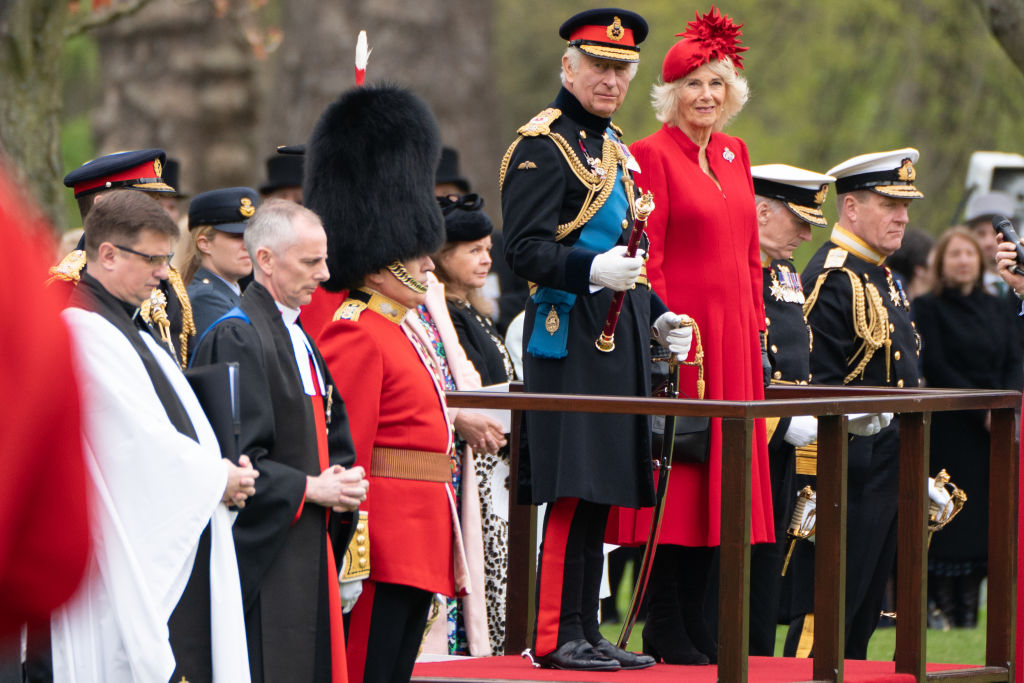
For Saurabh Phadke, the news of being invited to attend the coronation ceremony of King Charles III is still sinking in.
The architect and teacher from the western Indian city of Pune has been named among the selected charity champions invited to the mega event and he said he is approaching it with the spirit of the unknown.
The 38-year-old was chosen for his association and great success through the causes supported by the Prince’s Foundation, the charity founded by Charles when he was the Prince of Wales.
Originally trained as an architect, Phadke joined the foundation’s Traditional Building Skills programme and expanded his repertoire by training as a stonemason.
It was during the course that Phadke’s work stood out as he was based for four months at Dumfries House in Ayrshire, the Scottish headquarters of the Prince’s Foundation, and he and his fellow students built a new education pavilion on the estate.
“It’s still sinking in and I don’t know what to expect considering I’ve never been to a Coronation before. It’s with that spirit in mind that I’m approaching it,” said Phadke, when asked about his royal invitation to Westminster Abbey on Saturday (6).
Phadke also received an Albukhary Foundation Scholarship to do an MA at the Prince’s Foundation’s School of Traditional Arts, where he now works as a tutor.
Having led a nomadic existence in India, travelling from place to place teaching and also building schools, Phadke moved to the UK a few years ago when his wife Persis won a scholarship to do a geography PhD at King’s College in London.
“It was an opportunity for me to become a student again and become part of the [Prince’s Foundation] programme. I was really happy that I got the opportunity. Even though I’d done stonework in the past, I hadn’t trained as a stone mason,” he recalls.
Growing up in India, he lived and worked in communities around the country – helping design and construct buildings using local materials such as mud, stone and bamboo.
“It could be houses, toilets, schools, anything that a community needed. It could be in deprived communities, schools, farmers, or women’s collectives. I basically lived where I was working and moved from place to place. The circumstances would differ widely but in some cases, we would reach a place and start building, let’s say a toilet in open land where there was no toilet, and we would camp outdoors. It taught me a lot,” he shares.
Having originally trained as an architect, Phadke made the decision to change direction as he said he found it “disgusting” the way education was preparing students not for joy or satisfaction but as units meant to earn money.
He then worked as a teacher and was part of a group that started a school on the outskirts of Pune in a couple of years, constructing the classrooms from scratch. The young professional says the recent changes in his life had helped him realise how much he loved his work.
“Crafts and skills are opportunities to reflect. I might be building a toilet in India or working with a student on a project in the UK, but it’s still the same. We need to be able to respect everything in the same way – it can offer us the same joy and the same love,” he said.
The Prince’s Foundation was set up to provide holistic solutions to challenges facing the world and champion a sustainable approach to communities – a subject close to the heart of the 74-year-old monarch.
Gordon Neil, executive director of the Prince’s Foundation at Dumfries House, said, “We are so proud of Sourabh’s achievements, before he arrived to study with us at Dumfries House, all the way through our traditional craft skills programme, and while at the Prince’s Foundation’s School of Traditional Arts.
(With PTI inputs)