
Highlights:
- Trump claims India cut back Russian oil imports after US tariff pressure
- US already imposed a 50% tariff on Indian goods, partly tied to Russian crude
- Trump praises Modi but warns tariffs could be raised “very quickly”
- Senator Lindsey Graham pushes bill allowing tariffs up to 500 per cent
- Proposed law targets countries buying Russian energy during the Ukraine war
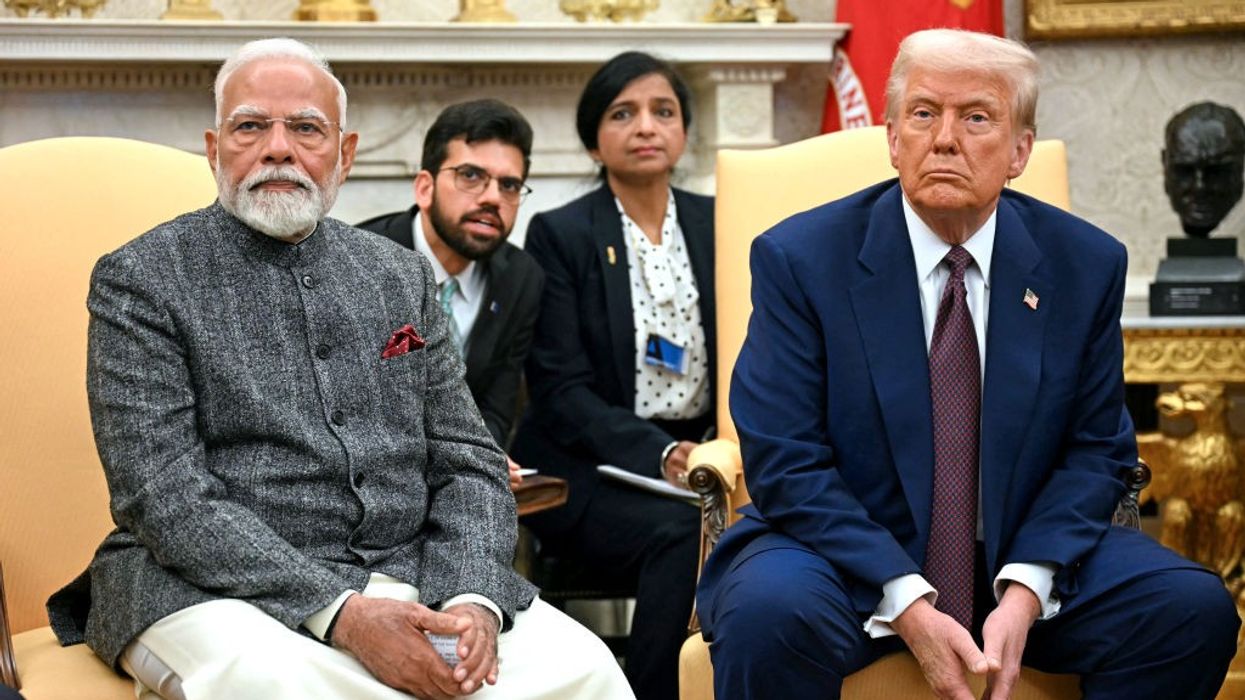
President Donald Trump has warned that India could face even higher tariffs if it continues buying Russian oil, while also claiming that New Delhi has already reduced its purchases to placate Washington. Speaking to reporters aboard Air Force One, Trump said Indian prime minister Narendra Modi understood his displeasure and acted accordingly to protect trade ties with the United States.
“Modi is a very good man, a good guy,” Trump said. “He knew I was not happy. It was important to make me happy. They do trade, and we can raise tariffs on them very quickly, and it would be very bad for them.”
Trump’s comments come months after the United States imposed sweeping tariffs on Indian goods. A 50% tariff on imports from India took effect on August 27, 2025, with 25% of that penalty explicitly linked to India’s continued purchase of discounted Russian crude oil following Moscow’s invasion of Ukraine.
According to Trump, tariff pressure has proven effective in influencing India’s energy decisions. He asserted that India has scaled back Russian oil imports in response to Washington’s warnings, framing the move as a direct result of US leverage over trade.
The remarks coincided with renewed efforts in Congress to expand economic pressure on Russia’s global energy customers. US Senator Lindsey Graham is pushing for approval of the Sanctioning Russia Act of 2025, legislation that would allow the US president to impose secondary tariffs on countries that continue buying Russian oil and gas if Moscow fails to agree to a ceasefire in Ukraine within 50 days.
Graham said trade penalties have already delivered results, not only with India but also in other diplomatic areas. “If you want to end this conflict, put pressure on Putin’s customers,” he said, arguing that buyers of cheap Russian energy are helping sustain Russia’s war effort.
Referring specifically to India, Graham said the threat of a 25 per cent tariff tied to Russian oil purchases had prompted urgent discussions in New Delhi. He recalled a recent conversation with Indian officials focused almost entirely on how to reduce Russian imports and secure tariff relief from Washington.
“This stuff works,” Graham said, adding that the proposed legislation would give the president extraordinary flexibility. Under the bill, tariffs could range from zero to as high as 500 per cent, entirely at the president’s discretion.
Graham and Senator Richard Blumenthal, who jointly introduced the bill, said the measure is designed as a “sledgehammer” to force difficult choices on countries that continue funding Russia’s war economy. The legislation currently has 85 co-sponsors in the US Senate.
In a joint statement, the senators argued that Trump’s strategy, combining tariff pressure with expanded US arms sales to NATO for Ukraine, has “changed the game” in efforts to bring the war to an end. They said empowering the president with sweeping tariff authority would significantly increase pressure on Moscow by targeting its remaining economic lifelines.