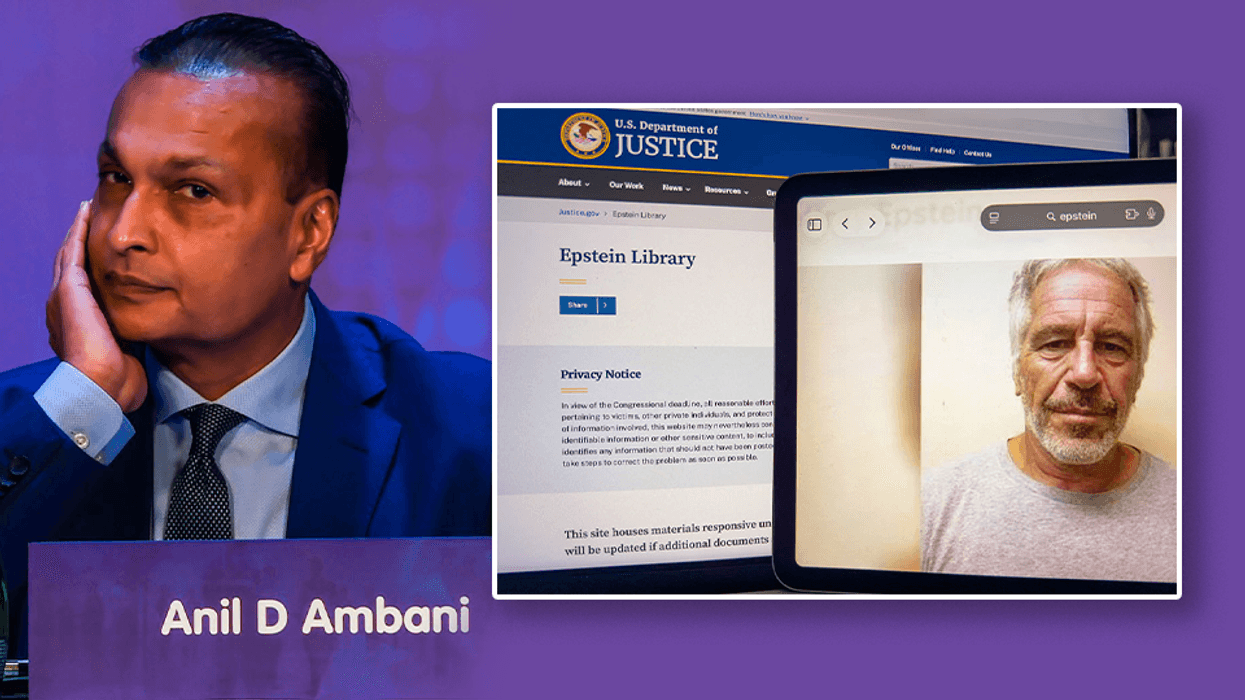

- Anil Ambani sought US political insight from Jeffrey Epstein
- Epstein presented himself as a backchannel to the Trump administration
- Messages suggest access to insider-like foreign policy information
- No evidence confirms Epstein had official White House connections
- Epstein files expose Ambani’s attempts to expand global influence
As the Epstein Files are getting public, gradually they are revealing darker secrets, one of which is in association with Indian businessman Anil Ambani, son of business tycoon Dhirubhai Ambani and brother of Mukesh Ambani.
The files reveal that Anil Ambani was eager to understand how India would fit into the United States’ evolving national security strategy in the early months of Trump administration in 2017. That search led him into an unlikely and deeply controversial connection with Jeffrey Epstein, a convicted sex offender who continued to operate within elite global circles.
According to a review of hundreds of messages exchanged between the two men over two years, Epstein presented himself to Ambani as someone with access to the inner workings of the White House.
“Will need ur guidance on dealing wth white house for india relationship ad defense cooperation,” Ambani wrote to Epstein soon after their online introduction, according to exchanges released this year by the Justice Department. Epstein promised to get Mr. Ambani some “inside baseball.
The tone of the messages showed a willingness to rely on Epstein as an informal adviser, despite his criminal past and controversial reputation.
“I’ll ask,” Mr. Epstein responded.
What makes the exchanges more troubling is that some of the information Epstein shared appeared to be accurate or, at the very least, prescient. In one instance, Ambani asked whether former CIA director David Petraeus would be appointed US ambassador to India. Epstein responded that Petraeus was not a leading candidate. Months later, the role went instead to Kenneth I. Juster.
In another exchange, Epstein suggested that John R. Bolton would replace H. R. McMaster as national security adviser. At the time, that prediction seemed uncertain. Yet it eventually came true, raising questions about whether Epstein had genuine sources or was simply making calculated guesses that later aligned with real events.
Epstein also offered to connect Ambani with figures close to president Donald Trump, including Stephen K. Bannon and Thomas J. Barrack Jr. He even suggested arranging meetings, positioning himself as a broker capable of opening doors at the highest levels of power.
In return, Ambani presented himself as politically connected and a conduit to Indian prime minister Narendra Modi’s government. He once wrote that “leadership” had asked for Epstein’s help in arranging meetings for him with Jared Kushner, Trump’s son-in-law, and Mr. Bannon.
The Epstein files also reveal more ambiguous and uncomfortable elements within their conversations. Scattered references to coded language, including mentions of “dessert” and “fun,” appear throughout the exchanges. While the exact meaning remains unclear, the tone adds to the unease surrounding Epstein’s continued interactions with powerful individuals even after his conviction.
Their communication extended beyond standard messaging platforms. The two men also spoke over the phone and used encrypted apps such as Signal and Telegram. Ambani reportedly used the handle “Armani A” in these interactions, suggesting an effort to maintain privacy in their exchanges.
The relationship unfolded during a period when Ambani’s global standing was under pressure. Once worth an estimated $45 billion, his fortune had declined sharply by 2019. At the same time, his brother, Mukesh Ambani, saw his wealth grow dramatically, creating a stark contrast between the two siblings.
Against this backdrop, Ambani’s engagement with Epstein appears to reflect a desire to rebuild influence and strengthen his international profile. Discussions in their messages touched on think tanks, political access, and global positioning. Epstein even offered introductions to major policy institutions and influential figures, further reinforcing his self-image as a gatekeeper to elite networks.
Financial strain also became part of the conversation. As Ambani faced mounting business challenges, including debt-related issues, Epstein offered advice and encouragement. He suggested financial strategies and repeatedly framed his involvement as that of a supportive friend rather than a paid consultant. However, one exchange hinted at a financial transaction, raising additional questions about the nature of their relationship.
Despite the tone of authority in Epstein’s messages, there is no concrete evidence that he held any formal role or genuine influence within the Trump administration. A White House representative has reiterated that Donald Trump denied any wrongdoing related to Epstein, distancing the administration from the financier’s claims.
Still, the revelations highlight how Epstein continued to insert himself into conversations involving global business leaders and political strategy long after his criminal conviction. His ability to maintain such connections underscores the blurred lines between perception and reality in elite networks.
For Ambani, the exchanges offer a rare and controversial glimpse into how one of India’s leading businessmen navigated international power structures during a critical moment. While there are no allegations of criminal wrongdoing against him, the association with Epstein and the reliance on his purported insights raise difficult questions about judgment, influence, and the lengths to which powerful individuals may go in pursuit of access.
The Epstein files do not provide all the answers. But they expose a relationship built on ambition, perception, and the promise of influence, one that continues to cast a long and uncomfortable shadow.