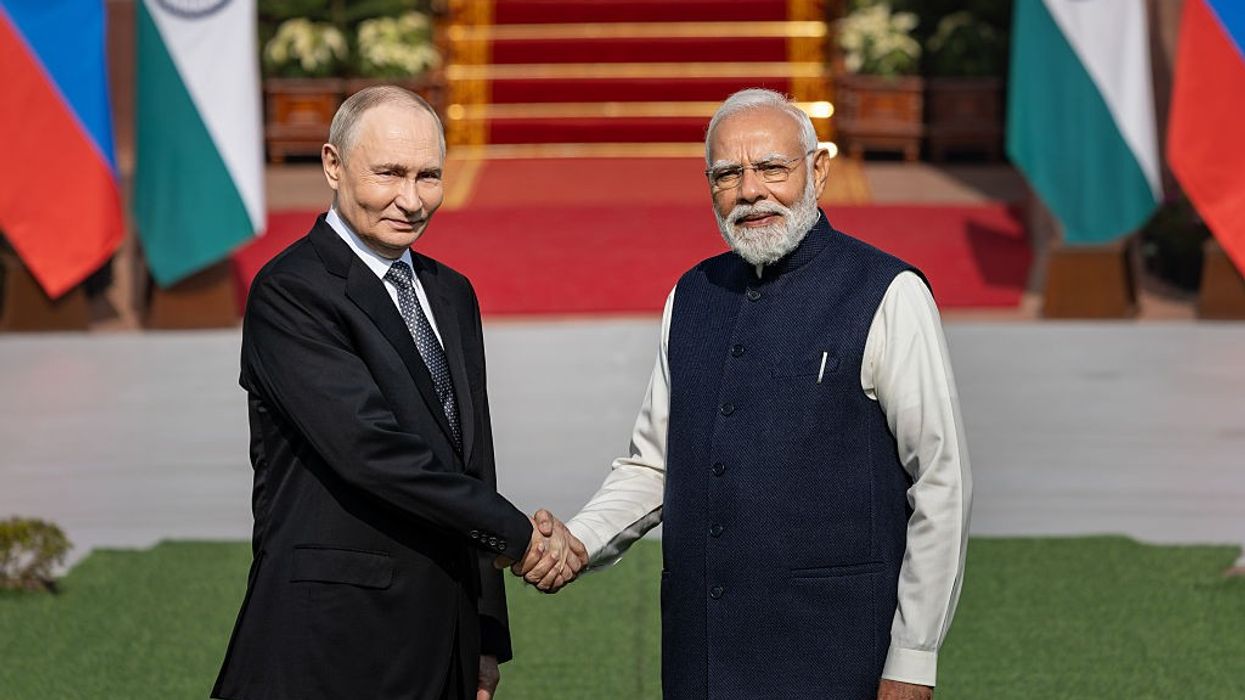
In a key diplomatic engagement in India, prime minister Narendra Modi told Russian president Vladimir Putin that India 'stands on the side of peace,' stressing the importance of restoring global stability amid the ongoing war in Ukraine.
The two leaders held wide-ranging talks at Hyderabad House, following Putin's ceremonial welcome and a warm personal reception by Modi at Palam Airport on Thursday (4)Modi and Putin were seen sharing a friendly handshake and an embrace before traveling together in the same vehicle to the Prime Minister’s residence at 7 Lok Kalyan Marg—a gesture symbolizing the longstanding and resilient nature of India–Russia ties.
India calls for peace in Ukraine
During their formal discussions, Modi emphasized India’s unwavering support for all initiatives aimed at bringing the Russia-Ukraine conflict to a peaceful resolution. He noted that India has consistently engaged with Russia since the start of the conflict and expressed gratitude for Putin’s regular updates on the situation.
Modi stressed that trust remains the cornerstone of the India–Russia partnership, remarking that the global community must “find the path of peace” and expressing confidence that the world will eventually move toward stability. “India is not neutral; India is on the side of peace,” he said.
Counterterrorism cooperation highlighted
Touching on the shared security concerns, Modi recalled past terror attacks, including incidents in Pahalgam and the deadly assault on Moscow’s Crocus City Hall. He stated that the root causes of such violence are similar across regions and reaffirmed that India and Russia have long stood united in combating terrorism.
He also noted that, despite the many global challenges over the past eight decades, the bilateral partnership has remained steady “like a pole star,” offering reliability amid uncertain times.
Economic roadmap and trade priorities through 2030
The two countries reviewed and advanced the India–Russia Economic Cooperation Program, extending to 2030. Modi emphasized that boosting bilateral economic ties remains a joint priority, with discussions progressing toward the early finalization of a Free Trade Agreement with the Eurasian Economic Union.
Several agreements were signed to expand collaboration in health, mobility, and cultural exchanges. Modi also highlighted cooperation on critical minerals, underscoring their importance in creating diversified, resilient global supply chains.
Putin echoed this sentiment, reaffirming that both nations will prioritize cooperation in security, trade, economy, and cultural engagement.
Connectivity and energy partnerships strengthened
Connectivity emerged as a major area of focus. Modi announced renewed momentum for the International North–South Transport Corridor, the Northern Sea Route, and the Chennai–Vladivostok Maritime Corridor, all aimed at improving long-term logistics and trade routes.
Energy security, a core pillar of the relationship, was also reiterated. Modi noted the decades-long partnership in civilian nuclear energy and affirmed continued collaboration to support clean energy goals.
A significant development came through a joint statement declaring that the India–Russia defense partnership will be realigned to support India’s pursuit of self-reliance. This includes joint research, development, and production of advanced defense technologies.
Additionally, PTI and Russia’s TASS news agency signed a cooperation agreement to facilitate regular exchange of news content, marking another step toward deepening institutional ties.