POLICE in Peshawar in Pakistan have identified as many as 4,000 people and started scrutinising the mobile data of each of them to trace the culprits who shot dead a reputed Sikh ‘hakeem’ (Unani medicine practitioner) in the city in September.
The 45-year-old Sardar Satnam Singh (Khalsa) was at his clinic on September 30 when the assassins berged into his cabin and shot him, killing him instantly.
The issue rocked Pakistani politics and the country’s senate sought a report from the police of Khyber-Pakhtunkhwa province (of which Peshawar is the capital) on the murder even as social media was abuzz with reports that Islamic State-Khorasan (IS-K) claimed responsibility for his murder because of his polytheistic views. IS-K is the Islamic State terror group’s Afghanistan affiliate.
Four special investigation teams comprising 15 officials were working on the case. They were sharing intelligence, collective mobile data and probing suspects. The fourth team has been asked to arrest suspects from Peshawar and other adjacent areas, authorities said. Based on initial probe, the police have ruled out the possibility of targeted killing and are investigating the case from different angles. They have also quizzed a person who works at Singh’s clinic and also collected data featuring names of his patients.
Singh was a well-known figure in the Sikh community and was running his clinic ‘Dharmandar Pharmacy' on Charsadda Road in Peshawar. He had been living in the city for the past 20 years.
About 15,000 Sikhs live in Peshawar, mostly in the Jogan Shah neighbourhood. While most of the Sikh community members in Peshawar are involved in business, some also run pharmacies.












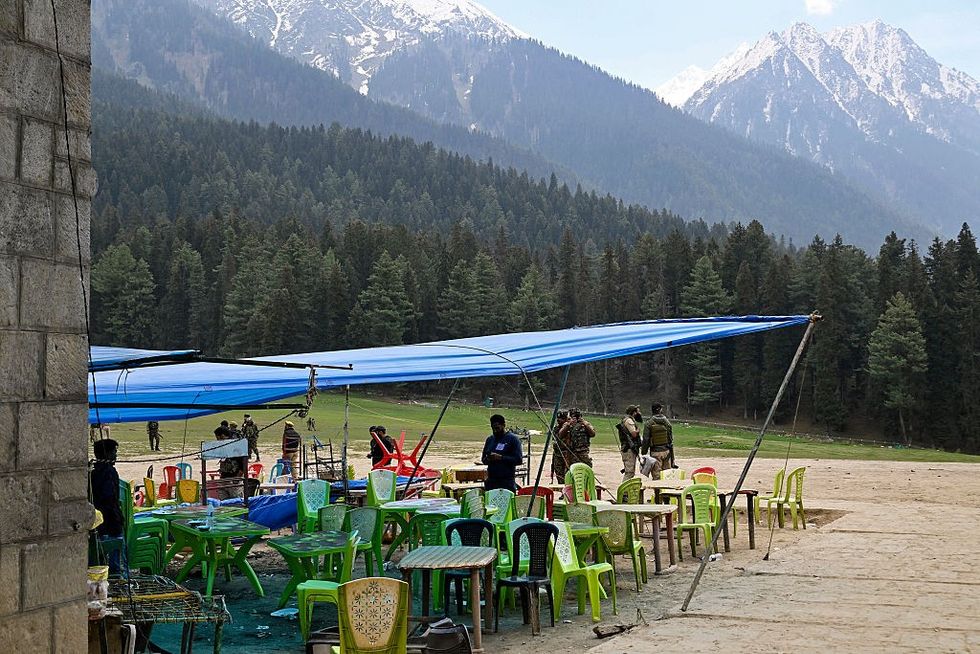 Security personnel inspect the site in the aftermath of an attack as food stall chairs lie empty in Pahalgam, about 90 kilometres (55 miles) from Srinagar on April 23, 2025. Indian security forces in Kashmir carried out a major manhunt on April 23, a day after gunmen opened fire on tourists killing 26 people in the region's deadliest attack on civilians since 2000. Getty Images
 Tourists visit Betaab Valley in Pahalgam, about 112 km south of Srinagar on June 26, 2025.Getty Images
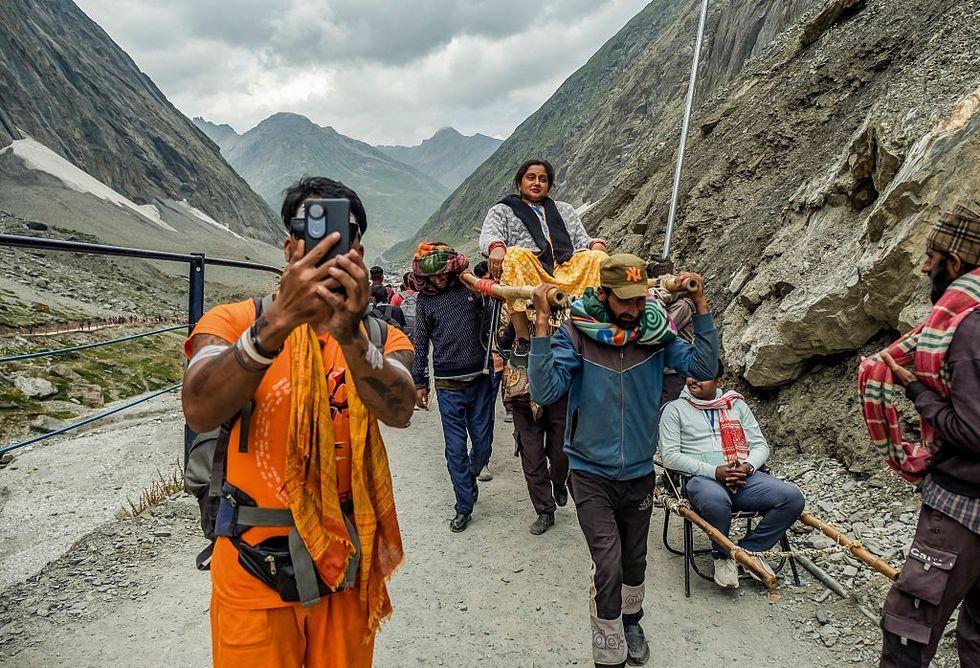 Pilgrims gather at the Baltal Base Camp near Domel, en route to the sacred Amarnath cave in Srinagar, Jammu and Kashmir, India, on July 29, 2025. The annual Amarnath Yatra, which began on July 3, proceeds under heightened security following a deadly terror attack in Pahalgam that claimed the lives of 25 tourists and a local pony handler. Security forces have been deployed in large numbers across the pilgrimage route, with checkpoints, surveillance, and restrictions in place to safeguard the thousands of devotees undertaking the arduous journey. The Amarnath Yatra is one of the most important Hindu pilgrimages, drawing worshippers from across India to the high-altitude Himalayan shrine dedicated to Lord Shiva. Despite the threat of violence and challenging terrain, pilgrims continue their spiritual trek, determined to complete the sacred journey under the shadow of grief and resilience.Getty Images