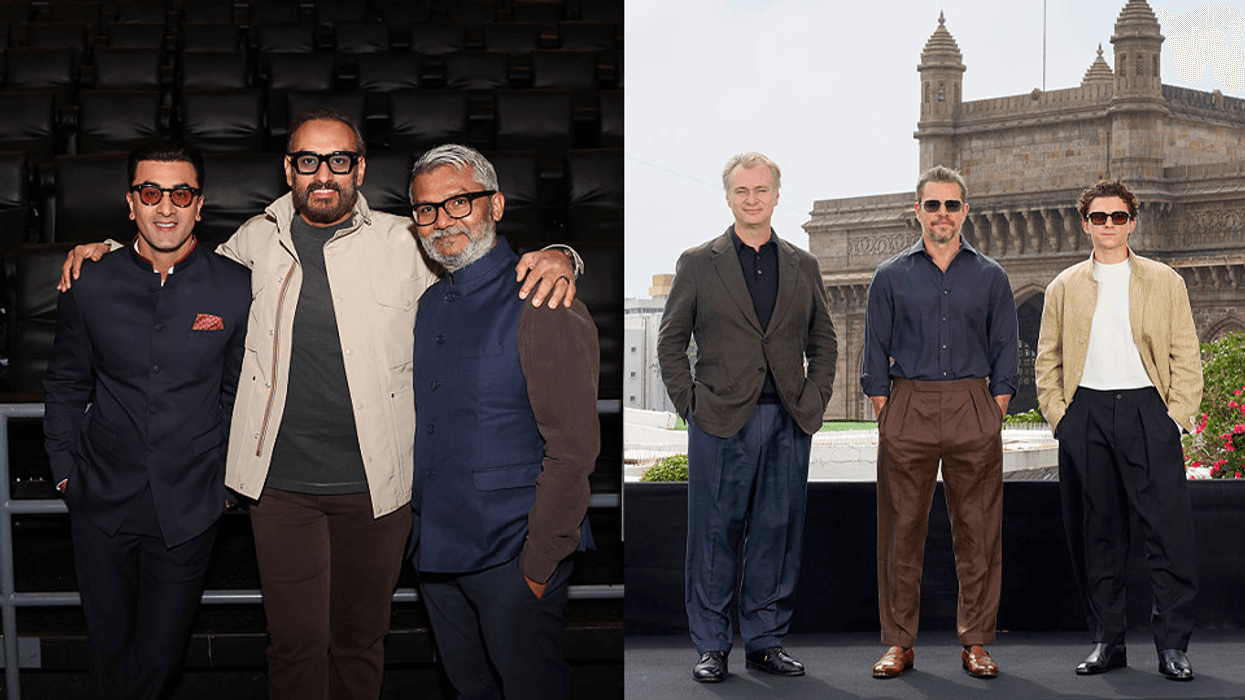

When audiences think about the biggest upcoming cinematic spectacles, three titles stand out for their ambition and scale, Nitesh Tiwari’s Ramayana, Dune: Part Three, and The Odyssey. While these films come from completely different cultural backgrounds, they share a common goal: bringing legendary stories, unforgettable characters, and massive worlds to life on the big screen.
Starring Ranbir Kapoor as Lord Ram, Ramayana is set to release in two parts, with the first installment arriving during Diwali 2026 and the second expected during Diwali 2027. Producer Namit Malhotra believes the film has the potential to connect with audiences beyond India, much like major Hollywood epics.
One major connection between Ramayana, Dune: Part Three, and The Odyssey is that all three are based on stories that have existed for generations.
The Odyssey, based on the ancient Greek epic traditionally attributed to Homer, follows the legendary journey of Odysseus as he attempts to return home after the Trojan War. Denis Villeneuve’s Dune franchise, adapted from Frank Herbert’s science-fiction novels, explores political power, prophecy, survival, and humanity’s relationship with a vast universe.
Similarly, Ramayana tells one of the world’s oldest stories, following the journey of Lord Ram, his battle against evil, and themes of duty, sacrifice, loyalty, and righteousness.
According to Namit Malhotra, the fact that many global audiences are unfamiliar with Ramayana creates an opportunity to introduce the epic in a new way.
He said, “What is interesting, and it was a perspective I actually heard from someone in America itself – it was like – ‘You are bringing us the first story of the world or the first story of the universe, but it's something we don't know much about. So, it's almost like you are telling us a timeless story, but it's actually… we are going to discover it for the first time.’”
Another similarity between these films is their focus on creating immersive worlds. Dune: Part Three has been praised for its enormous landscapes, futuristic environments, and cinematic scale. The Odyssey is expected to bring Greek mythology to audiences through a grand visual adaptation.
Ramayana is following a similar path by combining advanced filmmaking technology with Indian mythology. However, Malhotra believes the film’s biggest strength will not only be its visual scale but also its emotional connection.
He explained, “There's a lot of freshness and excitement towards it. Obviously, every Indian, their heart beats with this story. All of us, our parents, our grandparents, generations before us – have all learned the Ramayana, heard the Ramayana, experienced it in various different forms. It's very interesting to sort of bring something with that big screen spectacle, but with the heart that every Indian cares about to the world. That I think is very, very relevant.”
Although Ramayana, Dune: Part Three, and The Odyssey belong to different genres and traditions, they explore similar human experiences. Each story revolves around heroes facing impossible challenges, questions of leadership, moral choices, destiny, and the struggle between personal desires and greater responsibilities.
While Dune presents a futuristic universe and The Odyssey explores ancient Greek mythology, Ramayana brings Indian epic storytelling to a global cinematic stage.
With international audiences increasingly embracing diverse stories, these films represent a growing interest in mythology, fantasy, and legendary narratives from different cultures. Their success could shape the future of global cinema by proving that timeless stories, regardless of origin, can connect with audiences everywhere.