Highlights:
- India has neither accepted nor rejected Trump’s invitation to join the Board of Peace
- New Delhi is concerned about the board’s legitimacy, lifespan, and global mandate
- The initiative’s loose relationship with the UN raises red flags for India
- Trump’s personalized control over the board troubles Indian policymakers
- India fears diplomatic costs both from joining and from staying out
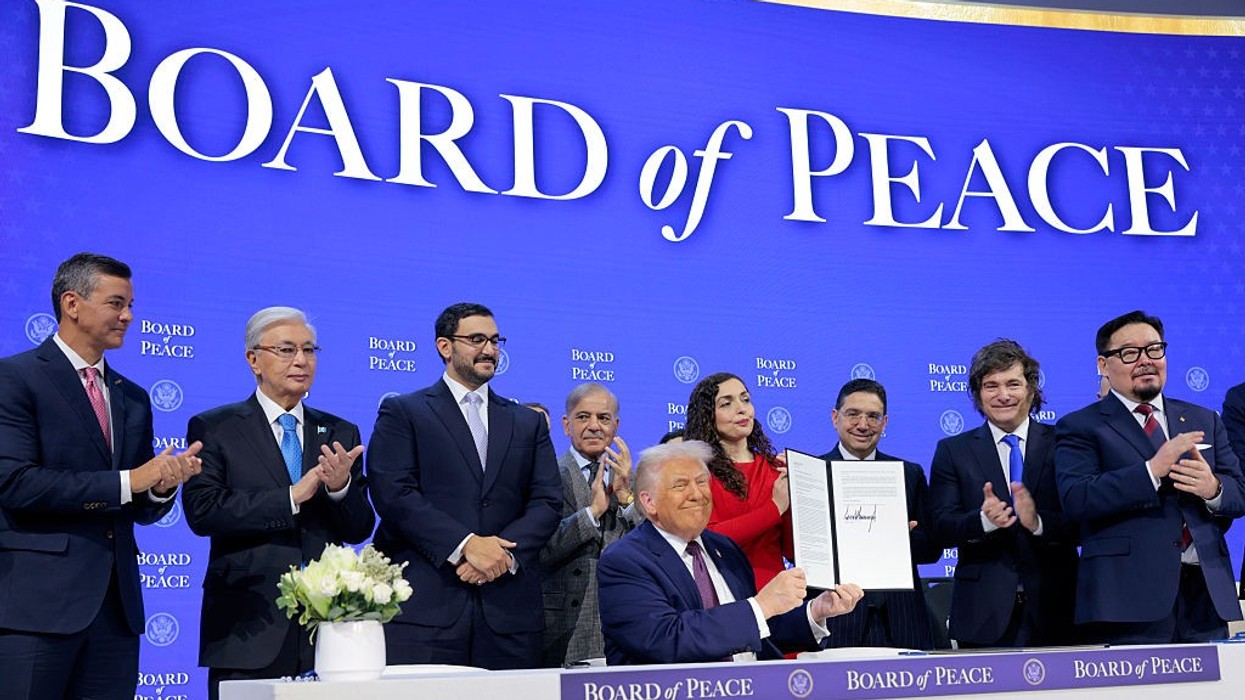
When US President Donald Trump unveiled his much-touted Board of Peace at Davos, several countries rushed to sign on. India did not. Instead, New Delhi chose a familiar diplomatic posture: pause, assess, and keep options open.
The invitation to Prime Minister Narendra Modi remains unanswered—not declined, not accepted. This calibrated ambiguity reflects India’s deep unease with both the structure and the intent of Trump’s new global peace mechanism.
What is the Board of Peace?
Originally presented as an international body to oversee Gaza’s post-war reconstruction, the Board of Peace has quickly evolved into something much larger. Its charter grants it authority over “areas affected or threatened by conflict” worldwide, effectively positioning it as an alternative conflict-resolution platform outside traditional UN control.
Although the board received a form of authorization through a UN Security Council resolution, it operates independently of UN governance, accountability mechanisms, and oversight. Trump serves as its life-long chairman, with sweeping powers to appoint members, shape agendas, and expand its mandate.
For India, this raises immediate concerns.
Why India is hesitant?
One of India’s first considerations is who has joined, and who has not. While several West Asian countries, such as Saudi Arabia, Israel, the UAE, Egypt, and Qatar, are members, most major European powers have stayed away. Crucially, none of the permanent members of the UN Security Council, China, Russia, France, or the UK, has joined.
From New Delhi’s perspective, this limits the board’s global credibility. An institution claiming worldwide relevance but lacking participation from major powers risks becoming politically fragile and diplomatically isolated.
The longevity problem
The Board of Peace is widely seen in Delhi as Trump’s personal project. Indian officials are openly questioning what happens when Trump leaves office. With no institutional safeguards or succession mechanisms, the board could quickly lose relevance or collapse entirely.
India is wary of investing diplomatic capital, financial resources, and political credibility in a body that may not outlast a single US presidency.
A challenge to multilateralism
India has long positioned itself as a defender of UN-centered multilateralism, even while pushing for reforms within the system. The Board of Peace, by design, challenges this framework.
Although it carries a veneer of UN approval, the board operates outside UN norms. Its structure concentrates power in a single individual rather than collective decision-making. For India, joining such a body risks signaling acceptance of a parallel global governance model, one that could weaken the very multilateral institutions India relies on to amplify its global voice.
Scope creep and strategic anxiety
Another concern is the board’s expanding mandate. While Gaza was the original focus, Trump has openly suggested the model could apply to other conflicts.
This alarms India. Trump has previously claimed credit for defusing tensions between India and Pakistan, claims New Delhi has firmly rejected. Any mechanism that could potentially insert itself into South Asian disputes is viewed with suspicion in Delhi, especially if it operates at the discretion of president Trump.
The financial and power imbalance
Permanent membership reportedly requires a $1 billion contribution, effectively introducing a “pay-to-influence” model. Even then, all decisions require the chairman’s approval, rendering member votes advisory at best.
For India, this undermines the principle of sovereign equality that underpins traditional multilateral institutions. It also raises uncomfortable questions about whether financial contribution, rather than consensus, defines authority.
Balancing the US relationship
Despite these concerns, India cannot simply walk away. The US remains a critical strategic partner, and declining Trump’s invitation outright could carry diplomatic consequences.
This explains India’s current approach: strategic patience. By waiting, India preserves flexibility, keeping Washington engaged while avoiding premature endorsement of a controversial institution.
India’s decision on the Board of Peace will hinge on how the institution evolves—whether it gains broader international legitimacy, clarifies its relationship with the UN, and restrains its global ambitions.
For now, New Delhi is choosing caution over commitment. In doing so, it is signaling a broader message: India will engage with new global initiatives, but not at the cost of multilateral principles, strategic autonomy, or long-term credibility.
In Trump’s Board of Peace, India sees not just an opportunity, but a precedent. And precedents, for a rising global power, matter.