
Highlights:
- SpaceX launched its largest Starship rocket yet from Texas.
- The mission was the 12th test flight of the mega-rocket.
- Nasa plans to use Starship for future Artemis moon missions.
- The rocket carried 20 mock Starlink satellites into space.
- SpaceX aims to eventually use Starship for missions to Mars.
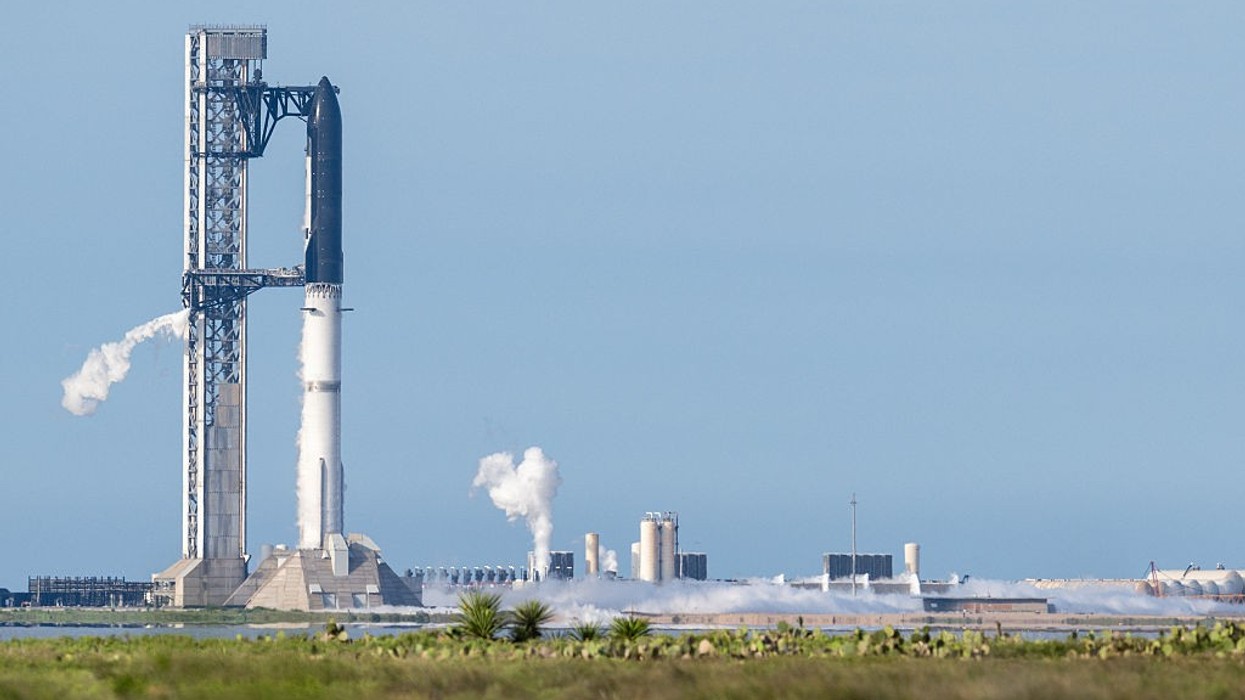
SpaceX launched its latest Starship rocket on Friday (22) during a major test flight from the southern tip of Texas. The spacecraft is the biggest and most powerful version of Starship ever built.
The upgraded rocket lifted off from Starbase near the Mexican border. The launch came two days after SpaceX CEO Elon Musk announced plans to take the company public.
The test flight carried 20 mock Starlink satellites. These satellites were expected to be released halfway around the world during the mission.
The launch marked the 12th test flight of Starship, the giant rocket system Musk is developing for future missions to Mars. Before Mars missions begin, however, the spacecraft is expected to support Nasa’s Artemis moon program.
The previous version of Starship last flew in October. The new version, called V3, is a redesigned and more powerful model. It launched from a brand-new launchpad at Starbase.
A launch attempt on Thursday (21) evening was canceled because of last-minute issues with the launchpad.
SpaceX hoped the latest mission would avoid the problems seen during earlier launches. Last year, two launches ended with explosions in midair that scattered debris over the Atlantic Ocean. Other test flights also ended in flames.
The newest Starship stands 407 feet tall, or 124 meters. It is several feet taller than earlier models and produces more engine thrust.
Starship is designed to be fully reusable. SpaceX plans to use giant mechanical arms at launchpads to catch returning rocket stages after launch. But during this test flight, no parts of the rocket were planned for recovery.
The redesigned first-stage booster was expected to fall into the Gulf of Mexico. The spacecraft itself, along with the mock satellite payloads, was expected to end its mission in the Indian Ocean.
Nasa is investing billions of dollars in lunar landing systems for its Artemis missions. The space agency is working with both SpaceX and Blue Origin, the company founded by Jeff Bezos.
The two companies are racing to become the first to provide a working lunar lander for astronauts.
Starship has already reached the edge of space during several earlier test flights. Most of those missions lasted about an hour or less.
Blue Origin’s Blue Moon spacecraft has not yet launched. However, the company is preparing a prototype mission planned for later this year.
Nasa recently completed a successful moon fly-around mission in April with four astronauts. The next step in the Artemis program will be a docking test in orbit around Earth, currently planned for next year.
During the Artemis III mission, astronauts will practice docking their Orion spacecraft with Starship, Blue Moon or possibly both systems.
Nasa hopes to land two astronauts on the moon during Artemis IV as early as 2028. Either Starship or Blue Moon could be used for the landing, depending on which spacecraft is safer and ready first.
The Artemis missions would mark Nasa’s first crewed moon landing since Apollo 17 in 1972. The long-term goal is to build a moon base near the lunar south pole with astronauts and robots working together.