RISHI SUNAK was not at last year’s Conservative Party conference.
Having lost the party leadership election, he kept a low profile in his Yorkshire constituency to not distract from then prime minister Liz Truss’s chance to set out her vision.
A chaotic week of u-turns trying to contain the implosion of her first budget showed how unlikely Truss was to restore stability. Sunak was catapulted from exile to power within the month.
Truss will not return Sunak’s favour this autumn. Britain’s shortest serving prime minister seems to believe that publicly marking each significant anniversary from the 49-day meltdown of her government will help to rebuild her shattered reputation. So, she sees Sunak’s first conference as leader as one more chance to show why Trussism can still win the argument.
Sunak’s loss to Truss last summer has shaped his premiership, well beyond having to wait a whole year for his first party conference as prime minister. The electoral crater facing the Conservative Party has become much deeper. And Sunak, being conscious that he lacked a public or party mandate, stuck for his first year with most of the people and policies he inherited, in the style of a caretaker prime minister.
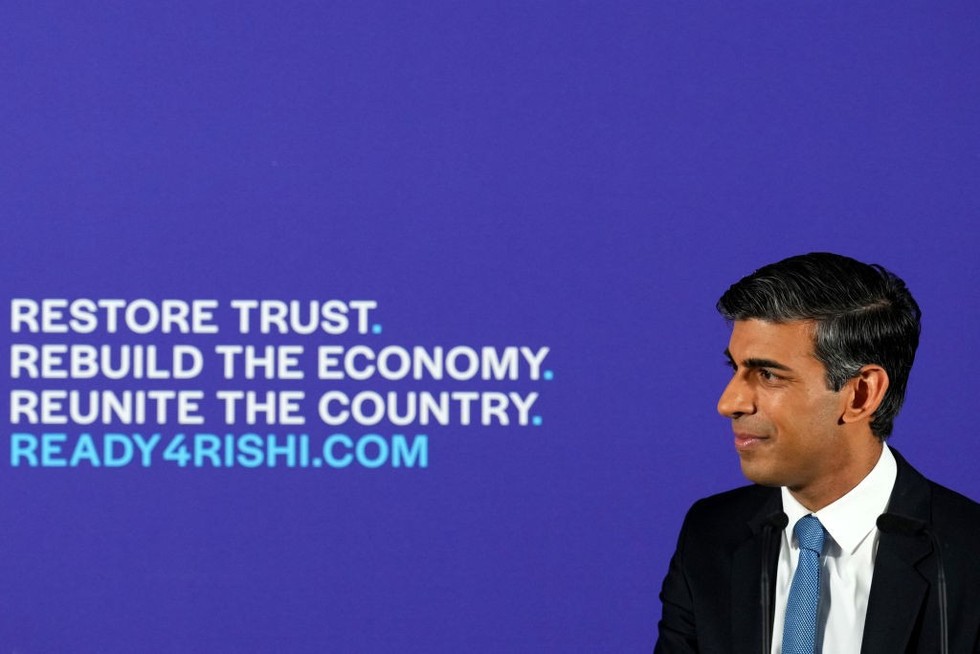
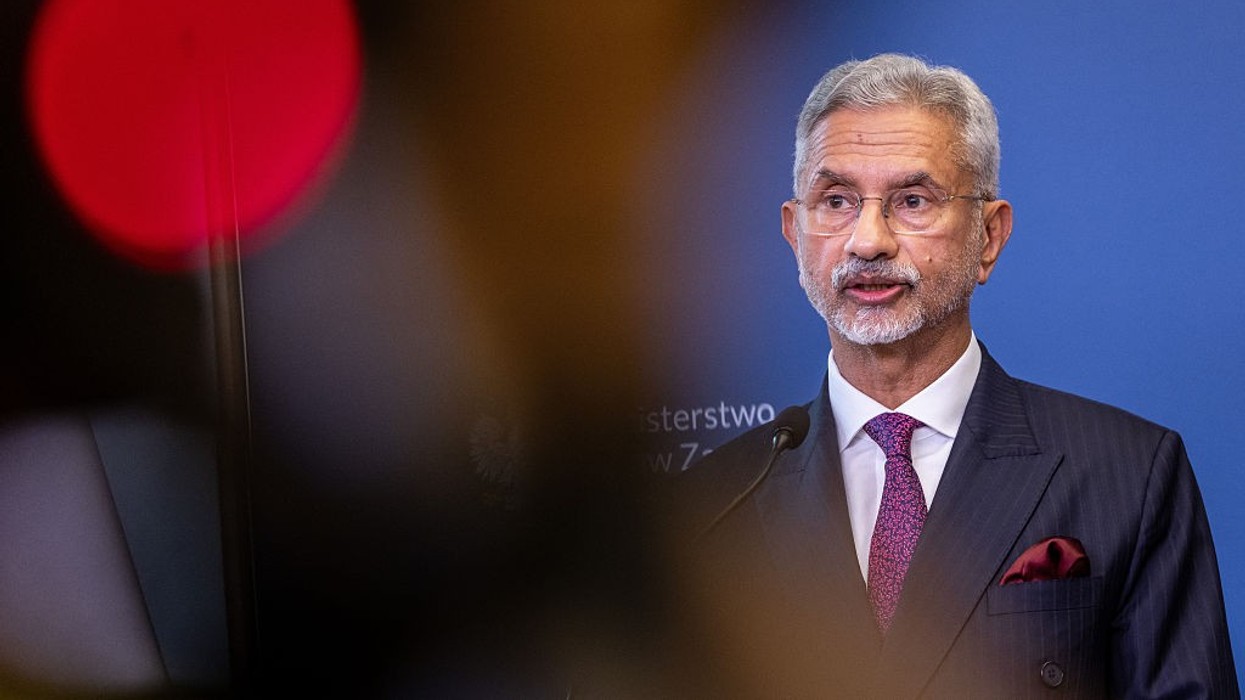
The plan is for Sunak’s second year to be different. Downing Street briefed that the Manchester conference will relaunch “the real Rishi Sunak”. The public overwhelmingly believe it is “time for a change” and the aim is to show that the prime minister can answer that challenge. But the prospects for a “president Rishi” campaign – emphasising the leader, not the party – were stronger last Autumn, when Sunak’s own public approval ratings soared well ahead of his battered party’s reputation. A year of governing has dragged the leader down towards the party.
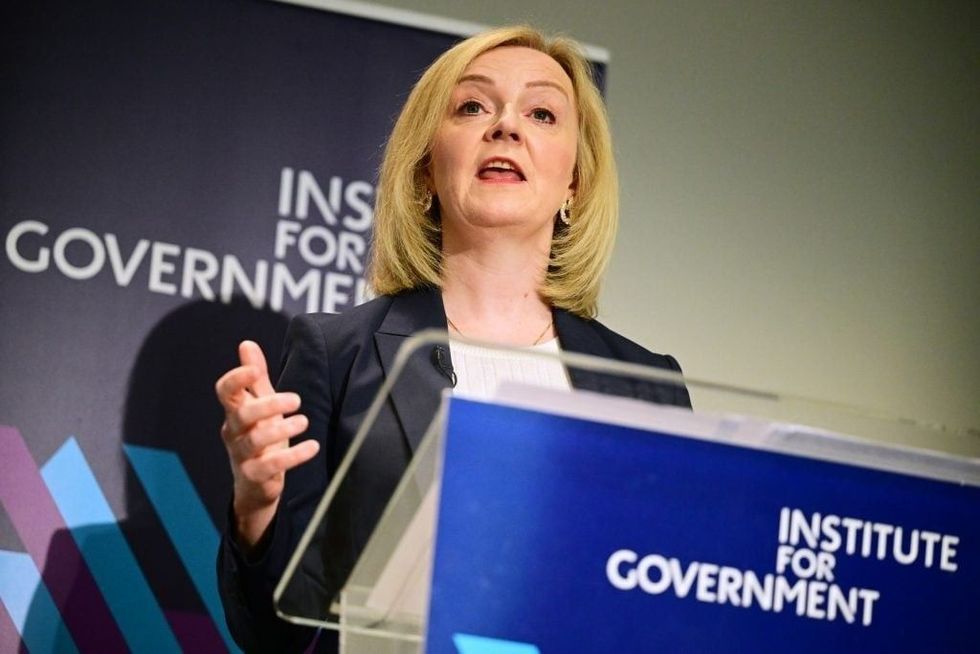 Truss sees Sunak’s first conference as leader as one more chance to show why Trussism can still win the argument, says Katwala (Photo by Leon Neal/Getty Images)
Why was Sunak considerably more popular than his party a year ago? He was thought significantly more competent than Truss or her predecessor, Boris Johnson.
Sunak had come to national attention as the Covid chancellor with political rivalries on hold, so appeared as much of a one-nation chancellor rather than as a party political one.
The Sunak policy that cut through was the furlough scheme, for which many people were personally grateful. It was a consensus policy, forged in partnership with employers and unions. It was the most powerful modern example of the state underpinning a social contract, guaranteeing security in an unprecedented crisis. It reflected a powerful fairness intuition that trumped just how expensive the policy was. If Sunak’s “whatever it takes” message about the proactive state cut through, the real Sunak, an instinctive state-sceptic, might have been surprised to find himself making it.
 Sunder Katwala
Once Sunak inherited the post-Truss chaos last Autumn, large slices of the electorate wanted to give him a chance despite scepticism about his party. They included Remain voting Conservatives who had reluctantly stuck with the party to keep Labour leader Jeremy Corbyn out and Liberal Democrat voters who had supported the 2010 (Nick) Clegg-(David) Cameron coalition government. A fair number of British Asian voters both welcomed both the symbolic message of Sunak’s accession to the top job and hoped it might herald a substantive shift to more competence and less political polarisation.
Yet, Sunak’s lack of any mandate made it harder to persuade his own party it might be more popular by becoming more like him. Instead, Sunak has boosted the morale of pro-Tory media commentators by signalling some moves towards the right, including on slowing down the pace of Net Zero.
Sunak receives much competing advice about how to try to win an election. Focusing on his five pledges will not be enough. Halving inflation would still see prices rising, more slowly, and the government is struggling on NHS waiting lists and stopping the boats. Fighting a culture war election would look desperate. Sunak is a moderate, modern social conservative, but will make for a highly unconvincing culture warrior.
So his choice is an Autumn policy blitz – but this could risk becoming too scattershot an affair.
The real Sunak would, given a full-term in office, focus on education reforms and more maths in schools. But his thoughts about an English Baccalaureate to replace A-levels will be relevant in the real world once Sunak can prove he won’t be leaving office next Autumn before this year’s new sixth formers are half-way through their A-levels.
Ditching the half-built HS2 rail network, giving Britain a multi-billion express train from Birmingham to Old Oak Common, near Wormwood Scrubs, looks more like short-term politics to finance a pre-election tax cut, rather than a big decision for the future.
Sunak pitching what he really thinks about this country’s future may be his best shot – but depends on the suspension of disbelief as to whether he can defeat expectations that have cast him as a stop-gap prime minister.