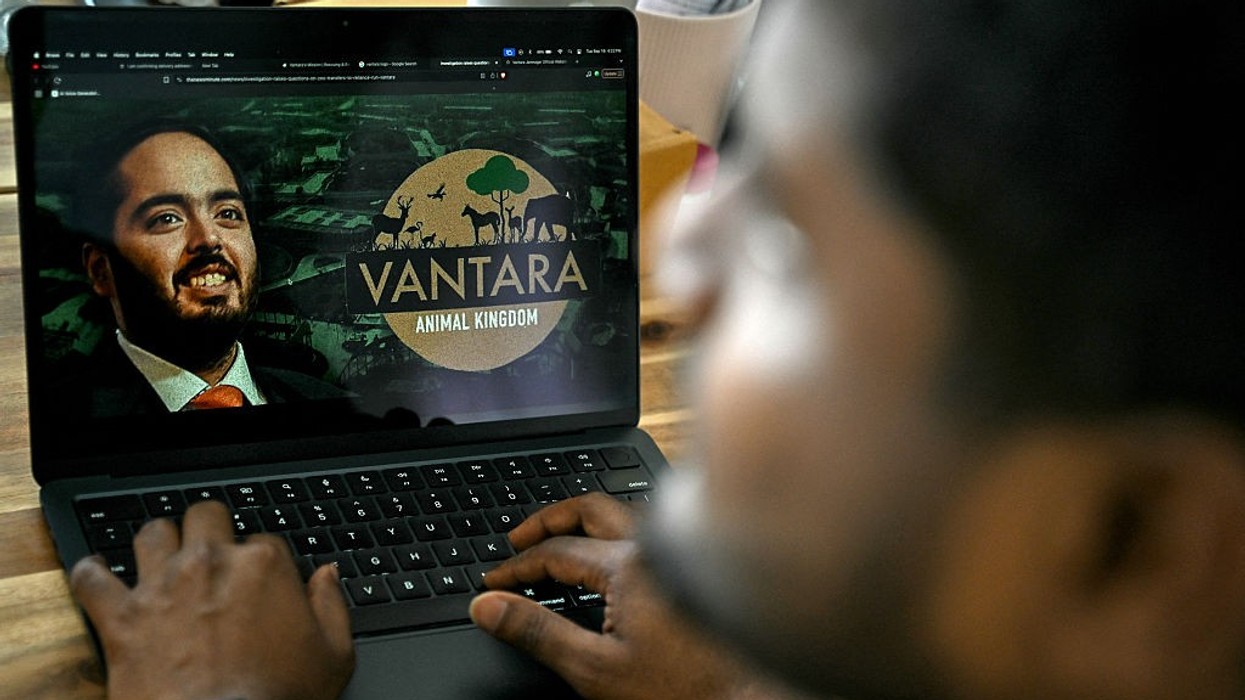

- Anant Ambani founded Vantara as a major animal rescue and conservation centre.
- The facility will pause live-animal imports for at least a year.
- Former CITES chief John Scanlon will oversee animal acquisition decisions.
- Vantara plans to support conservation programmes in countries where species naturally occur.
- The centre says success will be measured by wildlife recovery, not the number of animals it houses.
Anant Ambani, the youngest son of Indian billionaire Mukesh Ambani, is putting a new emphasis on conservation where animals naturally belong as his sprawling Vantara wildlife centre in Gujarat undergoes a major reset.
Vantara, which describes itself as the world’s largest animal rescue centre, has attracted global attention for the scale and speed of its animal acquisitions. Its 3,500-acre facility in Jamnagar houses hundreds of animals, including Asian elephants, tigers, lions, leopards, bears and crocodiles.
Now, after questions from wildlife experts and international conservation authorities about its imports of protected species, Vantara says it is changing direction.
The centre has appointed John Scanlon, who led the Convention on International Trade in Endangered Species of Wild Fauna and Flora (CITES) from 2010 to 2018, to chair a newly established governing council. The council will have authority over decisions involving animal acquisitions.
Scanlon said the organisation was voluntarily strengthening its oversight while moving towards supporting wildlife conservation in animals’ countries of origin.
“Vantara has sought, obtained, and acted upon external advice as it takes bold steps to reset its operations,” Scanlon said in a statement issued by Ambani's Reliance Industries.
From bringing animals to India to protecting them at home
The shift represents a significant change for a centre that has built its reputation around rescuing animals from difficult circumstances and bringing them to its massive Jamnagar facility.
Vantara says it will now place greater emphasis on in situ conservation — protecting animals in their natural habitats — rather than relying primarily on ex situ rescue, where wildlife is cared for outside its original environment.
“In making this reset, it has decided to voluntarily strengthen its internal due diligence governance, expertise and processes, and to pivot from ex situ rescue towards providing in situ support to countries, including in India.”
The move follows concerns over Vantara’s rapid acquisition of wildlife from around the world and questions surrounding the approval processes for importing protected animals.
The CITES Secretariat recommended reforms in 2025, warning that Vantara should ensure it does “not inadvertently become a driver of illegal harvest of wild animals”.
Vantara has since made a series of voluntary commitments, including withdrawing pending applications to import live animals.
A one-year pause on animal imports
The centre says it has imposed a minimum one-year moratorium on live-animal imports, lasting until June 2027, while it strengthens its governance, expertise and internal procedures.
That does not mean Vantara is stepping away from conservation. Instead, it says the goal is to use its financial resources, veterinary expertise and infrastructure to strengthen conservation programmes closer to where endangered species originate.
In India, Vantara plans to work with state forest departments, rescue centres, breeding programmes and zoos.
Internationally, its proposed projects include conservation support for Spix’s macaws in Brazil, as well as programmes in the Democratic Republic of Congo, Kenya and Rwanda. It also plans to support elephant care centres in Indonesia and Zimbabwe.
The strategy could give Vantara a broader role in global wildlife conservation without requiring the organisation to continually expand the number of animals housed in Jamnagar.
“Ultimately, we want to be judged not by how many animals come to Vantara”
Vantara was inaugurated by Prime Minister Narendra Modi in 2025 and has become one of the most ambitious private wildlife projects in India.
Its Jamnagar campus includes what Vantara calls the world’s largest dedicated elephant hospital and cares for more than 260 Asian elephants alongside numerous other species.
The centre has also offered to take in hippopotamuses descended from animals introduced into Colombia by drug lord Pablo Escobar, illustrating the international scale of its rescue ambitions.
But the latest strategy suggests that Vantara wants its next chapter to be defined less by how many animals it can accommodate and more by what happens to wildlife in the wild.
“This represents a new chapter for Vantara,” CEO Vivaan Karani said in a statement.
“Ultimately, we want to be judged not by how many animals come to Vantara, but by how many animals are helped where they belong, the species recovered in the wild, the people trained, the countries supported and the science and expertise we are able to share.”
For Ambani and Vantara, that could prove to be the most important shift yet: from building the world’s biggest animal rescue centre to becoming a global conservation partner that helps endangered wildlife survive without having to leave home.