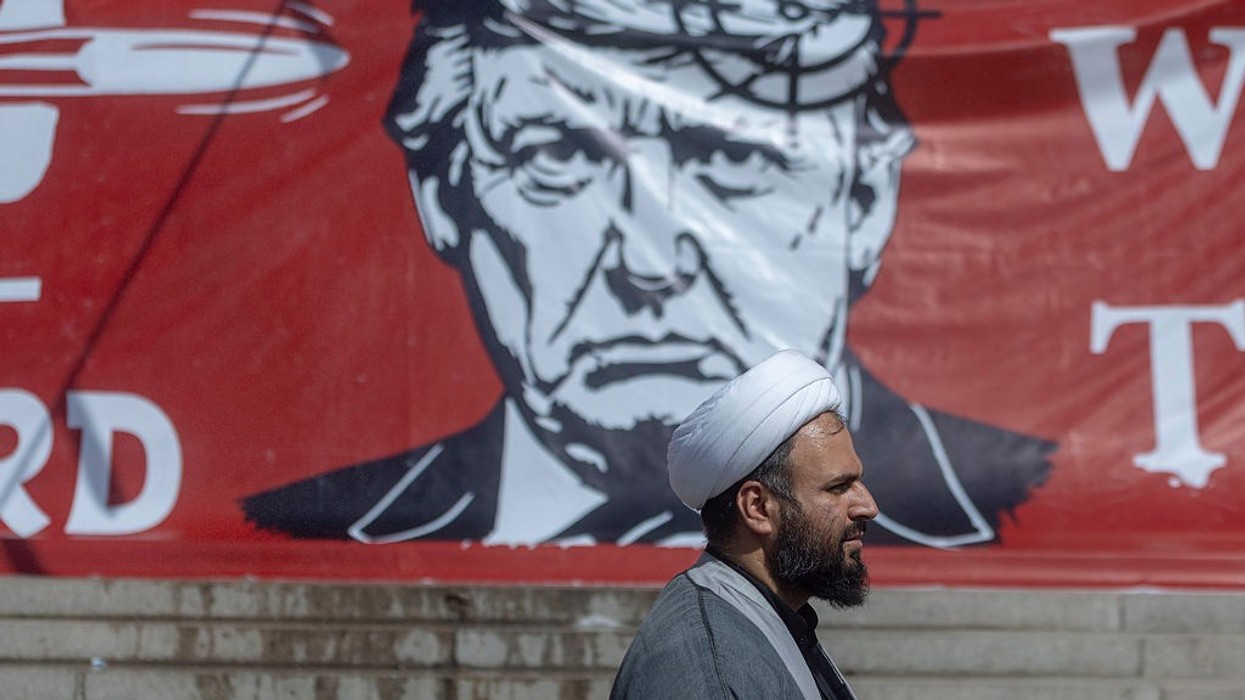

Washington is no longer simply threatening Iran. Donald Trump is warning the entire world to stay away from Tehran—or pay the price.
As the US-Iran war approaches its six-month mark, Trump has threatened an economic crackdown so sweeping that countries doing business with Iran could find themselves pulled directly into the conflict.
In a social media message Wednesday, Trump promised “Economic Warfare and Isolation on an unprecedented scale.” He offered few details, but the message was unmistakable: Iran’s economic lifelines are now targets, and anyone helping keep them open could become a target too.
“ANY country that allows its financial institutions, businesses, airports, or government entities to provide any type of lifeline to Iran will itself face TREMENDOUS Economic Consequences,” Trump wrote.
That threat dramatically raises the stakes of a war that has already spilled far beyond the battlefield.
Trump’s Iran war goes global
Thousands have been killed, Gulf nations have been dragged into the crisis, and global markets have been rattled by Iran’s ability to disrupt shipping through the Strait of Hormuz, a waterway that carried about one-fifth of the world’s traded oil before February.
Two ceasefire agreements, in April and June, have already collapsed. And while Israel has largely withdrawn from the fighting, the conflict shows little sign of settling.
Now Trump is reaching for a weapon Iran has experienced for decades: economic isolation.
Iran has lived under punishing US sanctions since the 1979 Islamic Revolution. Yet Tehran has shown little willingness to surrender under pressure.
Iranian Foreign Minister Abbas Araqchi accused Trump of using the confrontation to distract Americans from problems at home, including record US debt and rising interest costs.
He said: “America's economic terrorism threatens the global economy and the national sovereignty of countries around the world.”
Trump’s threat is particularly explosive because it could put US allies in an impossible position. Some countries have been involved in efforts to mediate between Washington and Tehran. Punishing them for maintaining economic or diplomatic channels could widen the confrontation rather than isolate Iran.
The United Arab Emirates has already suspended trade activities, commercial exchanges and financial transactions with Iran until further notice. The move followed a UAE claim that Iran launched two missiles that fell into the sea, a claim Tehran rejected as baseless.
China faces Trump’s economic hammer
Then there is China.
China bought more than 80 per cent of Iran’s shipped oil in 2025, according to Kpler data cited by Reuters. Any attempt to choke off that trade could turn the Iran crisis into another major US-China confrontation, especially given Beijing’s importance to American supply chains and rare-earth minerals.
And the economic pressure is already being felt. Oil prices climbed to three-week highs Thursday (20) as traders worried that the Iran standoff could continue disrupting Middle Eastern supplies.
Tehran, meanwhile, is refusing to blink.
Mohammad Mokhber, an adviser to Iran’s supreme leader, said Iran remains open to dialogue but does not confuse negotiations with surrender. He argued that military pressure and sanctions would not break Iran’s resolve.
That leaves Washington with a dangerous choice: escalate the economic squeeze or find a diplomatic exit.
Trump says he wants Iran’s highly enriched uranium stockpile and a tougher nuclear agreement to replace the deal he abandoned in 2018. Iran insists its nuclear program is peaceful.
Behind all the threats, sanctions and military pressure is one increasingly frightening question:
How far will this war spread before someone finally backs down?