
Highlights:
- US launched a fourth straight night of strikes on Iran.
- Iran threatened to disrupt additional global energy shipping routes.
- Trump warned of strikes on Iranian power plants and bridges.
- Iran reported civilian and military casualties from US attacks.
- Oil prices climbed as fears of supply disruptions increased.
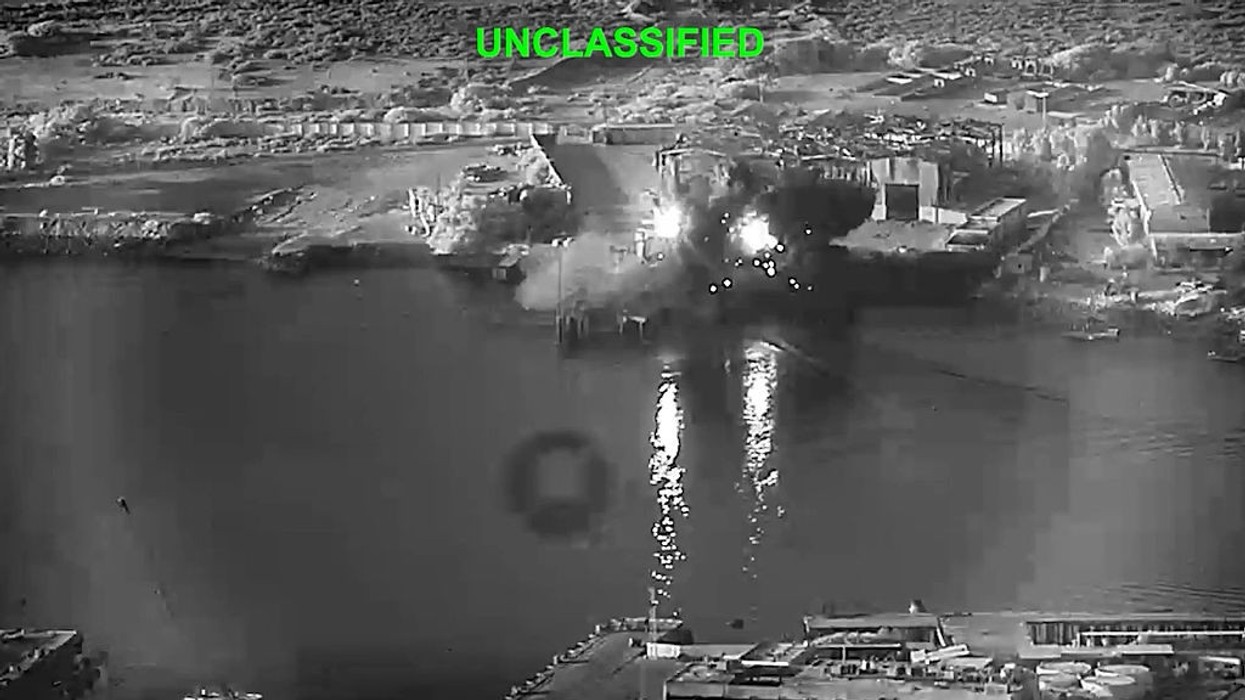
The conflict between the United States and Iran continued to escalate on Wednesday (15) after the US military carried out a fourth consecutive night of strikes on Iranian targets. The latest attacks came after president Donald Trump reinstated a blockade of Iranian shipping and renewed warnings that additional military action would follow unless Tehran agreed to return to negotiations over the conflict that began after US and Israeli strikes on Iran on February 28.
Iran responded by threatening to expand disruptions to global energy shipping routes if Washington continues efforts to control key maritime corridors. While Iranian officials did not specify which routes could be targeted, analysts believe Tehran may rely on its Houthi allies in Yemen to increase pressure on shipping through the Bab el-Mandeb Strait, one of the world's most important maritime chokepoints linking the Red Sea to international trade routes.
The threat has raised fresh concerns about global energy supplies. Saudi Arabia has already responded to the closure of the Strait of Hormuz, through which roughly one-fifth of the world's oil normally passes, by diverting more than 70 per cent of its regular daily crude exports to the Red Sea port of Yanbu. That alternative route has helped stabilize global oil markets despite the disruption in the Gulf.
However, analysts warn that any sustained Houthi campaign against vessels or ports in the Red Sea could significantly affect shipments through the Bab el-Mandeb Strait. Such disruptions would particularly affect cargo destined for Asian markets, although exports bound for Europe could still travel north through the Suez Canal.
The latest military exchanges have also fueled fears of further regional instability. Jordan, Bahrain, and Kuwait were again targeted on Wednesday (15) after Iran pledged to continue retaliatory attacks against US military assets. Those strikes effectively shattered an interim ceasefire that had briefly slowed the fighting.
Meanwhile, Iran reported additional casualties from the overnight US attacks. According to the semi-official Tasnim news agency, more than seven military personnel were killed at a military base in Bampur, near the southeastern city of Iranshahr. The army said the attack involved 13 missiles striking a guesthouse, guard posts, and accommodation facilities in what it described as an effort to inflict maximum casualties. Several other personnel were also wounded.
The army said the strikes were intended to cause maximum casualties, with 13 missiles hitting a guesthouse, guard posts and accommodation facilities at the base near the southeastern city of Iranshahr.
It added that a number of personnel were also wounded and promised a "decisive response" to the attack.
Earlier in the day, Iranian government spokesperson Fatemeh Mohajerani said at least 30 civilians had been killed in recent days by US strikes in southern Iran, according to state media.
Additionally, the deteriorating security situation has also affected global energy markets. Brent crude futures rose 58 cents, or 0.7 per cent, to $85.31 a barrel, while West Texas Intermediate crude gained 35 cents, or 0.4 per cent, to $79.69 a barrel. Both benchmarks had already climbed about 2 per cent on Tuesday (14), reaching their highest levels in a month as concerns over supply disruptions intensified.
"Brent and WTI have made upward corrections in line with escalating attacks, but the quantum of move is likely now tempered as the market waits to see any change in stance from the US and Iran," said June Goh, senior oil market analyst at Sparta Commodities.