
Highlights:
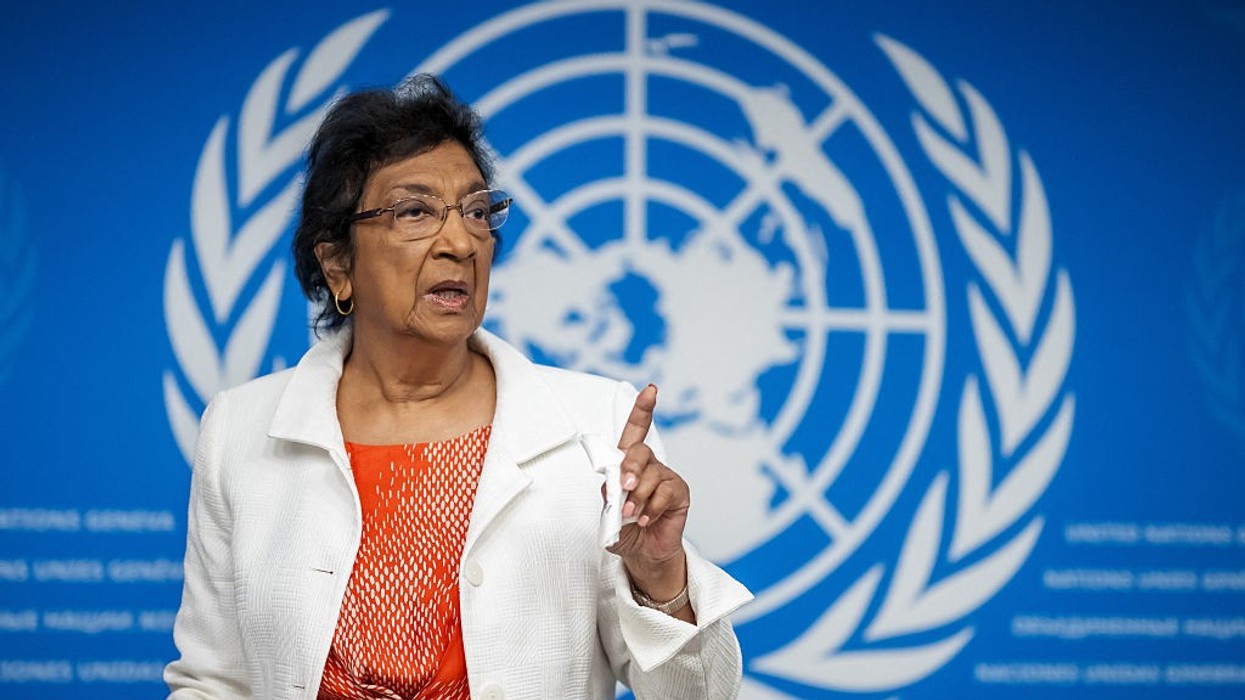
When Navi Pillay was told she had won the 2026 Nobel Peace Prize, she responded with a joke aimed at president Donald Trump: “If you clap a little bit more I may share this prize with Trump”.
The quip brought a moment of humour to a career defined by confronting some of the gravest crimes in modern history. Born into a family of Indian Tamil descent in apartheid-era South Africa, Pillay has spent decades defending political prisoners, challenging discrimination and helping shape international law on genocide and sexual violence. On October 9, the Norwegian Nobel Committee recognised her for her “efforts to promote peace and international law”.
But who is Navi Pillay, and what makes her achievements so significant?
From Durban to breaking barriers in law
Born in Durban on September 23, 1941, Navanethem “Navi” Pillay grew up under apartheid, a system that institutionalised racial segregation and discrimination in South Africa.
She pursued a legal career despite the barriers confronting women and people of colour. In 1967, she became the first woman to establish her own law practice in Natal, now part of KwaZulu-Natal. As a lawyer, she represented anti-apartheid activists and challenged the treatment of political detainees, including abuses involving torture and solitary confinement.
In 1995, following the end of apartheid, she became the first Black woman to serve as a judge on South Africa’s High Court. Her career would subsequently take her from domestic courtrooms to some of the world’s most consequential international tribunals.
The Rwanda genocide case that changed international law
One of Pillay’s most significant contributions came through the International Criminal Tribunal for Rwanda, where she served as a judge from 1995 and became president in 1999, holding the position until 2003.
The tribunal investigated atrocities committed during the 1994 Rwandan genocide. Pillay played a critical role in the landmark trial of Jean-Paul Akayesu, a former local official convicted of genocide and crimes against humanity.
The case helped establish a crucial legal principle: rape and sexual violence can constitute acts of genocide when committed with the specific intent to destroy a protected group. It also helped bring recognition to sexual violence as a weapon used during mass atrocities.
The ruling was a turning point in international criminal law, strengthening the basis for prosecuting crimes that had historically been overlooked or inadequately addressed.
From the UN to the global human rights debate
Pillay later served as a judge at the International Criminal Court. In 2008, she became the United Nations High Commissioner for Human Rights, a position she held until 2014.
During her career, she also co-founded Equality Now, an international organisation working to advance the rights of women and girls. Her work has spanned discrimination, political repression, gender-based violence and accountability for international crimes.
More recently, Pillay chaired the UN Human Rights Council’s Independent International Commission of Inquiry on the Occupied Palestinian Territory. In a report published in 2025, the commission concluded that Israel had committed genocide in Gaza, a finding Israel rejected. The work placed Pillay at the centre of an intensely contested international debate over accountability and the application of international law.
Why her Nobel win matters
Pillay’s achievement is more than a personal milestone. Her career illustrates how legal precedents can change the way the international community investigates atrocities and recognises victims’ experiences.
Her Indian Tamil heritage and rise through apartheid-era South Africa also make her story notable for communities whose histories are often absent from accounts of global institutions.
The 2026 Nobel Peace Prize recognizes a lifetime of work across national and international legal systems. From defending activists to helping establish that sexual violence can form part of genocide, Pillay has helped expand the reach of international justice.
Her legacy rests not only on the positions she held, but on the legal principles she helped bring into sharper focus: that human rights must be protected and that even the gravest crimes demand accountability.