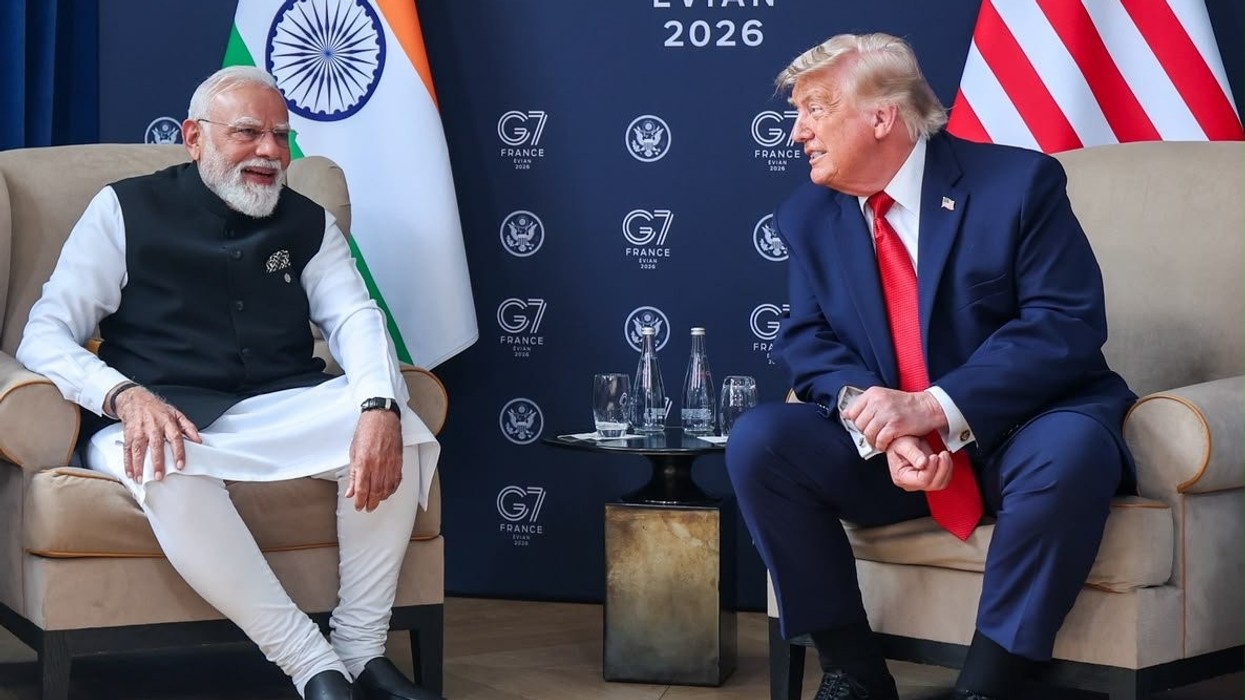

US PRESIDENT Donald Trump sought to reassure India that Washington remained committed to the bilateral relationship, declaring that New Delhi “has a friend in the US” as he met prime minister Narendra Modi on the sidelines of the G7 summit in Evian-les-Bains, France, on Wednesday (17).
The meeting, the first between the two leaders since Modi visited Washington in February, came after a year in which India-US ties were tested by disagreements over tariffs, trade, purchases of Russian oil, president Trump’s repeated claims about his role in ending the India-Pakistan military conflict, changes to US immigration policy and, more recently, the deaths of three Indian seafarers in US military strikes.
Both leaders sought to project a more positive tone after their talks, which covered a proposed bilateral trade agreement, defence and security cooperation, the conflict in West Asia and the safety of Indian seafarers working along global shipping routes.
Trump expressed confidence that negotiations on a trade agreement were moving forward, reaffirmed Washington’s support for India’s security and said he would visit India in the future. Modi, meanwhile, urged the US president to ensure that the safety of Indian seafarers was given priority in the implementation of Washington’s proposed peace understanding with Iran.
“As long as I am at the White House, India has a friend in the US,” Trump said when asked about the recent strain in bilateral ties.
Responding to a question on the India-US defence relationship, Trump also said: “I think it is a great relationship… If they (India) were attacked, we would be there to help them.”
“If anybody attacks that man (Modi), we are going to be there,” he added. The US president also underlined India’s growing role on the global stage.
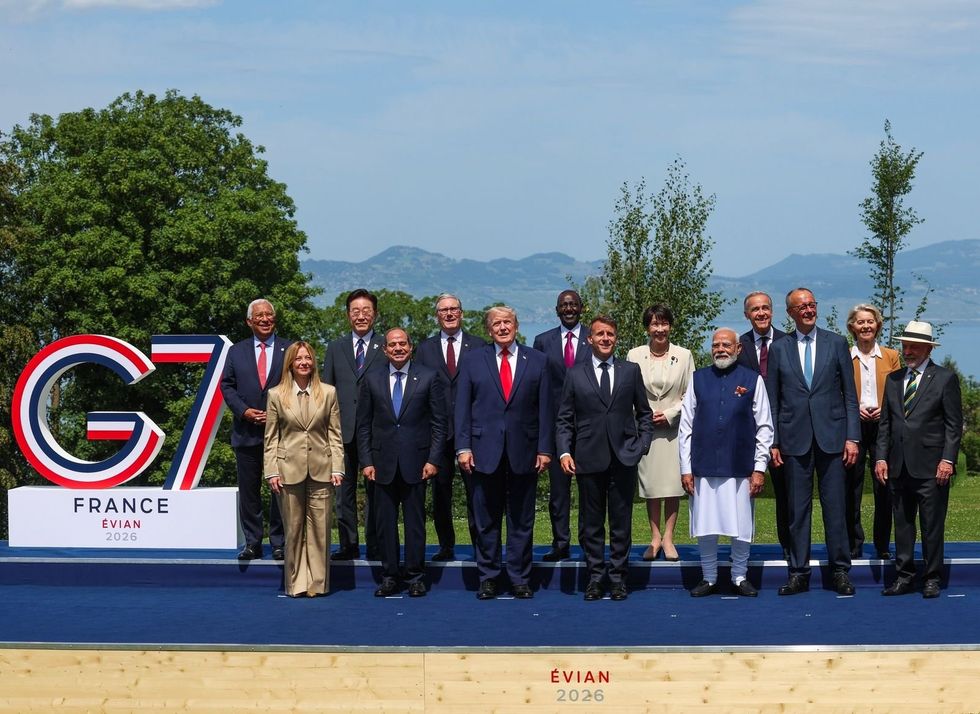 Leaders attend the summit in Evianles-Bains, FranceReuters
“I think India plays a big role in everything as long as he (PM Modi) is the leader. India is going to play a big role,” Trump said in response to a question on whether New Delhi had a role to play in West Asia.
Trade featured prominently during the discussions, with both governments signalling that negotiations on the first phase of a bilateral agreement were moving ahead despite months of disputes over tariffs and market access.
Asked how close the two countries were to finalising the proposed agreement, Trump replied: “Very close.”
“We have been there for a little while. He is a very tough negotiator. One of the toughest.”
Trump also said he would travel to India.
“We will be going to India sometime in the future,” he said, recalling his visit in 2020 when he attended the “Namaste Trump” event in Ahmedabad after referring to the “Howdy, Modi!” rally in Texas in 2019.
The proposed trade agreement has remained a priority for both governments since Modi’s visit to Washington in February, when the two sides agreed to work towards resolving differences over trade and tariffs.
Despite continued negotiations, relations came under pressure after Washington imposed higher tariffs on Indian goods, penalised New Delhi for purchasing Russian oil and strengthened engagement with Pakistan.
Trump also repeatedly claimed that he had helped end the military conflict between India and Pakistan in May 2025 and prevented it from escalating into a wider war.
New Delhi consistently rejected those assertions, maintaining that the cessation of hostilities resulted from talks between India and Pakistan and that the United States had no role in the process.
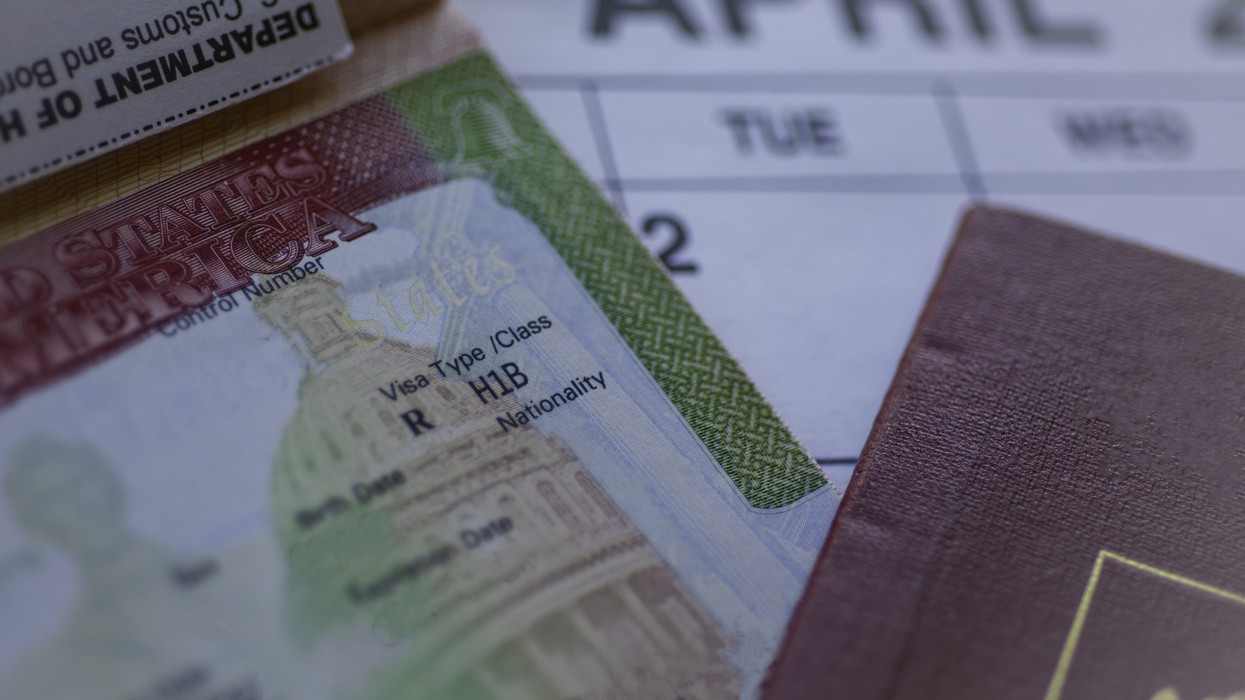
The relationship also faced challenges following changes to US immigration policy, including higher H-1B visa fees.
Asked about Indian professionals facing difficulties in the United States because of changes to the H-1B visa programme, Trump said the two countries had enjoyed a “tremendous relationship” in terms of employment.
The latest strain came after three Indian crew members were killed in US military strikes on merchant vessels off the coast of Oman.
Modi used Wednesday’s meeting to raise India’s concerns over the safety of Indian seafarers, linking the issue to Washington’s proposed understanding with Iran.
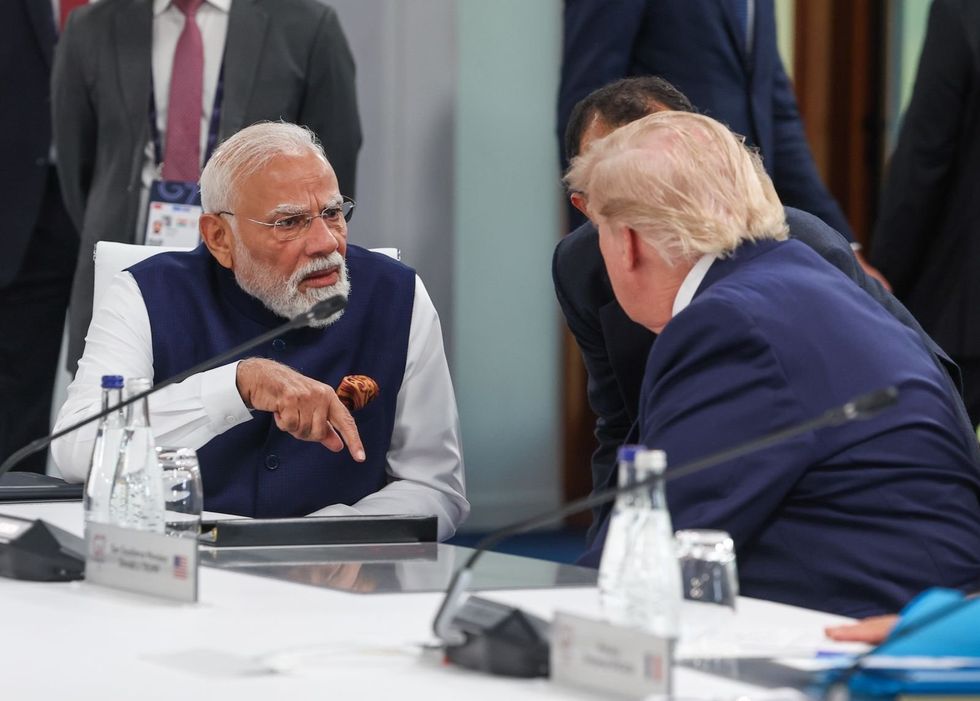 Narendra Modi and Donald Trump hold talksX/Narendra Modi
“Mr President, you and I agree that keeping the Strait of Hormuz open is vital for the global economy. India has consistently emphasised the importance of ensuring freedom of navigation and we should work together on it,” the prime minister said.
He then underlined the importance of protecting Indian seafarers working along international shipping routes.
“Hundreds of thousands of Indian seafarers are working across the global maritime trade routes and their safety is of utmost importance to us. You made tremendous efforts towards reaching this understanding (peace agreement with Iran). I am confident that the issue of safety of seafarers will receive the highest priority in the implementation of this agreement,” Modi said.
Trump acknowledged the deaths of the Indian sailors when asked about the incident.
“I heard about that (the deaths), it’s a rough profession, no question about it,” he said, adding, “We will work together.”
The bilateral meeting also took place against the backdrop of continuing conflict in West Asia, with Modi using his engagements at the G7 summit to highlight the wider economic impact of the crisis.
Addressing an outreach session of the summit, the prime minister warned that disruptions to fuel, fertiliser and food supply chains could have lasting consequences for developing countries.
“The impact of the West Asian crisis on fuel, fertiliser, and food supply chains will have long-lasting consequences for the Global South,” Modi said
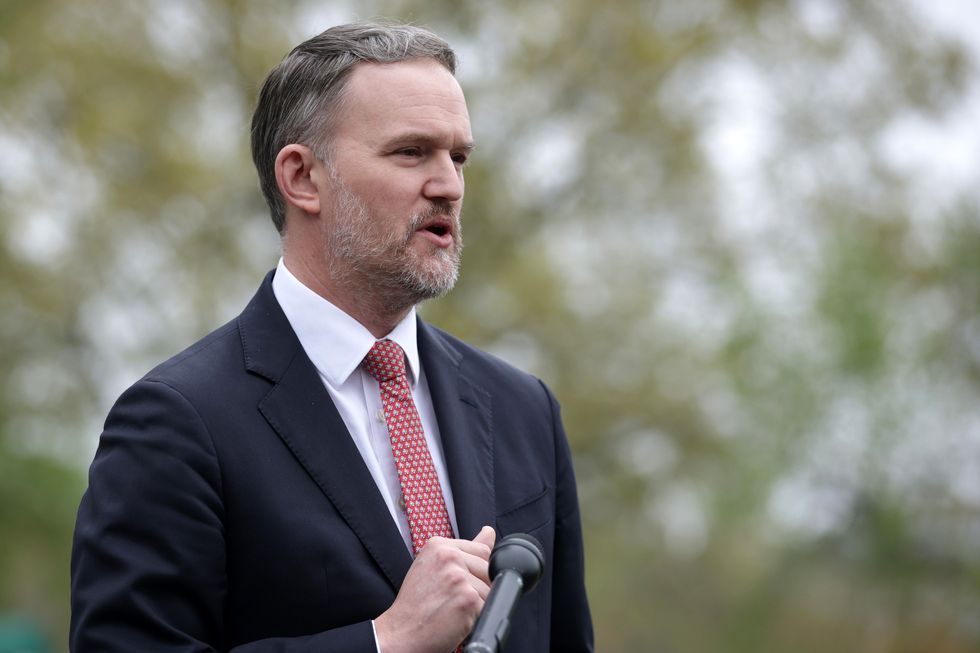 Jamieson GreerGetty Images
“If we truly want to strengthen international solidarity, the most vulnerable countries should not bear the burden of these crises alone.”
“Our international financial institutions must create support mechanisms that help developing countries absorb these shocks and maintain their economic resilience,” he said.
“When India progresses, one-sixth of humanity progresses. Therefore, India’s growth story is a story of inclusion, scale, and democratic empowerment for all of humanity.”
The Modi-Trump meeting also triggered political reaction in India.
The Congress criticised Modi for not specifically referring during the public remarks with Trump to the deaths of the three Indian sailors.
Congress general secretary Jairam Ramesh said on X: “Prime Minister meets his so-called good friend President Trump in Evian. Both leaders give a public statement. Prime Minister makes NO mention of the killing of three Indian seafarers in the Gulf of Oman as a result of a US attack.”
“Only President Trump takes questions. He replies to a question on the killing of the Indian nationals. Self-styled Vishwaguru still keeps quiet. Pathetic and totally unacceptable,” Ramesh said.
The meeting nevertheless marked a renewed effort by both governments to stabilise a relationship that has faced several challenges over the past year.
Trade remains at the centre of that effort. The two countries are working towards the first phase of an interim bilateral trade agreement, with negotiations continuing on tariffs, market access and other outstanding issues.
Modi and Trump have also directed officials to fast-track the trade agreement at the earliest. “The leaders noted with particular satisfaction the significant progress made in negotiations towards an interim bilateral trade agreement and instructed their officials to work towards a balanced, mutually beneficial, and commercially meaningful agreement at the earliest,” it said in a statement.
The two sides have already held several rounds of negotiations on the proposed agreement.
The next round of talks is expected later this month when US Trade Representative Jamieson Greer visits India on June 23-24. The discussions are expected to focus on giving final touches to the proposed interim agreement while addressing remaining differences over tariffs and market access. Wednesday’s meeting between Modi and Trump signalled that, despite the recent strains, both governments intend to maintain momentum in the negotiations as they work towards concluding the first phase of the India-US trade deal.