
- USS Abraham Lincoln has spent more than 260 days at sea.
- USS George Washington is moving toward the Middle East.
- Reports cite mental health and morale concerns aboard Lincoln.
- Pentagon officials reject claims of widespread poor conditions.
- Washington says its Hormuz blockade could continue indefinitely.
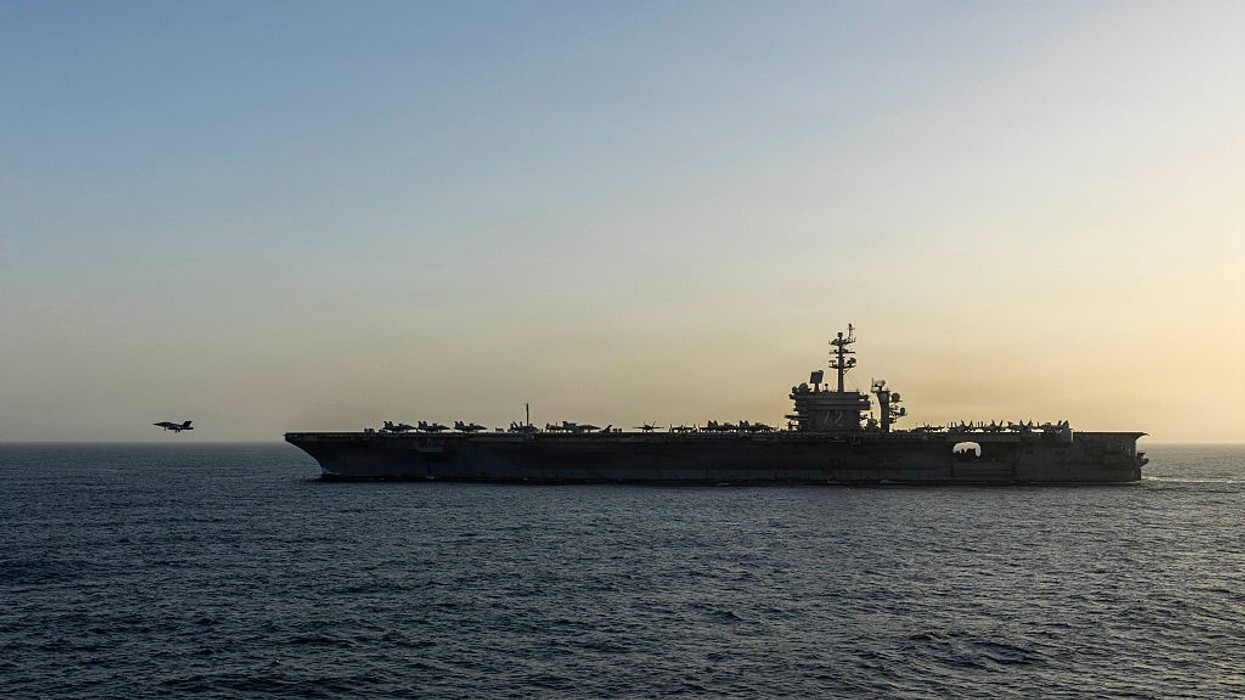
The United States is confronting a growing challenge in the Middle East as it attempts to maintain pressure on Iran while managing the strain of an unusually prolonged aircraft carrier deployment. The USS Abraham Lincoln, which has supported American military operations against Iran, has been at sea for more than 260 days, raising concerns about crew morale, mental health, supplies and the sustainability of the mission.
The US Navy has now turned to another carrier, the USS George Washington, as Washington considers replacing the Lincoln. The Pacific-based carrier left Da Nang, Vietnam, last week and has since been observed moving through Southeast Asian waters toward the Indian Ocean.
George Washington Heads Toward Middle East
According to the Navy, the George Washington departed Vietnam with a cruiser and destroyer. An official cited by the Associated Press said the carrier was in the Strait of Malacca and was heading toward the Indian Ocean.
The Wall Street Journal previously reported that the George Washington could replace the Lincoln as one of two US aircraft carriers stationed in the Middle East. The move comes as the Trump administration continues military operations against Iran and maintains a blockade around Iranian ports near the strategically vital Strait of Hormuz.
President Donald Trump has claimed that the United States controls the Strait of Hormuz and said he intends to "keep it." However, maintaining a sustained naval presence in the region presents significant operational and human challenges.
Concerns Grow Over Lincoln Crew
The Lincoln was deployed from San Diego on November 21, 2025, and reached the Middle East in January 2026, before the Iran war began on February 28. Its deployment was originally expected to end in May.
Military-focused outlets Navy Times and Stars and Stripes have reported concerns about declining morale and multiple alleged suicide attempts involving service members aboard the approximately 5,000-person carrier.
The Navy has acknowledged that combat operations disrupted traditional supply hubs in the Middle East. "Leadership prioritised mission-critical supplies: first food, then hygiene items, then mail," the Navy said, adding that sailors now have access to clean water and "healthy meal options."
Hegseth Rejects Reports
Defense Secretary Pete Hegseth has pushed back against reports of poor conditions, describing them as "completely misrepresented."
"We make sure every ship, every crew, every captain has everything we can provide them at every single moment. Some deployments are longer than others, and I have more respect and gratitude for those sailors than anybody. What they do in those high seas in those austere conditions with fewer port calls -- it's incredible," he told reporters during a visit to Panama.
Several Democratic lawmakers are nevertheless demanding greater Pentagon transparency. Senator Richard Blumenthal has sought answers from Navy leadership, while Senator Ruben Gallego has called the reported treatment of sailors "not just disgusting; it's dangerous."
The concerns come as the US Navy has reimposed its blockade on Iranian ports and Hegseth has said the United States can maintain the blockade "indefinitely." With no clear timetable for ending the war, sustaining American naval forces in the region could become a major challenge alongside Iran's military resistance.