PAKISTAN'S preeminent rights activist describes the upcoming election as a messy melodrama staged by an emboldened military, unlikely to bring down the curtain on a cast of crises plaguing the country.
Millions of people will vote in polls in less than two weeks, in a campaign marred by allegations of pre-vote rigging with the opposition heavily suppressed.
"I don't see Pakistan's problems going away after this election," said Munizae Jahangir, co-chair of the Human Rights Commission of Pakistan (HRCP).
"We're headed towards the next mess that nobody will know how to fix," she told AFP last week in the capital Islamabad.
Read: Amid rising pre-poll violence in Pakistan, US says it wants free, fair elections
The lacklustre election campaign feels like a sideshow compared to the backstage drama between jailed ex-prime minister Imran Khan and the military kingmakers who once backed him.
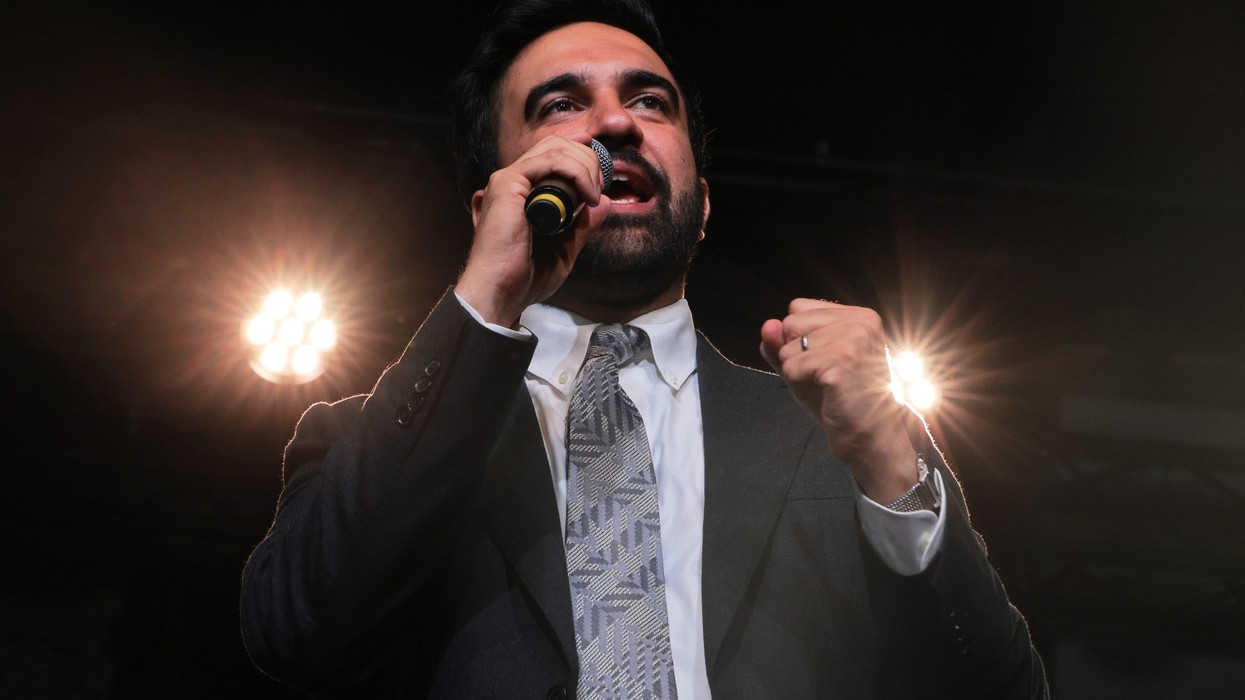
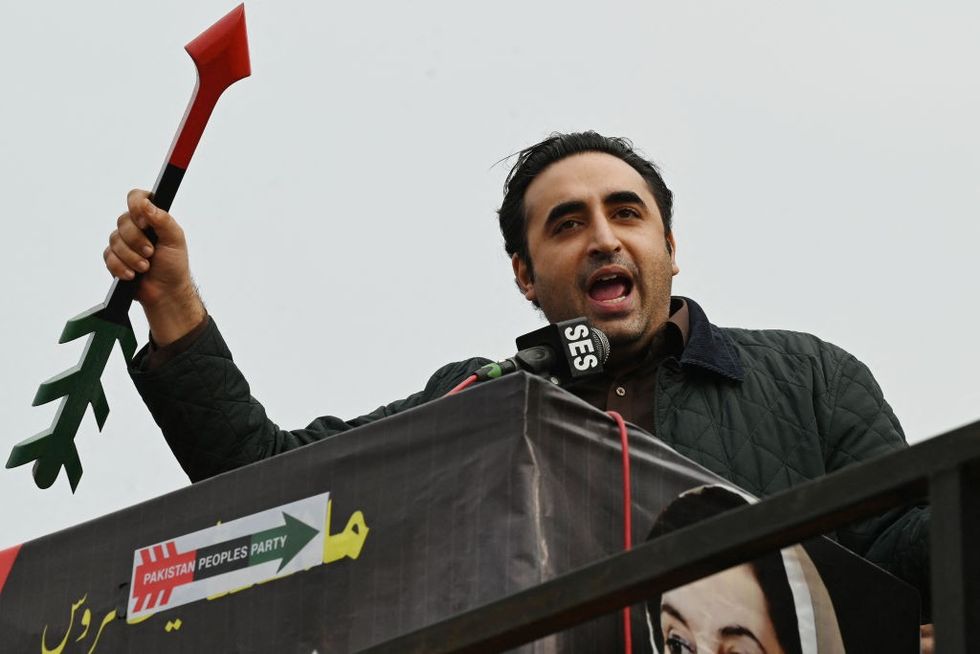 Pakistan Peoples Party chairman Bilawal Bhutto Zardari addresses supporters during an election campaign rally in Batkhela town of Malakand district in Khyber Pakhtunkhwa province of Pakistan on January 31, 2024. (Photo by AAMIR QURESHI/AFP via Getty Images)
Khan was ousted in 2022 in a parliamentary no-confidence vote he claims was orchestrated by the country's powerful generals.
"They have a schizophrenic relationship with Imran Khan," Jahangir said of the military brass.
Read: Terrorist attacks kill 15 in poll-bound Pakistan’s Balochistan
"Nobody can predict what the military is going to do because they first make up all these leaders and then they demolish them."
- Khan the compromised -
Jahangir hails from a family that for decades has faced down threats to check abuses of power.
In 1986 her mother Asma Jahangir -- who died in 2018 -- co-founded the HRCP, today a globally respected watchdog.
Described as Pakistan's "moral compass", the human rights lawyer set up the first legal aid cell for women and minorities, winning landmark cases that were sometimes met with violent threats.
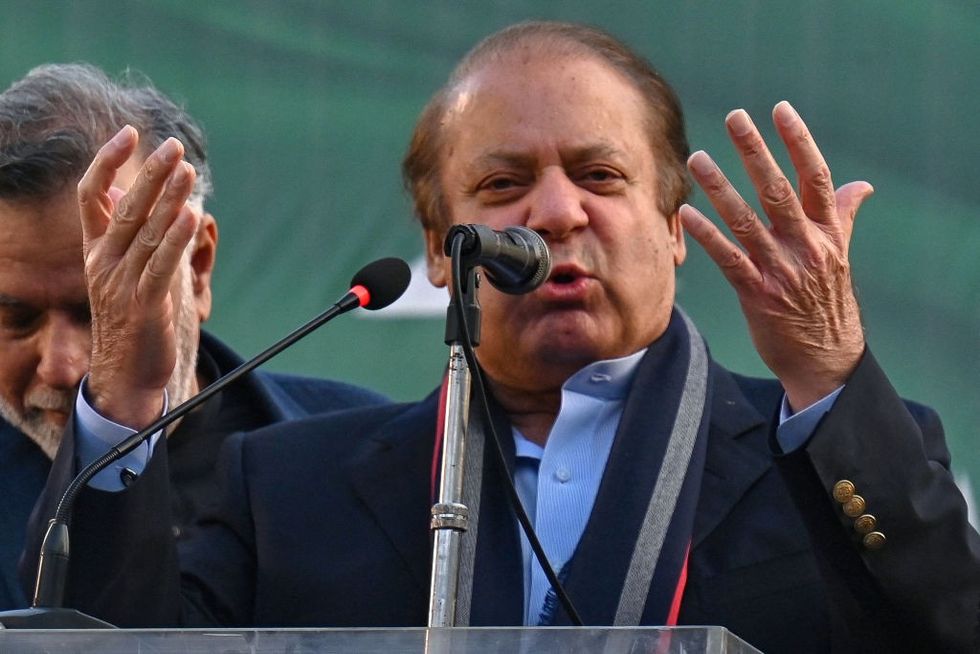 Pakistan's former prime minister and leader of the Pakistan Muslim League (PML) party Nawaz Sharif speaks during an election campaign rally in Lahore on January 29, 2024. (Photo by ARIF ALI/AFP via Getty Images)
She was ordered under house arrest in 2007 by Pervez Musharraf -- Pakistan's last military ruler who suspended the constitution and detained hundreds of critics.
"She had a way of collecting people and in a way strategising to push the military back to the barracks and create more civilian space for the politicians," Jahangir said of her mother.
Pakistan has been ruled by martial law periodically since the country was created out of the partition of the subcontinent in 1947.
Although Pakistan is now in its longest period of civilian government, political parties still require the backing of the armed forces, euphemistically dubbed "the establishment", to clinch power.
Khan was arrested in August after heaping scorn on generals over his 2022 ousting and accusing them of plotting an assassination bid that left him wounded.
His party has been severely hobbled in the election campaign, subjected to media censorship and barred from holding rallies.
But his four-year premiership was criticised by the HRCP for curbing freedom of expression, failing to rein in enforced disappearances and what Jahangir described as a "not-so-secret campaign to punish anyone who dared to differ with it."
"He clapped the military on when they subjugated the opponents and took away their fundamental rights, he didn't realise that this could happen to him as well," Jahangir said.
"It's very difficult to roll back the military and to take back civilian space when you have ceded so much of it."
- 'Any election is good' -
Despite the drawbacks, Jahangir is clear about the need for an election, with polling day already delayed by months under a caretaker government considered a puppet of the military.
"To say that this is a sham election, I think it's going a bit too far," she said. "Simply because any election is good for Pakistan right now."
Pakistan, with a burgeoning middle class and young population, will open booths to more than 125 million voters on February 8.
"We would obviously prefer an election where everybody is allowed to contest and all political parties are given a level playing field, but at the same time it is only an election that can bring up questions," she said.
In Pakistan, the questions are many.
The economy is still reeling after Islamabad came to the brink of default last year, militancy is on the rise with deaths in 2023 hitting a six-year high and climate change is ravaging the country by fueling more frequent droughts and floods.
Civil society is battling against enforced disappearances, attacks against religious minorities and an epidemic of gender-based violence.
The HRCP this month warned it is "deeply concerned by the overall deterioration in human rights, which needs urgent attention".
But regardless of the outcome of the election, few expect the next government to be able to address these burning issues.
"That weak government will not be able to challenge the military," said Jahangir. "That's why the military wants a weak government in Pakistan."
(AFP)