
Highlights:
The United States' decision to approve a $686 million upgrade package for Pakistan's F-16 fighter jets has triggered criticism in India, with analysts questioning Washington's approach towards nuclear security in South Asia. The deal does not include nuclear weapons, but experts warn that improved aircraft capabilities could strengthen Pakistan's existing nuclear delivery options.
The decision has also raised questions about the contrast between Washington's military cooperation with Pakistan and its pressure on Iran over its nuclear program.
India has questioned the move despite growing defense cooperation with the United States. Indian defense minister Rajnath Singh reportedly raised concerns about the F-16 modernization program with US defense secretary Pete Hegseth during the ASEAN Defence Ministers' Meeting in Cebu, Philippines, in late October.
What does the $686 million F-16 upgrade include?
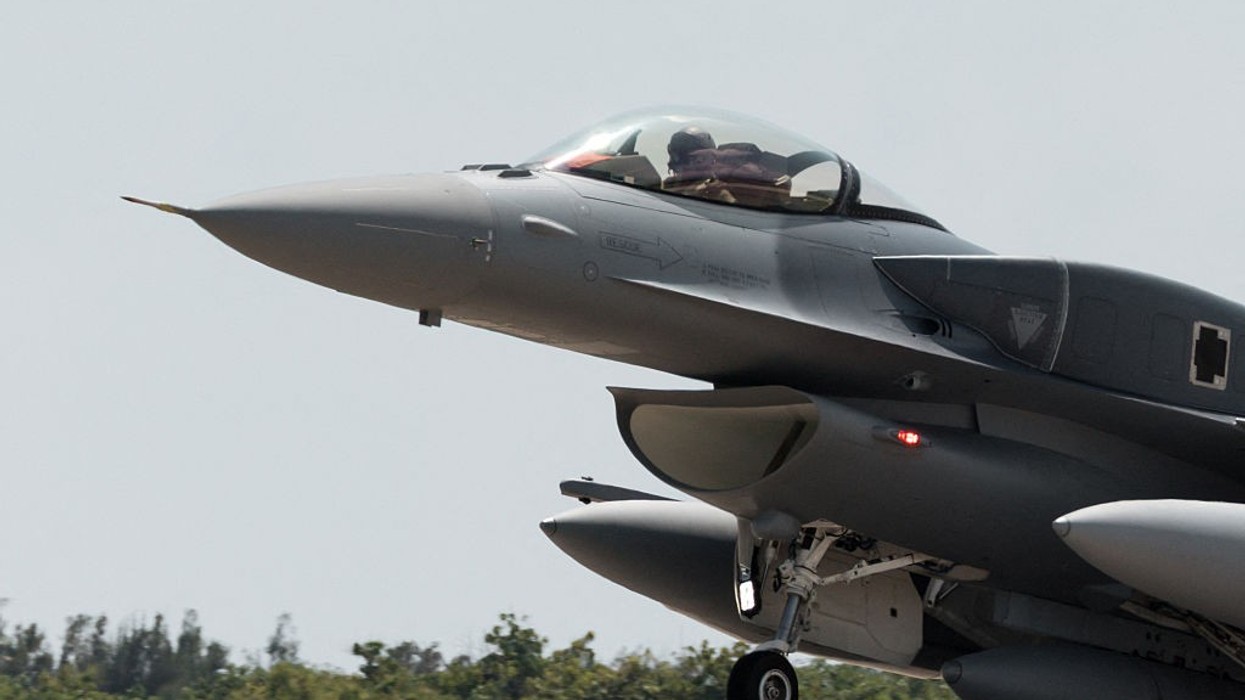
The military modernization package was approved by the US Defense Security Cooperation Agency (DSCA) in December 2025. It covers upgrades to Pakistan's avionics, cryptographic systems and related support for its fleet of approximately 70 F-16 fighter jets.
The improvements are expected to extend the operational life of the aircraft until 2040.
The package is designed to improve the jets' navigation, communications, situational awareness, and survivability. It does not provide Pakistan with new nuclear weapons or explicitly include dedicated nuclear-delivery equipment.
However, analysts argue that improving the performance of aircraft already considered capable of carrying nuclear weapons could have wider security implications for India.
Srinivaasan Balakrishnan, an analyst with the New Delhi-based Indic Researchers Forum, said the modernization would strengthen platforms that US intelligence has historically assessed as part of Pakistan's nuclear delivery options.
“The upgrade does not hand Pakistan a new nuclear bomb, but it meaningfully extends and modernizes the very platforms that US intelligence has long assessed as part of Pakistan's nuclear ‘delivery options’,” he said.
Balakrishnan argued that India's concern stems from Washington's decision to modernize Pakistan's military capabilities while maintaining pressure on Iran over its nuclear program.
Why is India questioning Washington's decision?
The F-16 deal has prompted criticism over what Indian analysts describe as a difference in the US approach towards Pakistan and Iran.
Washington has maintained that its pressure on Iran is necessary because of concerns surrounding its nuclear program. At the same time, it is providing military support to Pakistan, a country that already possesses nuclear weapons and has faced international scrutiny over nuclear proliferation.
Balakrishnan described the contrast as a double standard, arguing that the upgraded aircraft could strengthen Pakistan's ability to deliver nuclear weapons even though the package does not include warheads.
The issue is particularly sensitive because India and Pakistan have a long history of military confrontations and both possess nuclear weapons.
India has also reportedly warned US officials that sensitive technology supplied to Pakistan could potentially reach third parties.
New Delhi has consistently accused Islamabad of supporting, financing and facilitating cross-border terrorism. Pakistan denies these allegations.
Why does the US say the upgrade will not change the military balance?
Washington has defended the package as part of its continuing counterterrorism cooperation with Pakistan.
In its notification to Congress in December 2025, the DSCA said the modernization would help Pakistan maintain its ability to operate alongside US forces during counterterrorism missions. It also cited the need to extend the aircraft's service life and address flight safety concerns.
The agency stated that the proposed sale would not alter the basic military balance in the region.
However, Indian defense analysts argue that even without supplying new weapons, improving the aircraft's operational capabilities could have consequences during a military crisis.
Retired Indian Air Force Air Marshal Gurcharan Singh Bedi said the package did not include nuclear weapons or dedicated nuclear-delivery equipment and would therefore not significantly increase Pakistan's nuclear weapon delivery capability by itself.
He nevertheless cautioned that better aircraft survivability, situational awareness and jam-resistant communications could make existing air-based nuclear delivery options more credible during a confrontation.
How does the F-16 issue relate to recent India-Pakistan tensions?
The deal comes against the backdrop of the military confrontation between India and Pakistan in May 2025.
India launched Operation Sindoor on May 7, targeting nine alleged terrorist infrastructure sites in Pakistan and Pakistan-administered Jammu and Kashmir. The operation followed the April 22 terrorist attack in Pahalgam, which killed 26 people.
During the subsequent 88-hour conflict, Indian Air Force and government officials said Pakistan had deployed its combat aircraft, including F-16s, and suffered aircraft losses.
Pakistan denied losing any aircraft and said it had relied primarily on Chinese-made fighter jets, including the J-10C and JF-17.
The confrontation further strained relations between the two nuclear-armed neighbors.
India and the United States have continued to expand their defense partnership, including through the upgraded 2025 Framework for the US-India Major Defense Partnership and joint military exercises.
India has also ordered or received approval for several American defense systems, including Javelin anti-tank missiles, GE F404 aircraft engines, Apache helicopters and C-130J Hercules transport aircraft.
What does this mean for India's defence strategy?
The F-16 upgrade debate has renewed calls for India to strengthen its domestic defense manufacturing capabilities and improve its military preparedness.
India already maintains a range of nuclear delivery systems, including missiles, fighter aircraft and submarines. It also officially follows a no-first-use nuclear policy, under which it commits not to initiate a nuclear strike.
Bedi said India should focus on strengthening layered air defense, long-range surveillance, electronic warfare and fighter and missile capabilities.
He also recommended improving India's ability to counter stand-off weapons launched from F-16 aircraft while expanding its assured second-strike capability.
The central concern for New Delhi is therefore not simply the addition of new aircraft or nuclear weapons to Pakistan's arsenal. It is whether improvements to an existing fleet could make its military capabilities more effective during a future confrontation.
Although Washington maintains that the package is intended to support counterterrorism cooperation and aircraft safety, India's concerns highlight the wider security implications of US military assistance to Pakistan.