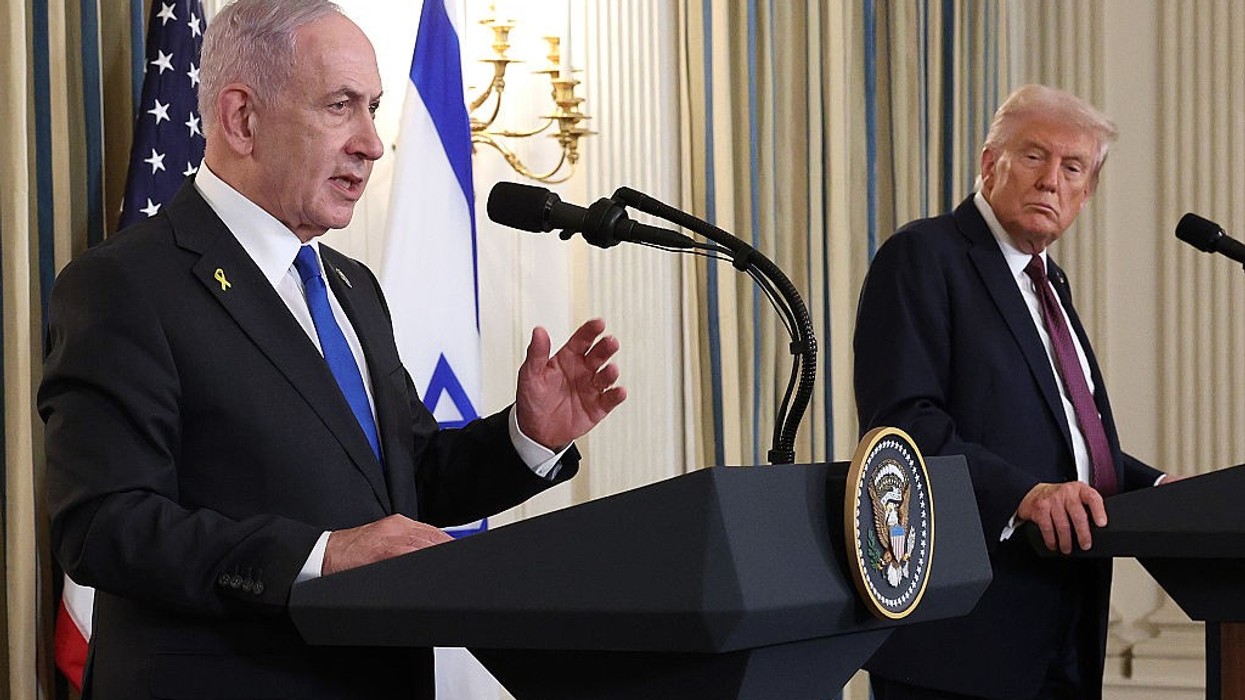

President Donald Trump sold his Gaza peace roadmap as a breakthrough. Israeli Prime Minister Benjamin Netanyahu is now making clear that he does not accept some of its most consequential provisions.
“As long as I am Prime Minister, there will be no Palestinian state in Gaza or the West Bank,” Netanyahu said Sunday.
He also ruled out an Israeli military withdrawal from Gaza until Hamas is completely disarmed.
The comments create a striking gap between the optimism coming from Washington and the position being stated publicly by Israel’s prime minister. Trump had described the 15-point roadmap as a “major milestone” and a “great breakthrough” toward ending the war.
But the Israeli government’s position directly challenges two elements central to the proposed path forward: the timing of Israel’s withdrawal and the longer-term political future of the Palestinians.
Netanyahu draws a line on Gaza withdrawal
For Israel, the sequence is non-negotiable: Hamas must disarm first.
An Israeli official said last week there would be “no withdrawal whatsoever” from the military’s current positions unless Hamas underwent what Israel considered genuine disarmament.
Netanyahu has now reinforced that position, saying Israeli forces will not withdraw from Gaza until Hamas is completely disarmed.
That puts Israel at odds with the structure of Trump’s roadmap, which calls for Israeli forces to withdraw in stages as other parts of the agreement are implemented.
Trump had appeared confident after meeting Netanyahu in Washington.
“Israel helped us, and they've been very good,” Trump said, describing Israel as “very happy” with the agreement.
He also acknowledged that putting the plan into practice would not be straightforward.
“Will it go through its ups and downs? It’s a very complex situation over there,” he said.
An Israeli political source said Gaza was not discussed during Netanyahu’s Washington meeting with Trump, raising questions about how much common ground the two leaders actually have on implementation.
Hamas rejects immediate disarmament
Hamas is also demanding that the sequence of events go in the opposite direction.
Senior Hamas official Basem Naim said the group remains committed to the roadmap agreed with mediators and representatives of Trump’s Peace Council in Cairo.
“We remain committed to the roadmap agreed with mediators and representatives of the Peace Council in Cairo,” Naim said.
But Hamas says Israel must first stop its attacks and fulfill its obligations under the earlier ceasefire agreement.
Ghazi Hamad, another senior Hamas official involved in the negotiations, said the group was prepared to accept a “difficult and painful” agreement but stopped short of agreeing to immediate disarmament.
Hamas wants Israel to end attacks, withdraw its forces to earlier positions and allow increased flows of humanitarian aid and goods into Gaza. Only after those steps, the group says, would it consider placing its weapons under the control of the proposed National Committee for the Administration of Gaza.
What Trump’s Gaza plan actually proposes
The 15-point roadmap calls for Hamas and other Palestinian factions to hand over Gaza’s civil administration and internal security to a Palestinian technocratic body.
It also proposes identifying and placing heavy weapons, arms depots, military sites and tunnels under that committee’s control.
An international stabilization force would monitor the arrangement and separate Israeli troops from Palestinian-administered areas. Israeli forces would then withdraw in stages, while reconstruction and the restoration of public services begin.
Beyond Gaza’s immediate security arrangements, the roadmap points toward a longer-term political process focused on Palestinian self-determination and the establishment of a Palestinian state.
That final objective now faces an unmistakable obstacle from Netanyahu.
Regional pressure grows
The dispute has already triggered a coordinated response from eight Muslim-majority countries: the United Arab Emirates, Qatar, Jordan, Indonesia, Pakistan, Turkey, Saudi Arabia and Egypt.
The countries condemned Israel’s continuing military operations in Gaza and warned that further action could undermine efforts to implement the next stage of the US-backed roadmap.
In a joint statement, they said Israel’s actions could “derail the political process”, trigger renewed escalation and deepen Gaza’s humanitarian crisis.
The result is a peace plan caught between two incompatible demands.
Israel wants Hamas disarmed before it withdraws. Hamas wants Israel to stop its attacks and begin withdrawing before it gives up its weapons. And Netanyahu has now ruled out the Palestinian state envisioned as part of the roadmap’s longer-term political horizon.
Trump may have called the plan a breakthrough. Netanyahu’s latest comments show that the hardest part, getting the parties to agree on what happens next, has barely begun.