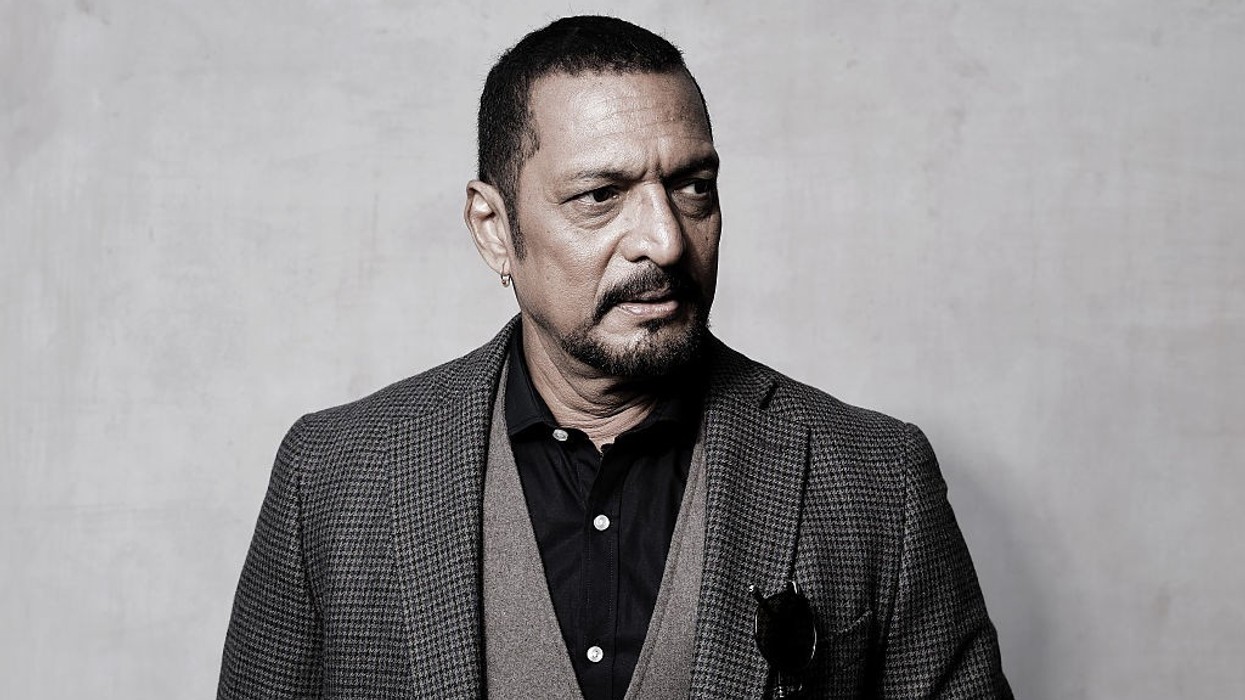

As the fans bid farewell to the legend Bollywood actor Nana Patekar, his unconventional roles are what he is leaving behind. Long before audiences knew him for the comic chaos of Welcome, Patekar built his reputation playing men who were angry, damaged, morally complicated or simply trapped inside systems larger than themselves. Some of his most memorable performances came in films that did not offer comfortable answers.
Across the 1980s, 1990s and early 2000s, he appeared in stories about unemployment, sexual violence, poverty, communal hatred, domestic abuse and the controversial use of police encounters.
Here are five films that show why Patekar's most powerful work was often found where entertainment met discomfort.
1. Ankush (1986): When unemployment turns into rage
- YouTube youtu.be
Released in 1986 and directed by N. Chandra, Ankush was one of the films that established Patekar as an actor capable of giving raw social anger a face.
The film stars Patekar alongside Madan Jain, Nisha Singh, Raja Bundela and Arjun Chakraborty. Patekar plays Ravindra Kelkar, known as Ravi, one of four unemployed young men living in Mumbai.
The four men are frustrated and disconnected from society. Their lives begin to change after they encounter Anita, a young woman who moves into their neighborhood with her grandmother. They try to become more responsible and integrate themselves into ordinary working society.
Then the film takes a devastating turn.
Anita is sexually assaulted by her employer and several associates. The accused escape punishment because of a lack of evidence, and Anita eventually dies by suicide. The four men, having lost faith in the legal system, decide to take revenge themselves.
That transformation is what makes Ankush particularly uncomfortable.
The film is not simply about unemployment. It connects economic frustration with alienation, helplessness and the dangerous consequences of losing faith in institutions. The young men initially want to become productive members of society, but the failure of the justice system pushes them toward violence.
Patekar's Ravi represents that simmering frustration. He is not presented as a polished Bollywood hero. He is an ordinary young man whose anger grows as he realizes that being “right” may not be enough to obtain justice.
And that remains the film's uncomfortable question: what happens when people stop believing that the law can protect them?
2. Salaam Bombay! (1988): A drug dealer won Washington Post's appreciation
- YouTube youtu.be
Two years later came Mira Nair's Salaam Bombay!, released in 1988.
The film starred Shafiq Syed as Krishna, with Raghubir Yadav, Chanda Sharma, Hansa Vithal, Anita Kanwar and Nana Patekar among the principal cast. It was Nair's feature directorial debut and went on to receive international acclaim, including an Academy Award nomination for Best Foreign Language Film.
The central character is Krishna, a young boy who ends up on the streets of Bombay after being sent away from home. He takes work delivering tea and becomes immersed in a world populated by street children, drug users, prostitutes, pimps and people struggling simply to survive.
Patekar plays Baba Golub, a drug dealer and pimp whose world intersects with Krishna's.
Baba is not the film's hero. That is precisely why the performance matters.
The film refuses to turn poverty into a sentimental backdrop. Its children are not presented as innocent symbols waiting to be rescued by a benevolent adult. They steal, beg, work, use drugs and navigate violence because those are the realities of the environment surrounding them.
Baba, meanwhile, represents part of the adult machinery exploiting that environment.
The Washington Post's contemporary review described the film as a look at Bombay's “shady side of the street,” highlighting the world of prostitutes, drugs and children trying to survive around it.
Patekar's performance contributes to that sense of menace.
The uncomfortable truth of Salaam Bombay! is that children can become invisible when poverty becomes normalized. The city continues functioning around them while they grow up in circumstances most people would rather not see.
3. Krantiveer (1994): When communalism becomes a weapon
- YouTube youtu.be
If Ankush showed what happens when people lose faith in justice, Krantiveer asked what happens when political power, crime and communal hatred feed each other.
Released in 1994 and directed and produced by Mehul Kumar, the film starred Nana Patekar, Dimple Kapadia, Atul Agnihotri and Mamta Kulkarni, with Danny Denzongpa, Paresh Rawal and Farida Jalal in supporting roles.
Patekar played Pratap Narayan Tilak, an unemployed, alcoholic and initially directionless man whose life changes after he becomes associated with journalist Megha Dixit, played by Dimple Kapadia.
Pratap gradually becomes a man willing to confront injustice.
But the film's world is deeply corrupt. Politicians, criminals, businessmen and sections of the system are shown working together. A central plotline involves communal riots being engineered for political and commercial gain, with violence and destruction ultimately serving a land-development agenda.
That makes the film's social criticism remarkably direct.
Krantiveer tackles poverty, inequality, corruption and communalism, but its most uncomfortable suggestion is that ordinary people can be manipulated into hating one another while powerful interests benefit from the destruction.
Patekar's performance turned Pratap into something larger than a conventional action hero. He was abrasive, angry and often politically incorrect, but his anger came from watching ordinary people being exploited.
The film earned Patekar the National Film Award for Best Actor and became one of the defining performances of his career.
4. Agni Sakshi (1996): The horror of domestic abuse
- YouTube youtu.be
Agni Sakshi, released in 1996, moved into a very different kind of darkness.
Directed by Partho Ghosh, the thriller starred Jackie Shroff, Manisha Koirala and Nana Patekar, with Divya Dutta and others in supporting roles.
Patekar played Vishwanath, a deeply obsessive and abusive man connected to Manisha Koirala's character, Shivangi.
The story begins when Shivangi, now married to Suraj Kapoor, played by Jackie Shroff, is confronted by a man claiming she is actually his wife, Madhu.
What initially resembles a mystery gradually reveals something much more disturbing.
Shivangi had previously lived as Madhu and endured years of abuse at Vishwanath's hands. After a vehicle accident in which Vishwanath was presumed dead, she took the opportunity to disappear and begin a new life.
Vishwanath's return threatens to destroy that life.
Patekar's role is particularly unsettling because the character's violence is rooted in obsession and possession. He does not simply want Madhu back; he behaves as though he has a right to control her.
That brings the film into the territory of domestic violence and coercive control.
The uncomfortable truth is that abuse does not always begin with physical violence. It can begin with possessiveness, surveillance, intimidation and the refusal to recognize another person's right to leave.
Patekar's performance makes Vishwanath frightening precisely because he is not portrayed as a cartoon villain. His obsession is deeply personal, making the threat feel intimate rather than abstract.
His performance was widely recognized, and Patekar won the National Film Award for Best Supporting Actor for the role.
5. Ab Tak Chhappan (2004): Killing but not by choice
- YouTube youtu.be
By 2004, Patekar was confronting another morally complicated institution: the police encounter system.
Ab Tak Chhappan, directed by Shimit Amin and produced by Ram Gopal Varma, starred Patekar, Revathi, Yashpal Sharma and Nakul Vaid, among others.
Patekar played Inspector Sadhu Agashe, an encounter specialist in Mumbai's Crime Branch.
The title refers to Agashe's record of 56 encounter killings.
But the film does not make him a simple hero.
Agashe is highly effective against criminals, and his reputation comes from eliminating suspects rather than allowing cases to move through a slow and often compromised legal system. The film also shows how this culture can become competitive, political and corrupt.
That is where Ab Tak Chhappan becomes uncomfortable.
The film asks a question that has no easy answer: if the criminal justice system fails to punish dangerous criminals, does that justify a police officer killing them outside the courtroom?
Agashe's methods may appear efficient, but the film gradually reveals the price of operating outside conventional law.
His encounter “score” becomes almost a professional statistic. Other officers begin competing. Political interests enter the equation. Police hierarchies become entangled with the underworld.
The distinction between justice and revenge becomes increasingly difficult to maintain.
Patekar's performance is deliberately restrained compared with the fiery Pratap of Krantiveer. Sadhu rarely needs to shout. His authority comes from the quiet confidence of a man who has spent years believing that he knows how the system really works.
And eventually, that system turns against him.
The common thread: Patekar never needed perfect heroes
These five films span nearly two decades, but they share a remarkable DNA.
Ankush examined unemployment, sexual violence and the collapse of faith in justice.
Salaam Bombay! exposed the ecosystem surrounding street children and urban poverty.
Krantiveer confronted communal violence, political corruption and inequality.
Agni Sakshi explored domestic abuse and obsessive control.
Ab Tak Chhappan questioned the morality of police encounters and institutional violence.
None of these subjects was particularly comfortable.
More importantly, Patekar's characters were rarely conventional heroes. They were angry men, damaged men, dangerous men or men operating in morally gray spaces.
That may be why his performances continue to stand out.
Patekar did not always ask audiences to like his characters. He asked them to look at the world that created them.
And sometimes, that world was considerably more disturbing than the character himself.