
Highlights:
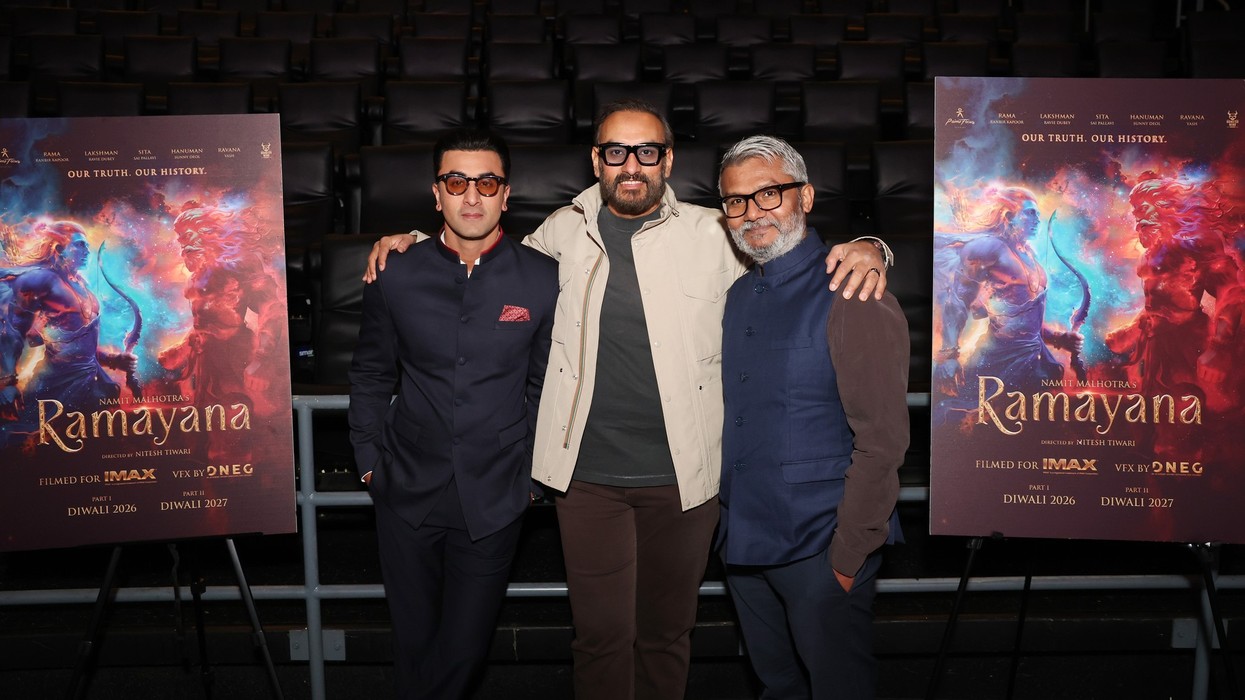
NITESH TIWARI’S Ramayana has become one of the most discussed Indian films in recent weeks, following the announcement that the two-part epic will be released worldwide on November 6 during Diwali, followed by the next edition during the festival of lights in 2027.
Shot for IMAX, the first installment is expected to cover Ram’s exile from Ayodhya, his journey with wife Sita and brother Lakshman, and the events leading up to Sita’s abduction, while the second part will focus on the rescue mission and the battle with Ravan.
Much of the attention around the film comes from the scale of its production. With a reported budget of around $475million-$480m, Ramayana is among the most expensive Indian films made.
The project brings together international VFX studio Double Negative (DNEG), known for films such as Dune, Interstellar and Inception, along with a musical collaboration between Oscar winners Hans Zimmer and AR Rahman.
Ramayana’s cast has added another layer of interest – Ranbir Kapoor plays Ram, Sai Pallavi portrays Sita, and Yash takes on the role of Ravan, while Sunny Deol is cast as Hanuman and Ravi Dubey as Lakshman.
Kapoor’s portraying Ram has become a major talking point, given the cultural importance of the character.
Director Tiwari has spoken about the responsibility of bringing the epic to the screen, describing the process as “intimidating, challenging, inspiring.”
Defending his choice of Kapoor, Tiwari said the role required an actor who could balance emotion, restraint and physicality. “Lord Ram was a man of few words. His love was unbound. His pain could not be seen, but it could be felt. His courage needed a lot of physicality.”
The release of the trailer on July 30 further increased interest around the film. The English trailer, along with versions in Hindi, Tamil, Telugu, Kannada and Malayalam, introduced the project to audiences across India and abroad. The footage focuses on Ram’s exile, his relationship with Sita and Lakshman, and the growing conflict with Ravan.
On social media, users highlighted the screen presence of Yash of Ravan, while Kapoor’s Ram received mixed reactions.
The costumes have also sparked discussion since Ramayan’s first looks were released. While many viewers praised the detailing, some questioned whether certain designs matched the epic’s setting, with Lara Dutta’s Kaikeyi look drawing particular attention online.
Responding to the debate, the costume team said the designs were created through research and a balance between tradition and cinema.
“The idea was to create a visual identity for every character,” the designers said, while ensuring the costumes reflected their “personalities, backgrounds and journeys.”
Ramayana’s international push included its recent presentation at San Diego Comic-Con, where the makers introduced the project to a global audience. Producer Namit Malhotra described Ramayana as an effort to bring the epic to the world stage while staying connected to its original values.
Interest in the film is being driven not only by its star cast and budget, but also by the expectations attached to telling one of India’s most familiar stories on a scale never attempted before.
The film also represents a major test for the future of large-scale Indian franchises, where mythology, technology and international distribution are being combined to create long-term cinematic properties. If successful, Ramayana could influence how Indian epics and historical narratives are developed for global audiences in the years ahead.