
Highlights:
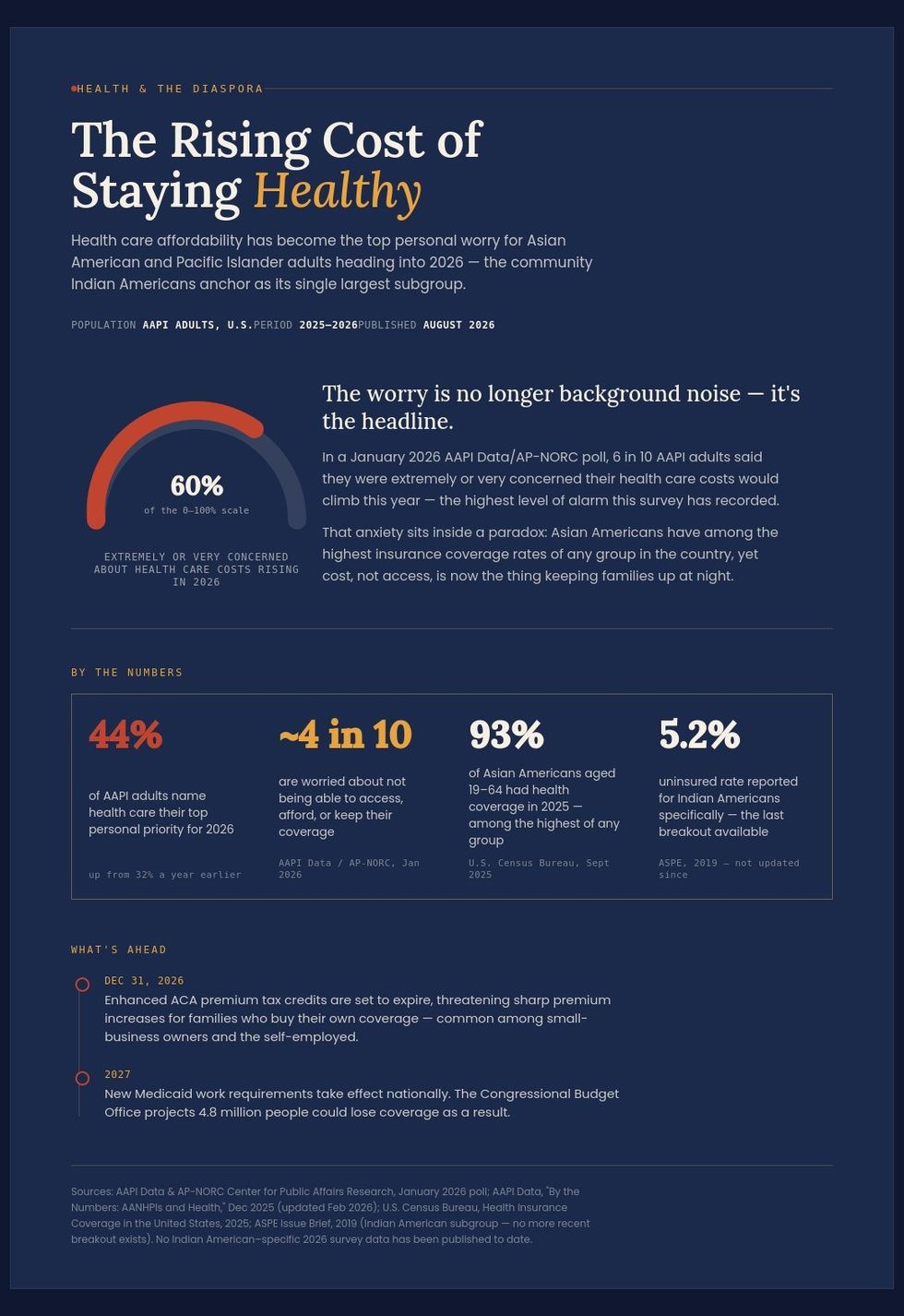
- 47 per cent of US adults worried they could not afford necessary health care in 2026.
- 49 per cent were considered financially secure enough to afford needed care and medicine in 2025.
- More than 82 million Americans made financial trade-offs to pay health care costs.
- ACA enhanced subsidies expired at the end of 2025, increasing Marketplace costs for many enrollees.
- Reddit users describe premiums, deductibles and family coverage as increasingly difficult to manage.
Nearly half of US adults, 47 per cent, said they were worried they would not be able to afford necessary health care in 2026, according to West Health-Gallup research. That is the highest level of concern recorded since the organizations began tracking the measure in 2021.
The financial pressure is not limited to low-income households. Newer West Health-Gallup research found that about one in three US adults, representing more than 82 million people, made at least one financial trade-off in the previous year to pay for health care. Common responses included borrowing money and stretching or rationing prescription medications.
For some Indian American and other immigrant families, the problem can be particularly complicated. Coverage may depend on a small business, self-employment, a job tied to an employer, or private insurance for parents visiting the United States. These situations can leave families with fewer straightforward options when income changes or a major medical emergency strikes.
Health care costs are now affecting everyday life
The West Health-Gallup findings show that health care costs are no longer simply an issue people confront at the doctor's office.
About one-third of adults surveyed said they had made at least one sacrifice in their daily lives to pay for health care. Among uninsured adults, the figure rose to 62 per cent. Even among households earning $90,000 to less than $120,000, 25 per cent reported making at least one trade-off.
The choices can be painful: borrowing money, cutting back on household expenses, delaying plans or stretching medications.
The pressure is also affecting major life decisions. West Health-Gallup found that nearly one in 10 adults, an estimated 24 million people, said they had postponed retirement because of health care costs. Eighteen percent said they had delayed changing jobs, while 14 per cent had postponed buying a home.
And the problem is not simply about whether someone has insurance.
In June 2026, Gallup reported that only 49 per cent of US adults were "Cost Secure", meaning they said they could afford quality care and had recently been able to pay for medical visits and prescriptions. That was down from 56 per cent when the measure began in 2021.
 Claude.in
Why small-business and immigrant families can feel the squeeze
For many Indian American households, health insurance may not come through a large corporate employer.
Some families run restaurants, convenience stores, motels, professional practices and other small businesses. Others work as independent contractors or in the gig economy. When there is no traditional employer-sponsored plan, families may have to purchase coverage themselves through the Affordable Care Act Marketplace or another source.
That can make premium increases especially difficult to absorb.
The enhanced ACA premium tax credits that helped reduce Marketplace premiums expired at the end of 2025 and were not renewed by Congress. KFF estimates that the expiration increased premium payments for Marketplace enrollees, with some people also losing eligibility for premium tax credits altogether.
Reddit discussions from small-business owners illustrate how that pressure feels in real life.
In the r/smallbusiness community, one self-employed couple said their Marketplace PPO premium increased from $1,700 to $2,200 a month after their subsidy was reduced. Another small-business owner described receiving a $2,200 monthly quote for coverage for a family of three.
One Reddit user summed up the frustration bluntly: "I just can't make sense of paying this much longer." — r/smallbusiness.
Another small-business owner wrote that a family plan would cost about $2,200 a month, adding that the expense was difficult to justify alongside the employee's salary. — r/smallbusiness.
These are individual Reddit experiences, not nationally representative evidence. But they provide a window into the kind of financial calculation reflected in the broader West Health-Gallup data.
Visiting parents face a different kind of coverage gap
For Indian American families, another concern can involve parents visiting the United States from India.
Parents who come to the US on temporary visitor visas generally cannot simply rely on Medicare, which is primarily designed for eligible older Americans with the required US work history or other qualifying circumstances.
Families therefore often turn to private travel medical or visitor insurance.
Those policies can be useful, but they are not necessarily equivalent to comprehensive U.S. health insurance. Coverage limits, deductibles, exclusions, preexisting-condition provisions and eligibility rules can vary significantly between policies.
That means a family planning for a several-month visit may face an uncomfortable calculation: pay more for broader coverage, accept substantial out-of-pocket exposure, or hope that an emergency never happens.
A Reddit discussion in r/indiahealthinsurance similarly shows how members of the Indian diaspora think about international coverage for themselves and insurance needs for parents, including hospitalization, emergency treatment and international coverage.
The broader lesson is important: having an insurance policy does not necessarily mean having complete financial protection from a major medical event.
The safety net is getting more complicated
The financial pressure is unfolding alongside major changes to Medicaid and other federal health programs.
Under the 2025 reconciliation law, Medicaid eligibility and enrollment rules were changed, including a new community-engagement requirement for certain adults. CBO projects that the law's Medicaid provisions will reduce Medicaid enrollment substantially over the coming decade and increase the number of uninsured people.
That makes the affordability problem more than a question of monthly premiums.
For families already operating with narrow financial margins, losing coverage or facing higher deductibles can force difficult choices: postpone a doctor's appointment, delay a prescription, use savings, borrow money or put off another household expense.
The West Health-Gallup research suggests those choices are already happening. About 15 per cent of adults reported borrowing money to pay health care expenses, while another 15 per cent reported prescription rationing or non-adherence.
The result is a particularly painful paradox: people can technically have insurance and still be afraid to use it.
For Indian American families balancing small-business income, self-employment, changing jobs, immigration-related circumstances or visiting relatives, that uncertainty can feel even more personal.
Health insurance is supposed to be the safety net.
For millions of Americans in 2026, it increasingly feels like another bill they are afraid they will not be able to afford.










 A mud-covered building following a flash flood at Trishuli in Nuwakot district, Nepal, August 26, 2026.Reuters.
 A CCTV footage shows people running away as wall of mud and water destroys buildings in a valley at Nepal-China border, in Gyirong, Tibet region, China August 26, 2026, in this screengrab obtained from a social media video.Reuters