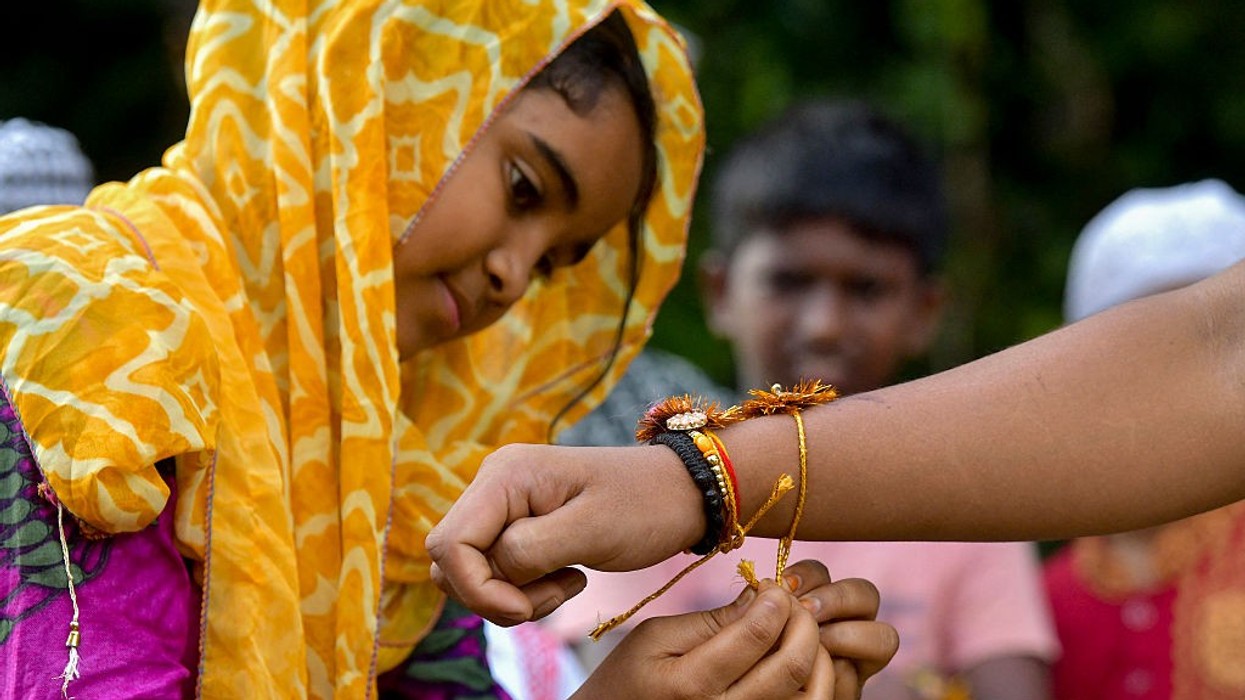

For millions of Indian families, Raksha Bandhan is not complete without a sister tying a sacred thread around her brother's wrist. But for families divided between India and the United States, that familiar ritual has become a long-distance calculation.
A sister in India may spend relatively little on the Rakhi itself. The expense begins when she tries to get it across the ocean—postage, packaging, gifts, sweets and, potentially, US import duties and processing requirements.
This year, India Post is making a visible effort to keep that connection alive. On August 14, 2026, the Department of Posts announced that its International Tracked Packet Service allows customers to send Rakhis and gifts to 135 countries, including the United States. The starting postal rate to the US is $4.19 for a packet weighing up to 50 grams, with 18 per cent GST charged additionally. That means the basic postage comes to $4.94 before the cost of the Rakhi or any gift inside.
For a festival built around affection rather than commerce, that number can feel surprisingly heavy.
A small Rakhi, a bigger bill
India Post Postmaster General Krishna Kumar Yadav described the service in deeply personal terms. “India Post’s International Tracked Packet Service is serving as an emotional bridge for millions of Indian families whose loved ones reside abroad,” as mentioned in the Department of Posts' August 14, 2026 release issued through the Press Information Bureau.
That emotional bridge, however, comes with a price.
The $4.19 US postage rate applies to a packet weighing up to 50 grams. An additional 18 per cent GST, or about $0.75, brings the basic cost to approximately $4.94. A sister who wants to send more than a single Rakhi, perhaps a greeting card, a small keepsake or a modest gift, can quickly move beyond that basic weight bracket.
India Post has also introduced special Rakhi packaging. In North Gujarat, its 2026 Rakhi covers cost ₹10, excluding postage, while special gift boxes cost $0.37 for 250 grams, $0.42 for 500 grams and $0.53 for 1 kilogram. The department says these boxes can be used to send Rakhis along with sweets and gifts to loved ones in India and abroad.
The numbers illustrate the emotional economics of long-distance Raksha Bandhan: the thread may be inexpensive, but maintaining the tradition across continents is not necessarily so.
The US Customs complication
The bigger financial uncertainty comes from the US side.
The United States suspended the long-standing de minimis exemption for low-value imports. Previously, qualifying shipments valued at $800 or less could generally enter without duty under that provision. US Customs and Border Protection says that treatment is no longer available for covered shipments entering through international mail.
That does not mean every Rakhi parcel automatically receives a large tariff. The amount owed depends on the merchandise, country of origin, declared value and applicable customs treatment.
That distinction matters because India Post's October 2025 announcement initially said postal shipments from India to the U.S. would face a flat 50% duty on declared FOB value under the tariff framework then in effect. India Post introduced a Delivery Duty Paid system so applicable duties could be collected in India before the parcel reached its American recipient.
But US rules subsequently changed. The February 2026 executive order continued the suspension of duty-free de minimis treatment, while establishing a new framework for international postal shipments. The White House also imposed a temporary 10 per cent import surcharge beginning February 24, 2026, although that particular surcharge was scheduled to run through July 24 unless extended.
For that reason, it would be misleading to tell American readers that a Rakhi sent from India in August 2026 automatically carries a 50 per cent tariff. The rules are more complicated, and the applicable duty can depend on how and what is shipped.
When tradition meets the cost of distance
For Indian-American families, the issue is about more than customs policy.
Imagine a sister in Ahmedabad preparing a Rakhi parcel for her brother in New Jersey. She buys the Rakhi, perhaps adds a card and a small gift, pays for packaging and then pays international postage. If the parcel becomes heavier, the shipping cost rises. If the contents trigger U.S. duties or other applicable charges, the financial calculation becomes harder still.
The emotional cost is already familiar. A sister cannot simply walk into her brother's home, perform the ceremony and share a meal. She has to replace physical presence with a parcel, a video call or a carefully timed delivery.
Now, even that parcel requires more planning.
India Post has tried to make the process easier. Its 2026 program offers tracked international packets to 135 countries, while special Rakhi covers and boxes have been introduced specifically to help families send the festival across borders.
The department has even promoted affordable domestic Rakhi options and special packaging initiatives. In August, Chhattisgarh Postal Circle introduced a ₹520 Rakhi Special Gift Box containing a complete Raksha Bandhan set, another example of how India's postal network is trying to turn physical distance into something manageable.
Yet the central contradiction remains.
India is trying to make it easier for sisters to send love overseas at a time when U.S. import rules have made low-value international shipments less straightforward.
For an American family receiving a Rakhi, the package may look tiny: a colorful thread, perhaps a card and a few carefully chosen gifts. For the sister who mailed it, it represents much more, the cost of postage, the effort of customs declarations and the hope that something deeply personal survives the journey.
Raksha Bandhan has always been about a bond that distance cannot break.
In 2026, Indian sisters are simply paying more to prove that it hasn't.

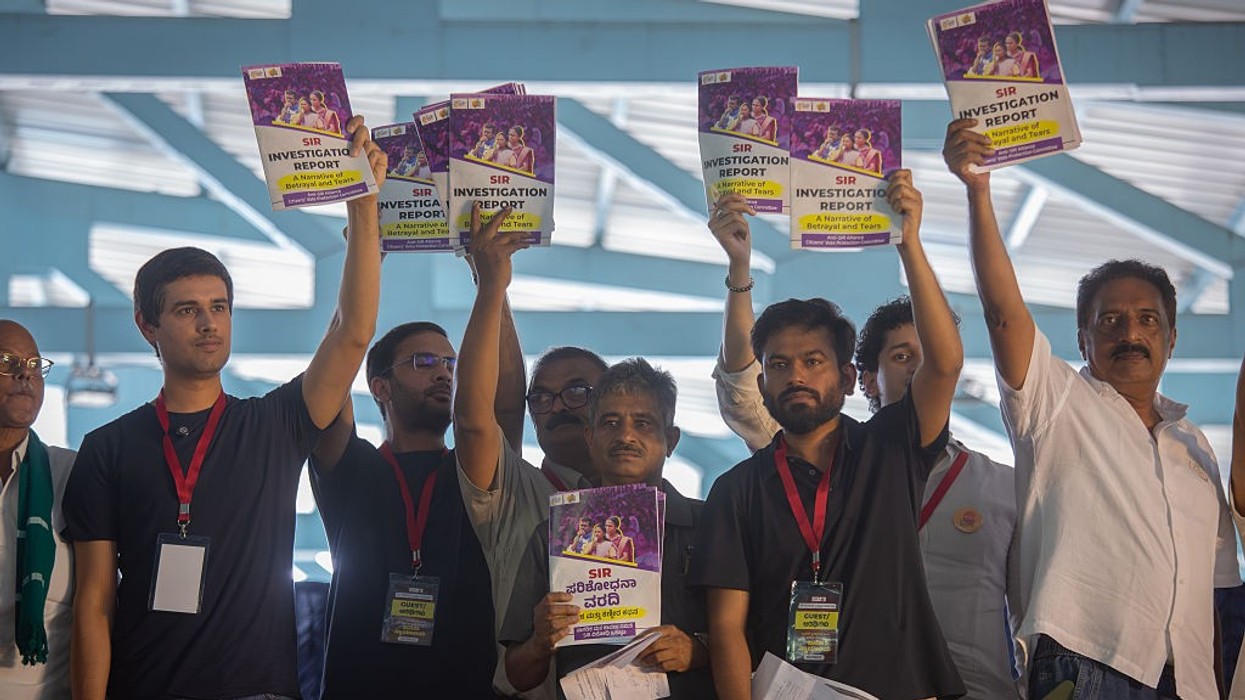
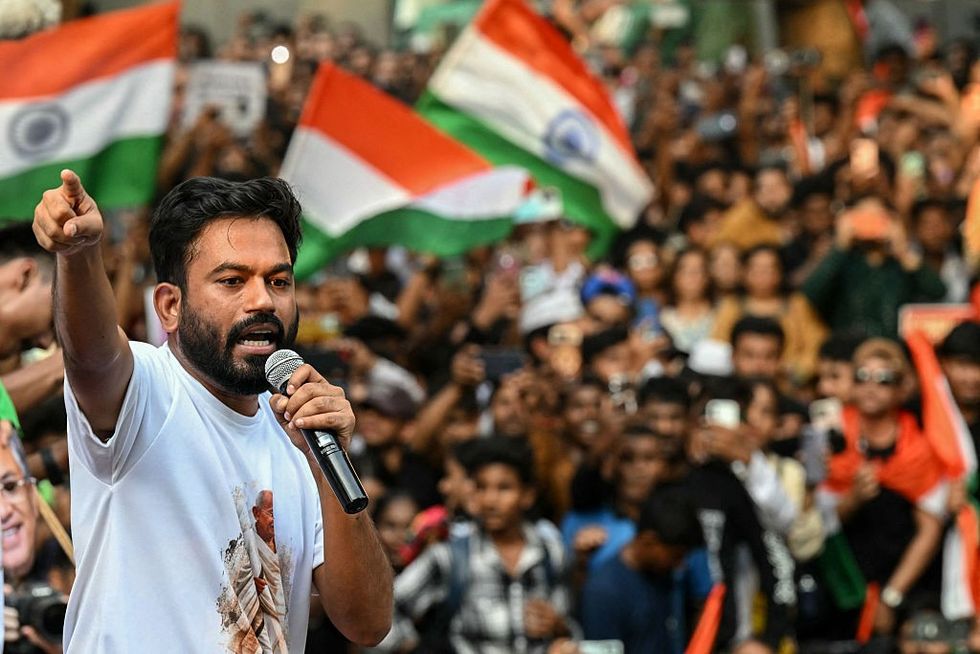 Cockroach Janta Party (CJP) founder Abhijeet Dipke addresses supporters during a protest demanding the resignation of India's chief election commissioner Gyanesh Kumar over alleged voter-roll irregularities in Mumbai on October 2, 2026. Indian protesters rallied in New Delhi and Mumbai on October 2, including members of the popular youth-led "cockroach" party, demanding the resignation of the chief election commissioner over alleged voter-roll irregularities.Getty Images