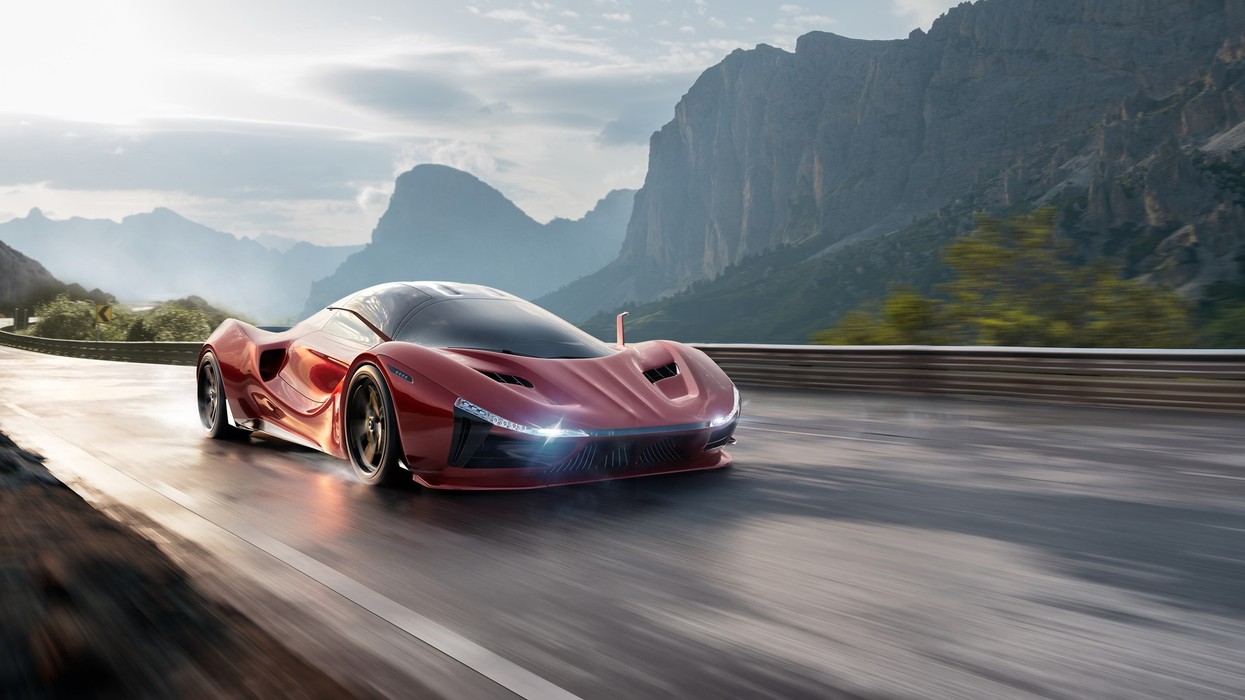

- Porsche has signed a five-year, 1.25 billion euro ($1.46 billion) AI deal with Tata Consultancy Services.
- As part of the arrangement, TCS will acquire Porsche's IT consulting business, MHP, for 320 million euros.
- The deal comes as TCS reports rising AI-linked revenue, even as Indian IT stocks broadly struggle this year.
Porsche is making a sizable bet on artificial intelligence, and it is doing so by leaning on India's largest IT services firm rather than building everything in-house. The German sports car maker has signed a five-year, 1.25 billion euro (roughly $1.46 billion) contract with Tata Consultancy Services, and as part of the deal, TCS will also acquire Porsche's IT consulting business, MHP, for 320 million euros.
Michael Leiters, Porsche's chairman, reportedly said the arrangement combines Porsche's "automotive expertise with TCS's digital and AI capabilities," and is meant to boost the automaker's innovation, efficiency and competitiveness "in an increasingly data- and software-driven world of mobility." In simpler terms, Porsche wants help catching up in a car industry that is becoming just as much about software as it is about engines and design.
A deal that goes beyond typical outsourcing
This is not your standard vendor arrangement. By buying MHP outright, TCS is not just providing services to Porsche, it is absorbing an entire unit of roughly 4,500 employees along with years of specialized German automotive and engineering know-how. That kind of domain expertise is hard to come by, and it instantly gives TCS more credibility to pitch similar AI and software work to other automakers across Europe, not just Porsche.
K. Krithivasan, TCS's chief executive and managing director, reportedly said the goal is to "industrialize AI at scale for Porsche." Beyond that single client, the acquisition also strengthens TCS's footprint in Germany and among European automotive and industrial customers more broadly, at a time when the company is trying to prove it can do more than routine IT maintenance.
The timing is notable too. TCS has been closing several AI-focused transformation deals since the start of the year, and the company said its annualized AI revenue hit $2.6 billion in the June quarter, up 13.6 percent from the previous quarter. That said, the broader picture for Indian IT firms has not been rosy. There is a widespread concern that AI could eventually hurt the business prospects of IT services companies rather than help them, and the Nifty IT index, which tracks IT services stocks, is down nearly 20 percent since the start of the year, compared with a drop of just over 7 percent for the Nifty 50.
Part of a bigger cost-cutting plan at Porsche
The MHP sale is not a standalone move either. It fits into Porsche's broader "Sportwagenschmiede 35" strategy, aimed at improving the company's profitability and cash flow. Leiters reportedly said last month that Porsche is "firmly aligning our company with our core business," with streamlining operations at every level forming a key part of that plan. The deal with TCS will only take effect once the acquisition of MHP is formally completed.
Financial analysts have pointed out that this will not be entirely painless for TCS either. Since MHP operates almost entirely in Europe without a cheaper offshore delivery model, some estimates suggest the acquisition could dilute TCS's margins by 50 to 60 basis points over the next year. That suggests TCS is willing to accept some short-term financial pressure in exchange for a stronger, more entrenched position in Europe's shift toward AI-driven manufacturing.
Whether this partnership becomes a template for how legacy automakers and IT giants work together going forward remains to be seen, but for now, it is a clear signal that even a brand as steeped in mechanical engineering as Porsche sees its future increasingly tied to software and data.





 Amazon
 Amazon
 Amazon
 Amazon
 Amazon
 Amazon
 Amazon
 Amazon
 Amazon
 Amazon
 Amazon
 Amazon
 Amazon
 Amazon
 Amazon
 Amazon
 Amazon
 Amazon
 Amazon
 Amazon