Highlights:
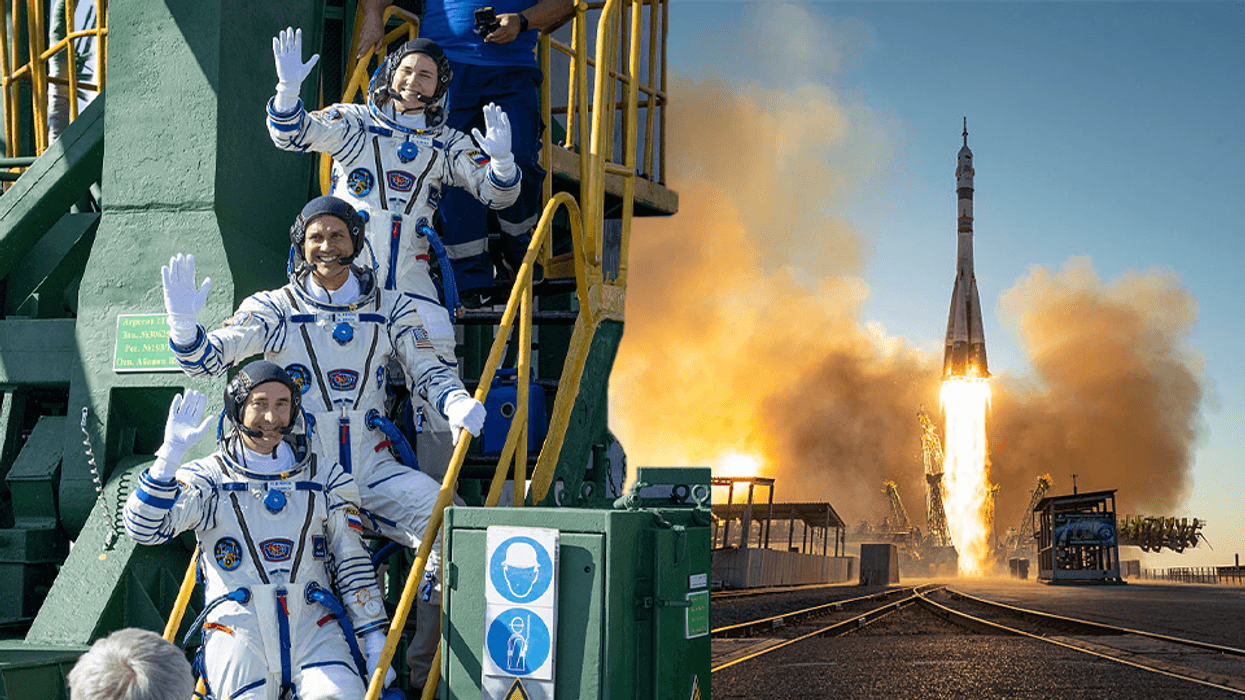
Indian-origin NASA astronaut Dr. Anil Menon has begun his first mission aboard the International Space Station (ISS) after the Soyuz MS-29 spacecraft successfully docked with the orbiting laboratory. The Soyuz MS-29 spacecraft launched on Tuesday (14).
Leading the mission is Commander Pyotr Dubrov, a veteran Roscosmos cosmonaut embarking on his second spaceflight, who famously spent nearly a year continuously in orbit during his first mission from 2021 to 2022. Flying alongside him is Flight Engineer Anna Kikina, also making her second trip to space; she made history in 2022 as the first Russian cosmonaut to fly on a commercial American spacecraft via SpaceX’s Crew-5 mission. The final seat is held by NASA’s Menon, a US Space Force Colonel, engineer, and emergency medicine physician making his very first spaceflight.
When NASA selected Menon as an astronaut in 2021, it wasn't because of a single achievement it was the result of years of preparation across medicine, engineering, military service, and human spaceflight. Before earning a seat aboard the Soyuz MS-29 spacecraft for his first mission to the International Space Station (ISS), Menon had already spent years working behind the scenes to keep astronauts healthy and missions safe.
NASA's astronaut selection process is among the most demanding in the world. Tens of thousands of applicants compete for only a handful of positions, undergoing extensive medical evaluations, psychological screening, physical fitness assessments, and reviews of their operational experience. Candidates are expected to demonstrate technical excellence, teamwork, decision-making under pressure, and the ability to function in isolated, high-risk environments.
Menon's resume checked every one of those boxes.
1. Years of Human Spaceflight Experience
Long before becoming an astronaut, Menon was deeply involved in NASA's human spaceflight program. Beginning in 2014, he worked as a NASA flight surgeon and spent more than six months in Star City, Russia, supporting multiple long-duration Soyuz missions to the ISS.
In 2018, he joined SpaceX as the company's first flight surgeon, where he built its medical operations program and supported milestone missions, including Demo-2, the first crewed SpaceX mission, and Inspiration4, the first all-civilian orbital spaceflight.
2. Rare Combination of Medicine and Engineering
NASA values astronauts who can solve technical and medical challenges in space. Menon earned a master's degree in Mechanical Engineering from Stanford University before completing both a Doctor of Medicine (MD) at Stanford and a Master of Public Health (MPH) at the University of Texas Medical Branch.
He also conducted engineering research at NASA Ames Research Center while maintaining an active career as an emergency medicine physician with specialized training in aerospace and wilderness medicine.
3. Proven Performance Under Extreme Pressure
Menon also brought extensive military and disaster-response experience.
A Colonel in the U.S. Space Force, he previously served as an Air Force flight surgeon, logging more than 100 sorties in F-15 fighter jets and over 1,000 flight hours as a pilot. He deployed with Critical Care Air Transport Teams, treating wounded service members during missions in Afghanistan.
His emergency response work also took him to major disasters, including the 2010 Haiti earthquake, the 2011 Reno Air Show crash, and the 2015 Nepal earthquake. He also treated climbers on Mount Everest through the Himalayan Rescue Association.
Now aboard the International Space Station after Soyuz MS-29 successfully docked, Menon has joined Expedition 74/75 for an approximately eight-month mission.
His work will focus on experiments designed for the next generation of deep-space exploration. These include testing artificial intelligence-assisted ultrasound systems, evaluating autonomous medical technologies, studying how long-duration spaceflight affects blood circulation and overall human health, and advancing semiconductor crystal manufacturing in microgravity.
NASA is also using the mission to test medical capabilities that astronauts may need during future Artemis missions to the Moon and eventual crewed missions to Mars, where immediate support from doctors on Earth will not be possible.
Menon's career uniquely positioned him for these responsibilities. His blend of operational experience, engineering expertise, emergency medicine, and prior work supporting astronauts made him one of NASA's strongest candidates for the agency's next era of human space exploration.
Born to an Indian father from Kerala and a Ukrainian mother, Menon was selected by NASA in 2021 following one of the world's most demanding astronaut selection processes.