
Highlights:
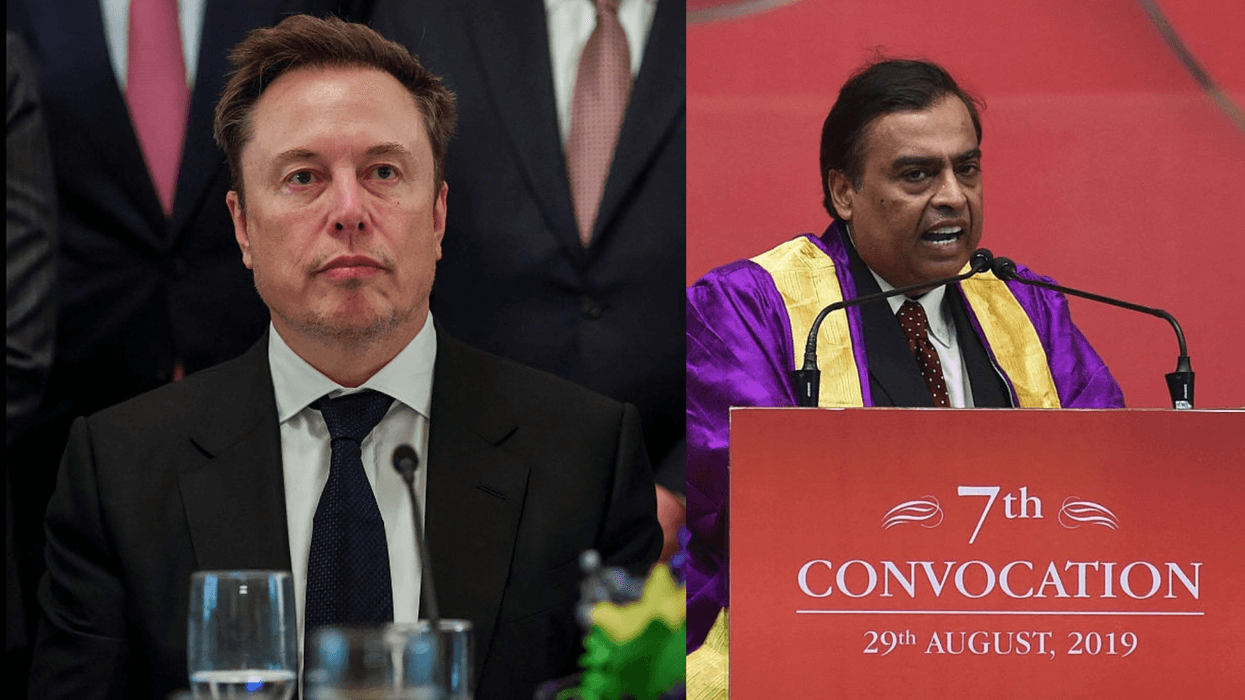
Elon Musk has intensified his public feud with Indian billionaire Mukesh Ambani, sharing media reports alleging links between Reliance-associated businesses and political funding for India’s ruling Bharatiya Janata Party (BJP). The latest escalation comes as Musk accuses powerful business interests of obstructing his Starlink satellite internet service in India to protect existing market dominance.
On Saturday (10), Musk posted screenshots of a 2022 Al Jazeera investigation into a Reliance-funded firm allegedly helping boost BJP campaigns on Facebook and an archived 2024 Indian Express report concerning political donations by Qwik Supply, a Reliance-linked company.
The Indian Express report said Qwik Supply donated $39.9 million to the BJP and $2.6 million to the Shiv Sena through electoral bonds. The reports shared by Musk concern allegations about political and business connections; sharing them does not independently establish wrongdoing by Reliance or the companies mentioned.
Reliance has not publicly responded to Musk’s latest allegations.
Musk takes aim at Ambani over political and business influence
The latest posts follow a series of increasingly confrontational remarks by Musk, who has accused Ambani of protecting a dominant position in India’s telecommunications market.
A few hours before sharing the reports, Musk addressed Ambani as "Prime Minister Ambani" and questioned whether Reliance would allow Starlink to compete in India.
"Dear Prime Minister Ambani, Please accept my humble apologies for not realising that you are the real boss of India. Naturally, you would prefer to maintain your monopolistic exploitation of the great people of India, but would you nonetheless consider allowing Starlink to compete?" he wrote.
The remark was a sarcastic swipe at Ambani’s influence and an escalation in Musk’s criticism of the conditions facing his satellite broadband company.
Musk has argued that Starlink could help connect underserved communities, giving children access to educational resources and small businesses opportunities to reach international customers.
He also highlighted the technology’s potential during emergencies, writing that Starlink has proven essential in saving lives during natural disasters when other communication systems failed.
The dispute has placed India’s satellite internet market at the centre of a wider argument about competition, regulatory approvals and the influence of major corporate groups.
India rejects claims of preferential treatment
The Indian government has pushed back against suggestions that regulatory decisions are being used to favor one company over another.
Communications Minister Jyotiraditya Scindia said Friday that India does not permit monopolies in any sector. He also stressed that the government’s approach to satellite communications was technology-neutral.
"Let me set the record straight. For us, the Department of Telecommunications, we are technology agnostic... Our job is to be able to provide the bouquet of services to every single customer. It is for the customer to choose in a free market which service he or she prefers, and within that service bouquet, which company's service he or she prefers," the Union minister said at a briefing at the India Mobile Congress.
Scindia said three companies, Musk’s Starlink, Reliance Jio’s satellite venture Jio Satcom and Bharti-backed Eutelsat OneWeb—had secured satellite communications licenses. Amazon’s Project Kuiper has also expressed interest in entering the market.
However, companies must meet security requirements and other regulatory conditions before beginning operations. The government is also working toward a final decision on the pricing framework for satellite spectrum.
Starlink’s India launch remains uncertain
Musk has repeatedly questioned why Starlink has yet to begin commercial operations in India despite obtaining licenses in numerous other countries.
"Starlink is licensed in over 165 countries and has spent five years complying with every single law and requirement of the government of India, so why still no license?" Musk wrote in an earlier post on X.
His criticism comes as India Mobile Congress, the country’s major annual telecommunications event, showcases developments in connectivity and digital infrastructure. Reliance Jio Infocomm Chairman Akash Ambani declined to comment on the satellite communications dispute at the event, saying the company was focused on delivering value to Indian consumers.
Scindia also criticized the Congress party over its position on the dispute, arguing that its stance on Musk and licensing had been inconsistent.
For now, the confrontation remains unresolved. Musk is using his social media platform to challenge Ambani’s business influence and raise questions about political connections, while the government insists that satellite communications companies must follow the same regulatory framework.
Whether Starlink can begin commercial operations in India will depend on meeting the country’s remaining requirements. Meanwhile, Musk’s latest posts have broadened the dispute from a licensing disagreement into a public clash over corporate power, political donations and competition in one of the world’s largest telecommunications markets.