
Highlights:
A leaked draft agreement between the United States and Iran reveals major commitments by both countries as they prepare to begin formal negotiations on a final deal.
The 14-point framework agreement, published by Saudi Arabia’s Al Arabiya network, states that Iran has pledged never to produce nuclear weapons. In return, the United States would ease sanctions on Iranian crude oil sales, petrochemical products, banking services, and other sectors during the negotiation period. The U.S. also commits to removing all sanctions as part of a final agreement.
The memorandum of understanding (MoU) is expected to be signed in Geneva on Friday (19) by senior officials from both countries. According to the draft, both sides agree to an “immediate and permanent end to the war on all fronts, including Lebanon, and undertake that from now on they will not launch any hostile action against each other.”
Although the United States and Iran announced a ceasefire on April 8 after 40 days of bombing, tensions remain in Lebanon, where Israel still occupies parts of the country. Israeli prime minister Benjamin Netanyahu has said Israeli troops will not leave those areas. Hezbollah, the Lebanese Shia group with close ties to Iran, has said it will continue resisting Israel’s military presence.
The agreement also states that the United States and Iran will “respect each other’s sovereignty and territorial integrity, and to refrain from interfering in each other’s internal affairs”. Earlier in the conflict, president Donald Trump had indirectly encouraged political change in Iran by calling on Iranians to take control of their institutions. However, after announcing the MoU on June 15, he said he did not support regime change.
Once the memorandum is signed, both countries will begin negotiations on key issues, including Iran’s nuclear program. The goal is to reach a final agreement within 60 days, although that timeline can be extended if both sides agree.
Under the draft, the United States would immediately lift its naval blockade. Iran would then work to restore shipping traffic through the Strait of Hormuz to pre-war levels within 30 days. The agreement notes that this process would consider the removal of technical obstacles and the clearing of mines by Iran.
Trump has said ships would be able to pass through the strait without paying tolls. Iran’s foreign ministry has said there would be no tolls, but ships would still pay charges for environmental maintenance and other services.
The draft also states that the United States agrees to “withdraw its forces from the surrounding areas within 30 days after the final agreement,” although it does not define what those surrounding areas are.
One of the key provisions addresses Iran’s nuclear activities. The text states: “Iran reiterates that it will never produce nuclear weapons. Iran and the U.S. have agreed that the fate of enriched material and the fate of all other mutually agreed nuclear-related issues, including Iran’s nuclear needs, will be adequately addressed in a final agreement; the final agreement will confirm the provisions of this Article.”
Iran currently possesses hundreds of kilograms of highly enriched uranium. Tehran has long argued that uranium enrichment is its right and has refused to give it up. Trump, however, has called for zero enrichment on Iranian soil. These issues are expected to be discussed during the next phase of negotiations.
The draft also addresses Iran’s demands for access to frozen assets and assistance in rebuilding after the war. Iranian officials have said the country would gain immediate access to some unfrozen funds, while the Trump administration has maintained that no direct cash payments will be made.
However, the leaked text states: “The US undertakes that, in light of the progress of negotiations towards a final agreement, frozen or restricted funds and assets of Iran will be released and made fully available.” It adds: “The US undertakes to issue all necessary permits and licenses on this basis.”
In addition, the United States and its regional partners would “create a comprehensive plan agreed upon by both parties for the rehabilitation and economic development of Iran, While ensuring financing of at least $300 billion. The implementation mechanism of this plan, as part of the final agreement, will be formulated within 60 days.”
The draft concludes by stating that both countries have agreed that any final agreement will be approved through a binding resolution of the United Nations Security Council.







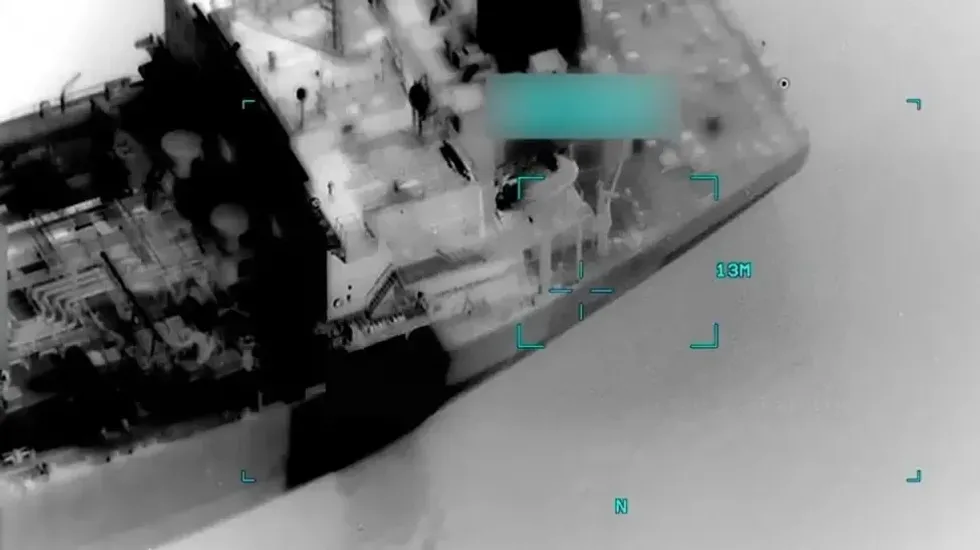 A US military image of the strike on the vessel off OmanUS Centcom