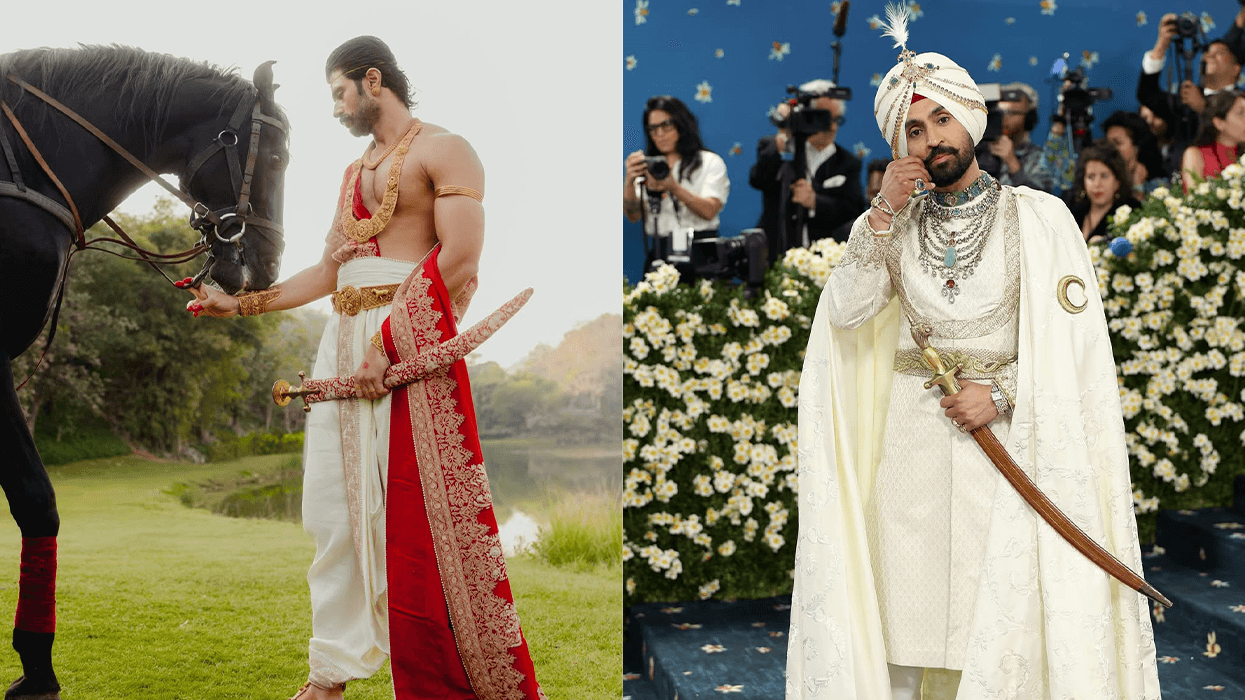

In a global menswear landscape dominated by restraint, clean lines, muted palettes, and the philosophy of “less is more,” Indian men are moving in the opposite direction. They are reclaiming maximalism, not as excess, but as identity. Through jewelry, textiles, and symbolism, they are reintroducing a visual language that once defined power, heritage, and masculinity across the subcontinent.
The original reference point for this aesthetic lies with ancient Indian kings, who treated the body like a moving throne. Across dynasties, from Mauryan and Gupta to Rajput, Mughal, and princely states, royal dressing was never about subtlety. It was about presence. Rich silks, fine cottons, and brocades in jewel tones like deep red, saffron, emerald, and indigo signaled wealth and divine favor. Garments themselves became surfaces of ornamentation, embroidered with gold and silver threads and often embedded with gems.
From thrones to textiles: The royal origins of Indian maximalism
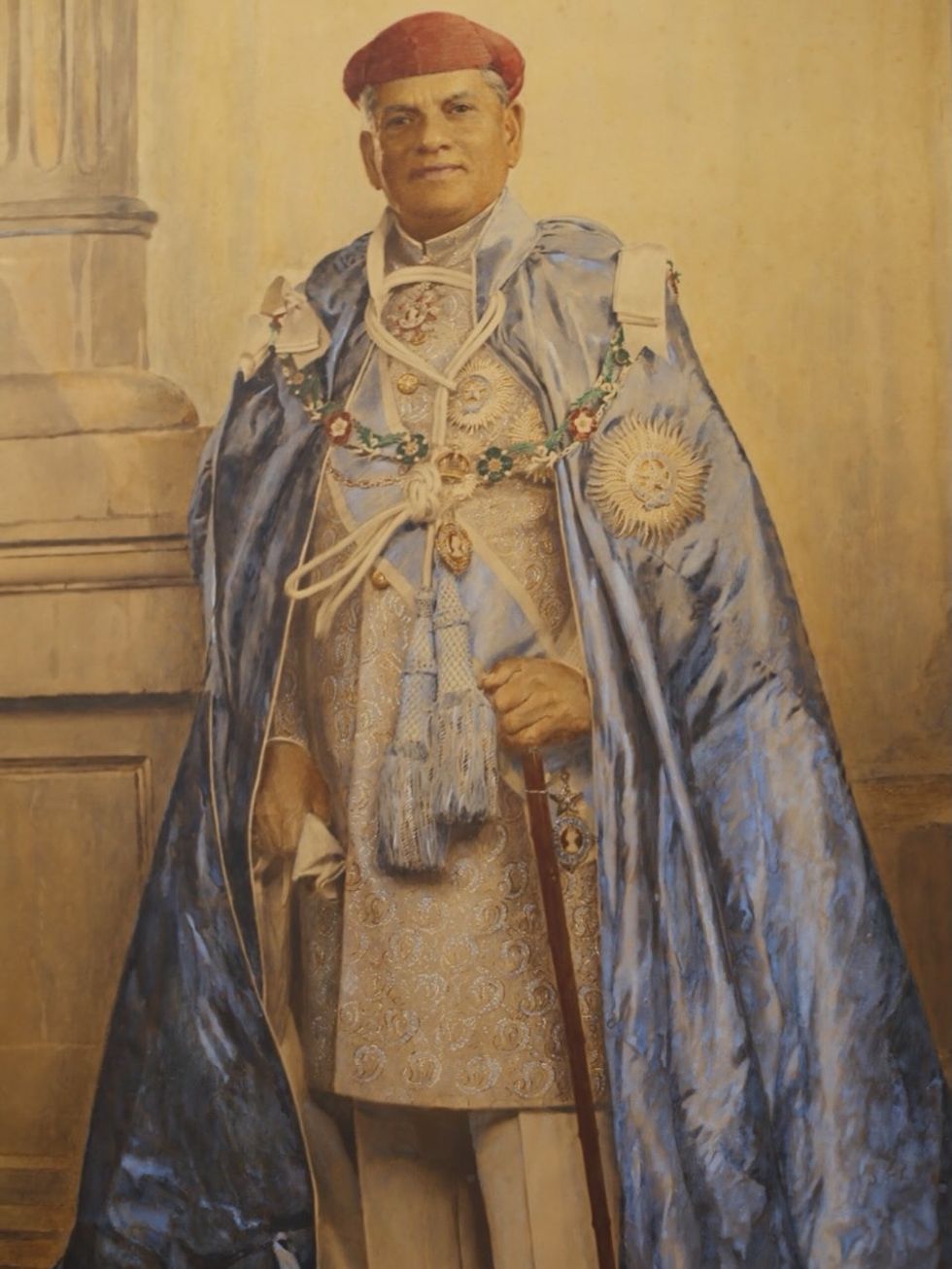 The royal ‘blue cloak’ worn by the King of BarodaInstagram/@radhikaraje
Layering defined the royal silhouette. The turban or crown formed the first layer of sovereignty, often adorned with sarpech ornaments, pearls, and gemstone chains. The upper body featured a structured build: a base tunic or angarkha, followed by longer coats or jamas, and finished with shawls draped across the shoulders. Around the neck, multiple strands of jewelry, from chokers to long malas, created depth and visual rhythm.
The arms and waist carried their own weight of symbolism. Armlets, stacked bracelets, rings, and kamarbandhs added both function and ornamentation. Even weapons like swords and daggers were intricately jeweled, transforming them into extensions of personal style. Dressing was immersive, layered from head to toe, front to back, never minimal, always intentional.
Today, that philosophy is finding new life.
Modern Indian men are revisiting this royal grammar of dressing, choosing visibility over understatement. Instead of disappearing into neutral tones and barely-there accessories, they are embracing curated abundance, stacked jewelry, ornate fabrics, and culturally rooted silhouettes that command attention without apology.
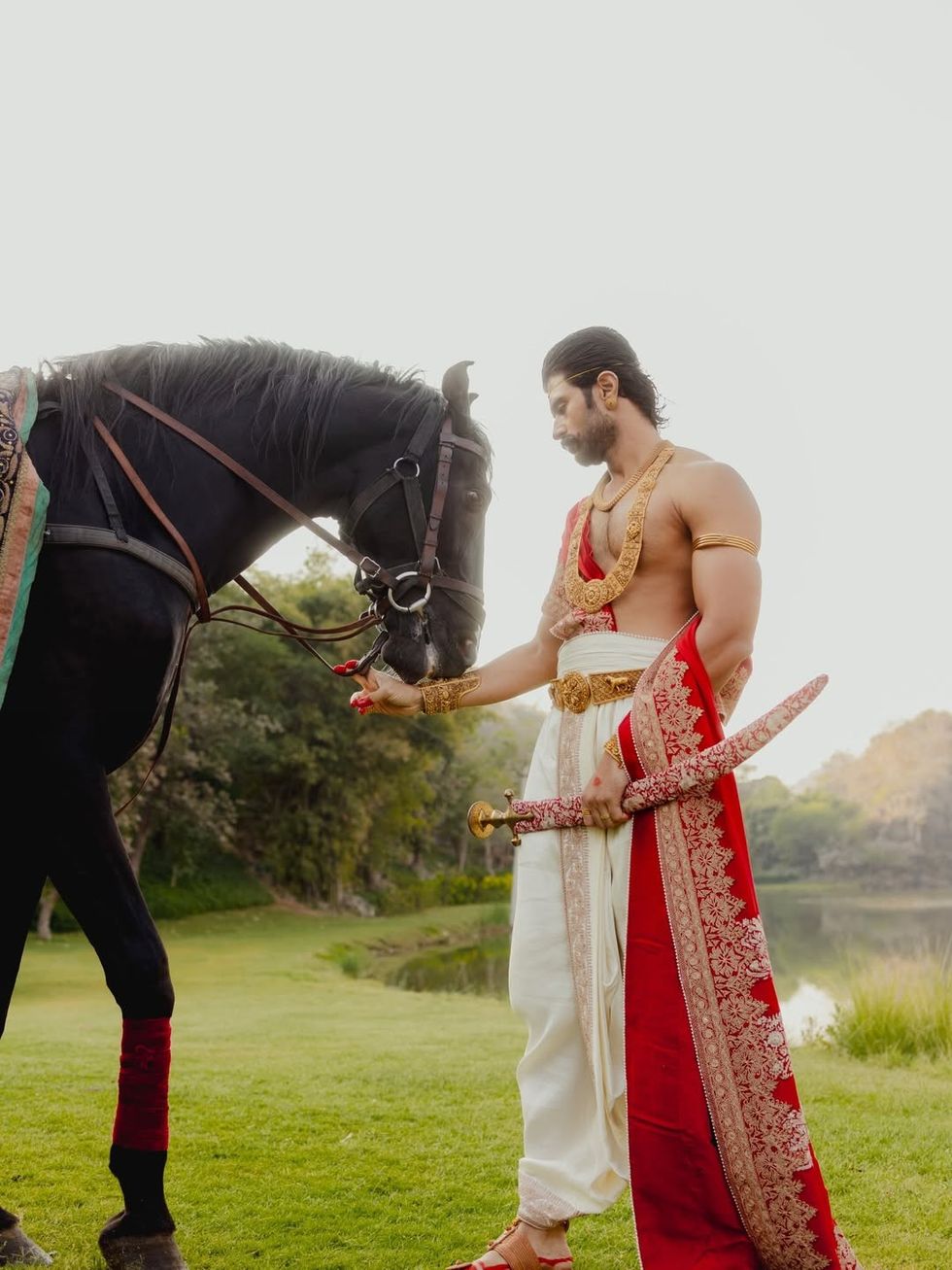 Vijaya Deverakonda at his weddingInstagram/ @thedeverakonda
Few moments capture this revival more clearly than Vijay Deverakonda’s wedding. At a time when contemporary grooms often lean toward pastel sherwanis and minimal styling, his look rejected restraint entirely. Dressed in a red-and-gold palette inspired by South Indian temple aesthetics, he wore layered gold jewelry and traditional ornaments that echoed royal iconography.
The styling positioned him not as a subdued partner beside the bride, but as a sovereign presence, equal, expressive, and deeply rooted in heritage.
This wasn’t a costume; it was continuity. A modern star stepping into an ancient visual language of masculinity that celebrates grandeur rather than suppressing it.
Modern icons, ancient aesthetics: Celebrities leading the shift
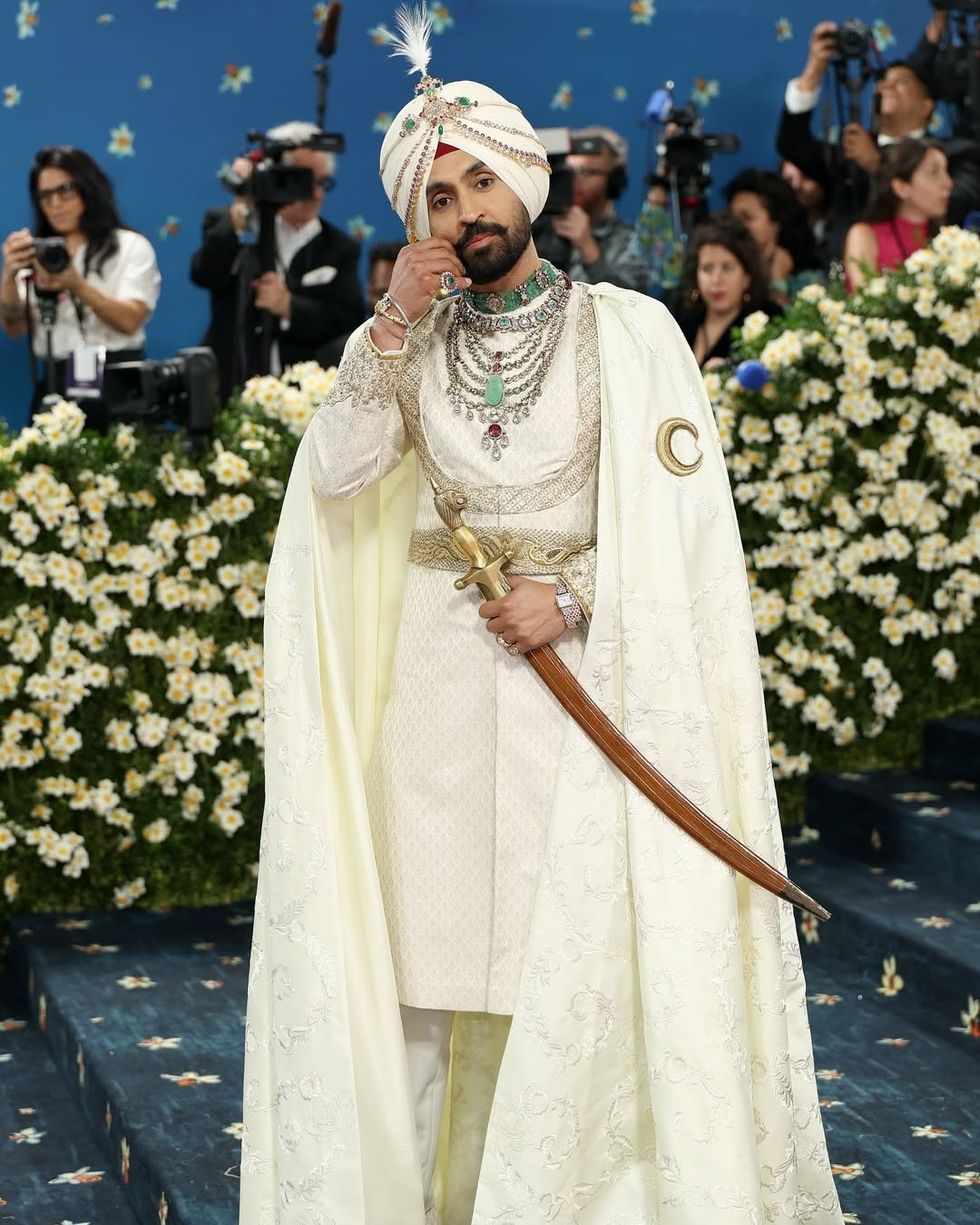 Diljit Dosanjh at Met Gala 2025Instagram/@diljitdosanjh
On the global stage, Diljit Dosanjh extended this narrative even further. His appearance at the Met Gala transformed one of fashion’s most Westernized spaces into a canvas for Indian maximalism. Wearing an intricately embroidered sherwani paired with a dramatic cape featuring Gurmukhi script and the map of Punjab, he turned clothing into a cultural assertion.
The look was layered not just in fabric, but in meaning. A jewel-studded turban, a statement neckpiece reminiscent of the historic Patiala necklace, and a lion-headed kirpan elevated the ensemble into something symbolic. In a room full of black tuxedos, his presence was impossible to ignore, proof that maximalism can be both deeply traditional and strikingly contemporary.
Meanwhile, Ranveer Singh continues to embody maximalism as an ongoing performance. His fashion choices blur the lines between heritage and experimentation; brocade sherwanis, bold prints, layered necklaces, and statement rings all come together to create looks that feel theatrical yet intentional.
Whether styled in ornate designer pieces or reinterpreting bohemian aesthetics with gold and gemstones, he treats clothing as a medium of expression rather than conformity.
What connects these figures is not just their use of jewelry or embellishment, but their refusal to minimize themselves. In a world that often encourages men to edit, simplify, and tone down, Indian maximalism offers an alternative: expand, express, and occupy space.
Beyond fashion: Why Maximalism is becoming a cultural statement
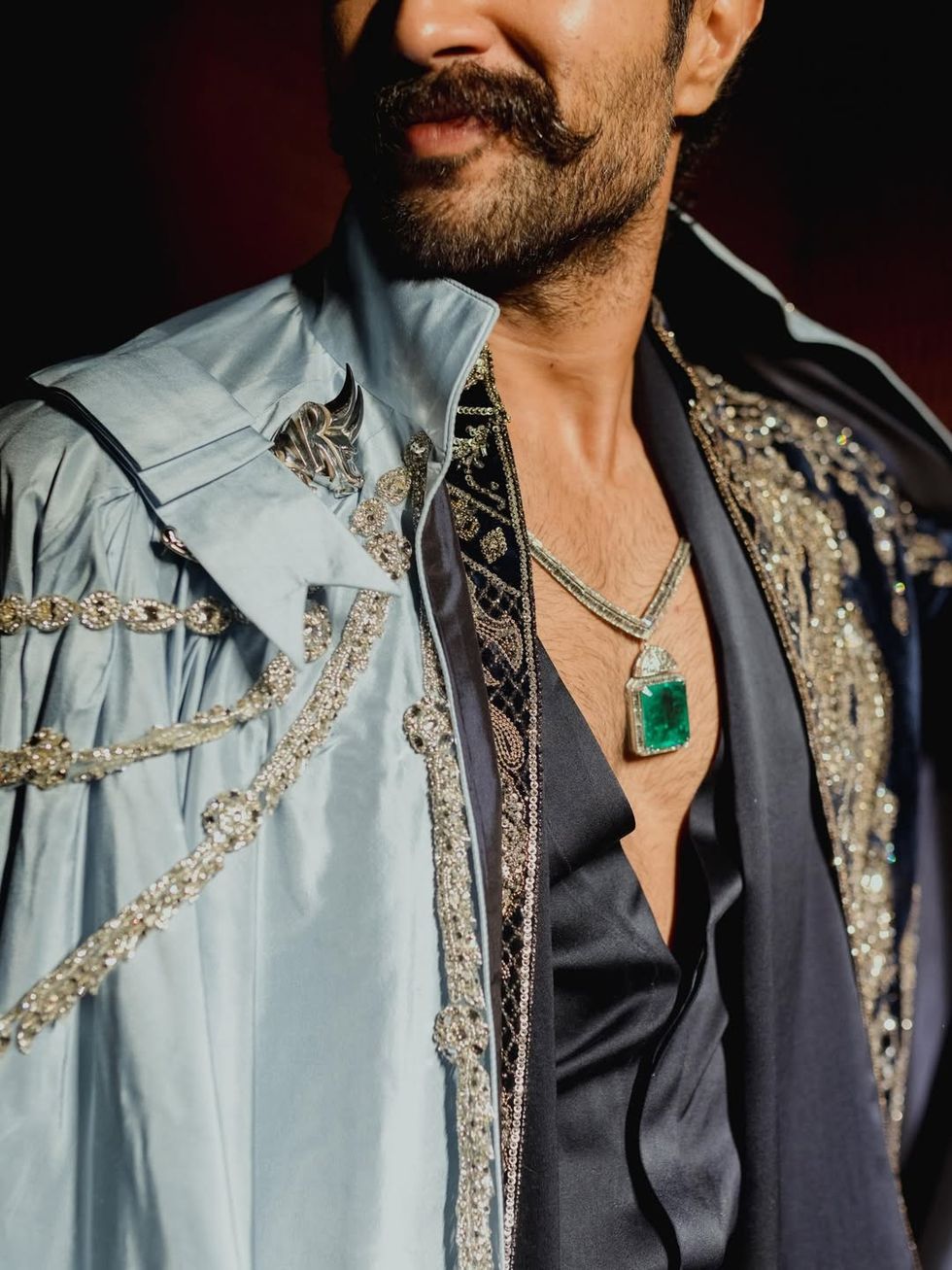 Vijay Deverakonda donning the ‘royal blue cloak.’ Instagram/ @thedeverakonda
This shift is also visible beyond celebrity culture. At weddings, red-carpet events, and cultural events, men are increasingly embracing temple-inspired necklaces, stacked bracelets, and intricate brooches. Jewelry is no longer seen as eccentric; it is becoming essential again.
Indian maximalism today is not about random opulence. It is about curated richness—heritage motifs, regional identity, and craftsmanship layered with intention. It draws from the past but speaks in a modern voice, allowing men to reconnect with a tradition where dressing was never just aesthetic, but symbolic.
In reclaiming this style, Indian men are not rejecting global fashion, they are redefining it. They are reminding the world that masculinity does not have to be quiet to be powerful. Sometimes, it shines brightest when it is fully seen.


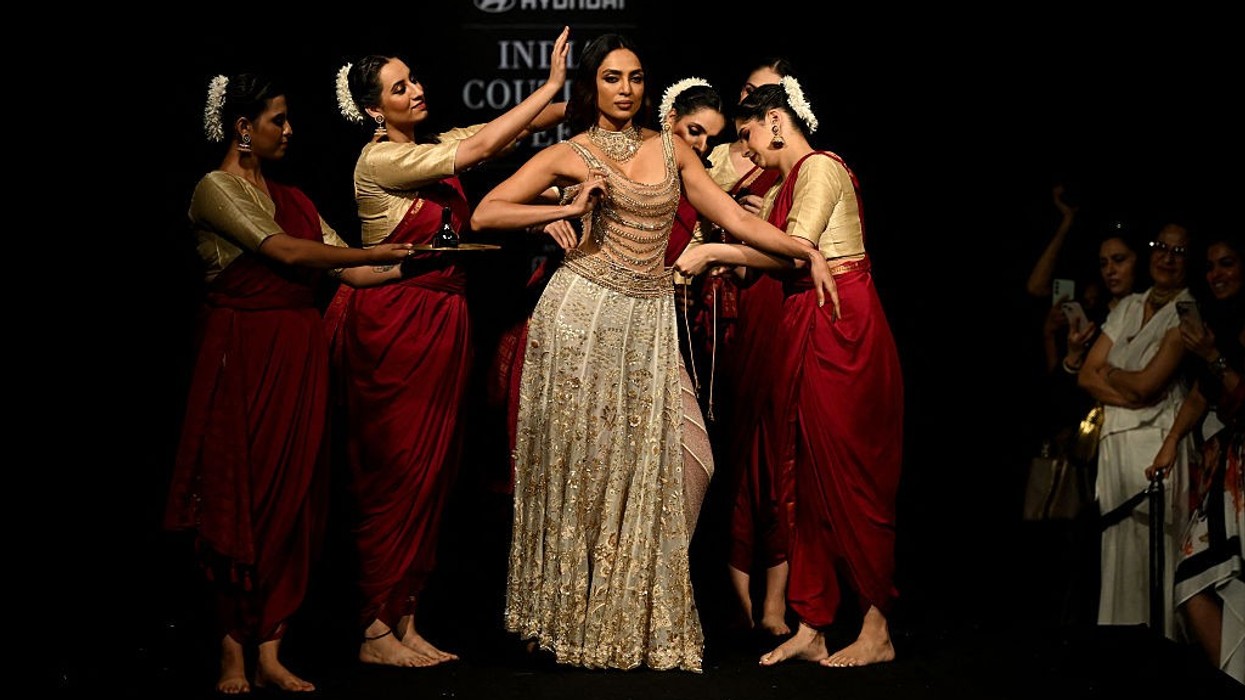
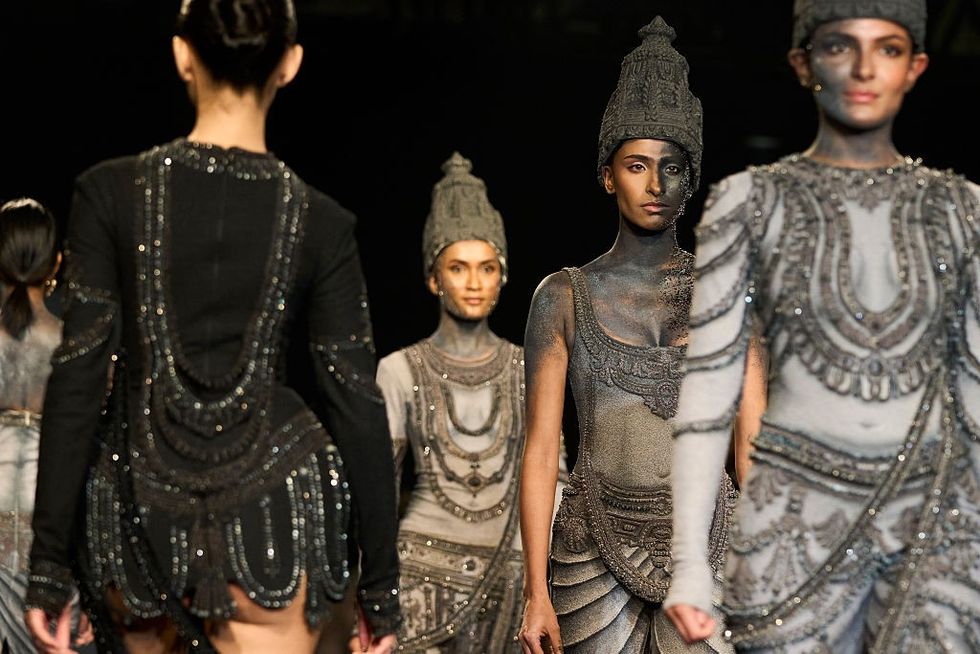 Devi: The Eternal MuseGetty Images
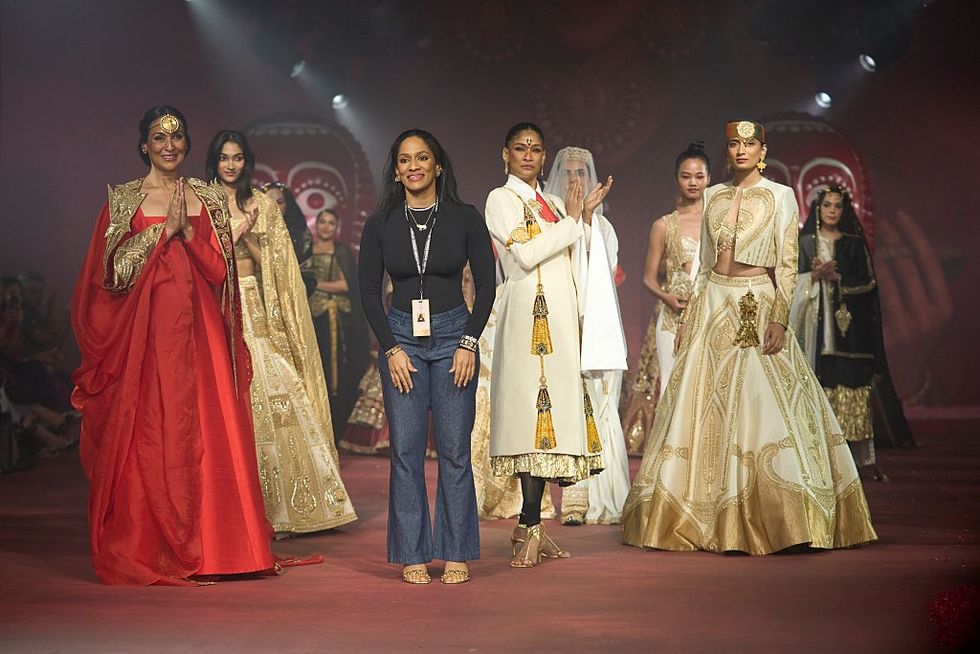 Masaba Gupta joins the models on the runway during the House of Masaba show at India Couture Week 2026 on July 25, 2026 in Delhi, India.Getty Images
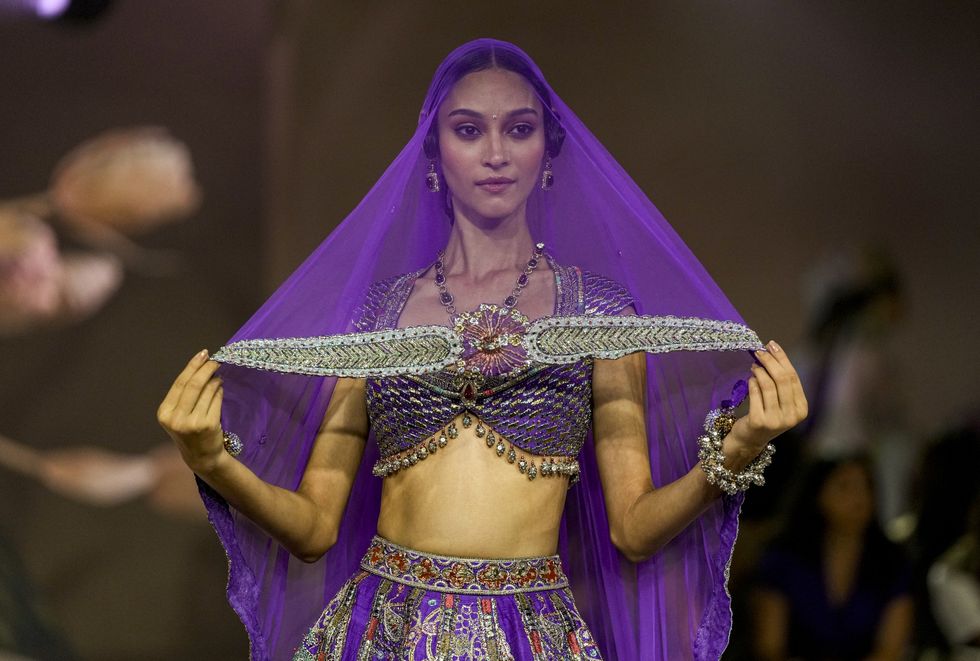 PTI
PTI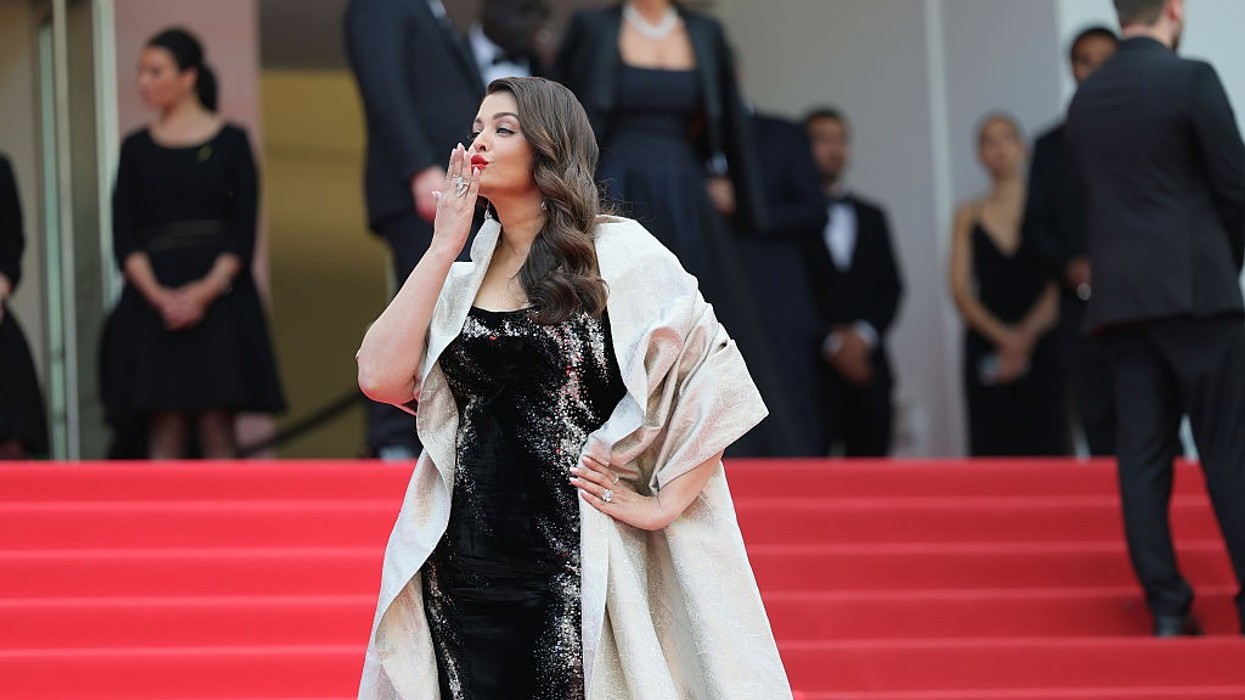

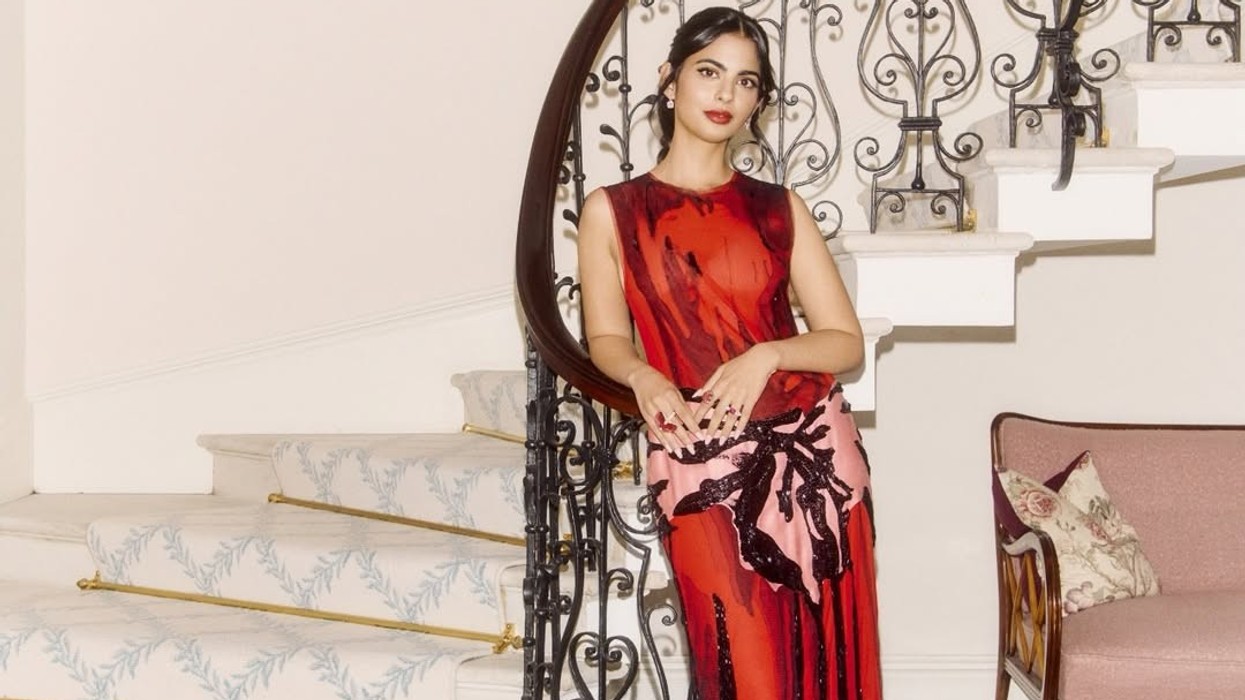
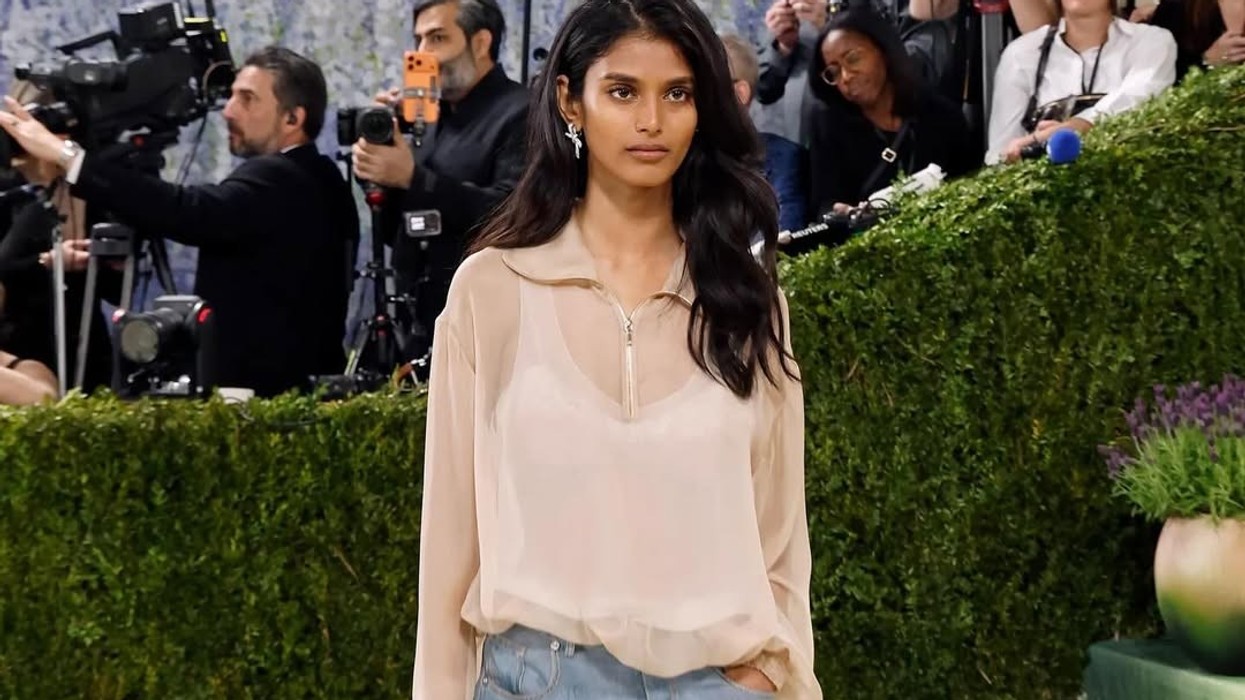
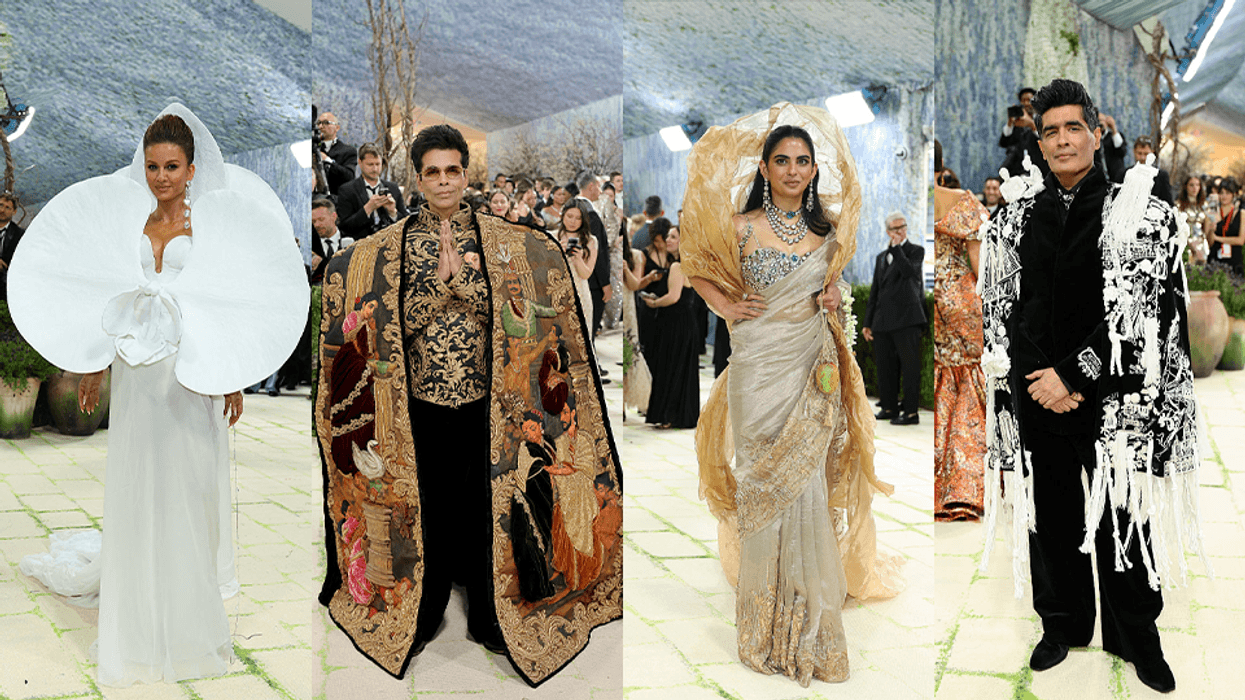
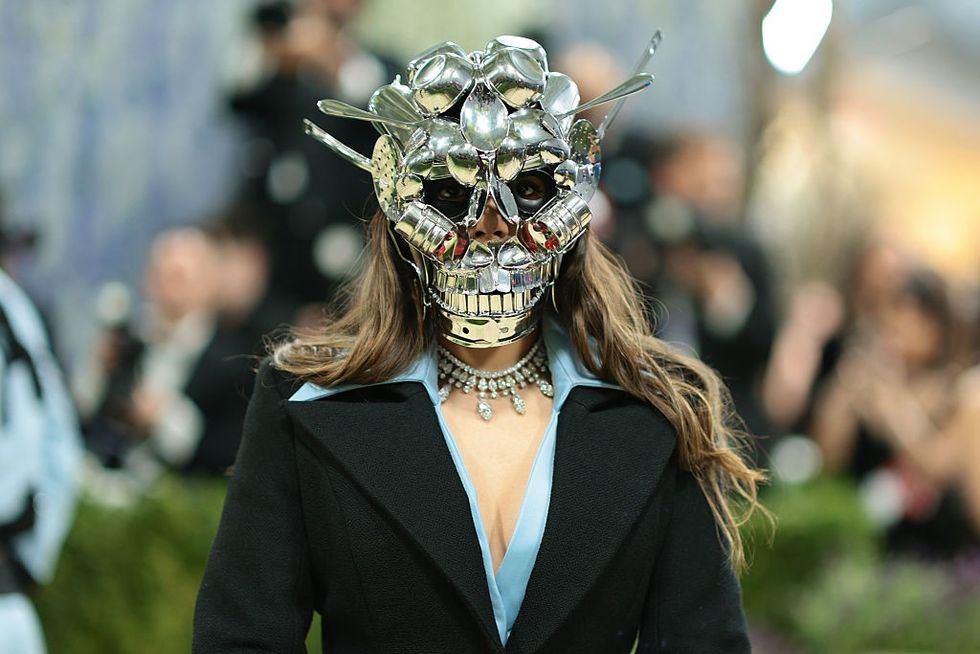 Ananya Birla attends the 2026 Met Gala celebrating "Costume Art" at the Metropolitan Museum of Art on May 04, 2026 in New York City.Getty Images
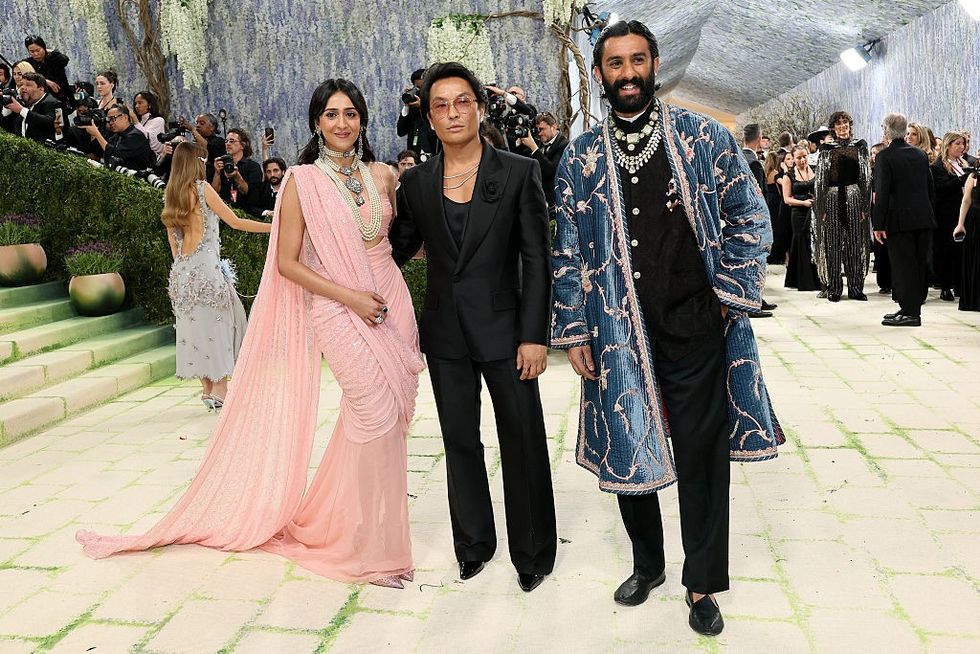 (L-R) Princess Gauravi Kumari of Jaipur, Prabal Gurung and Maharaja Sawai Padmanabh Singh attend the 2026 Met Gala celebrating "Costume Art" at the Metropolitan Museum of Art on May 04, 2026 in New York City. Getty Images
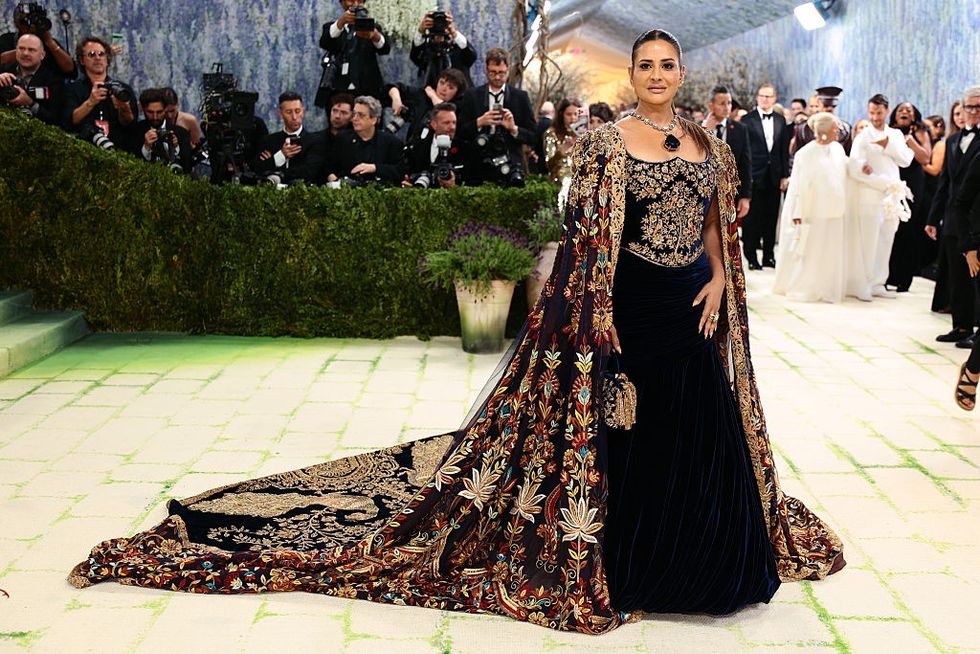 Sudha Reddy attends the 2026 Met Gala celebrating "Costume Art" at the Metropolitan Museum of Art on May 04, 2026 in New York City. Getty Images
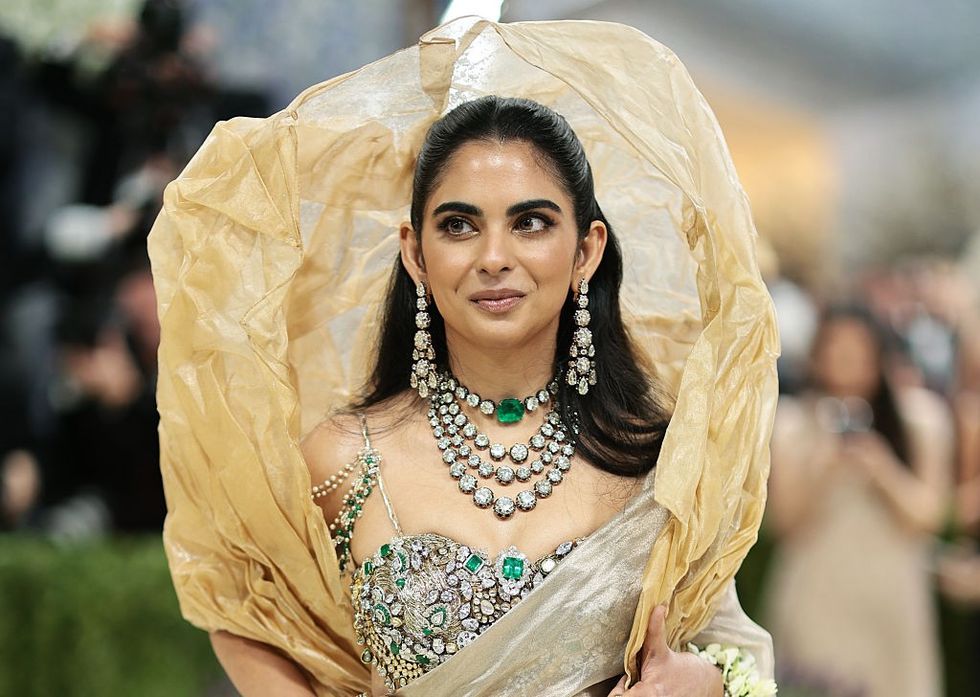 Isha M. Ambani attends the 2026 Met Gala celebrating "Costume Art" at the Metropolitan Museum of Art on May 04, 2026 in New York City. Getty Images
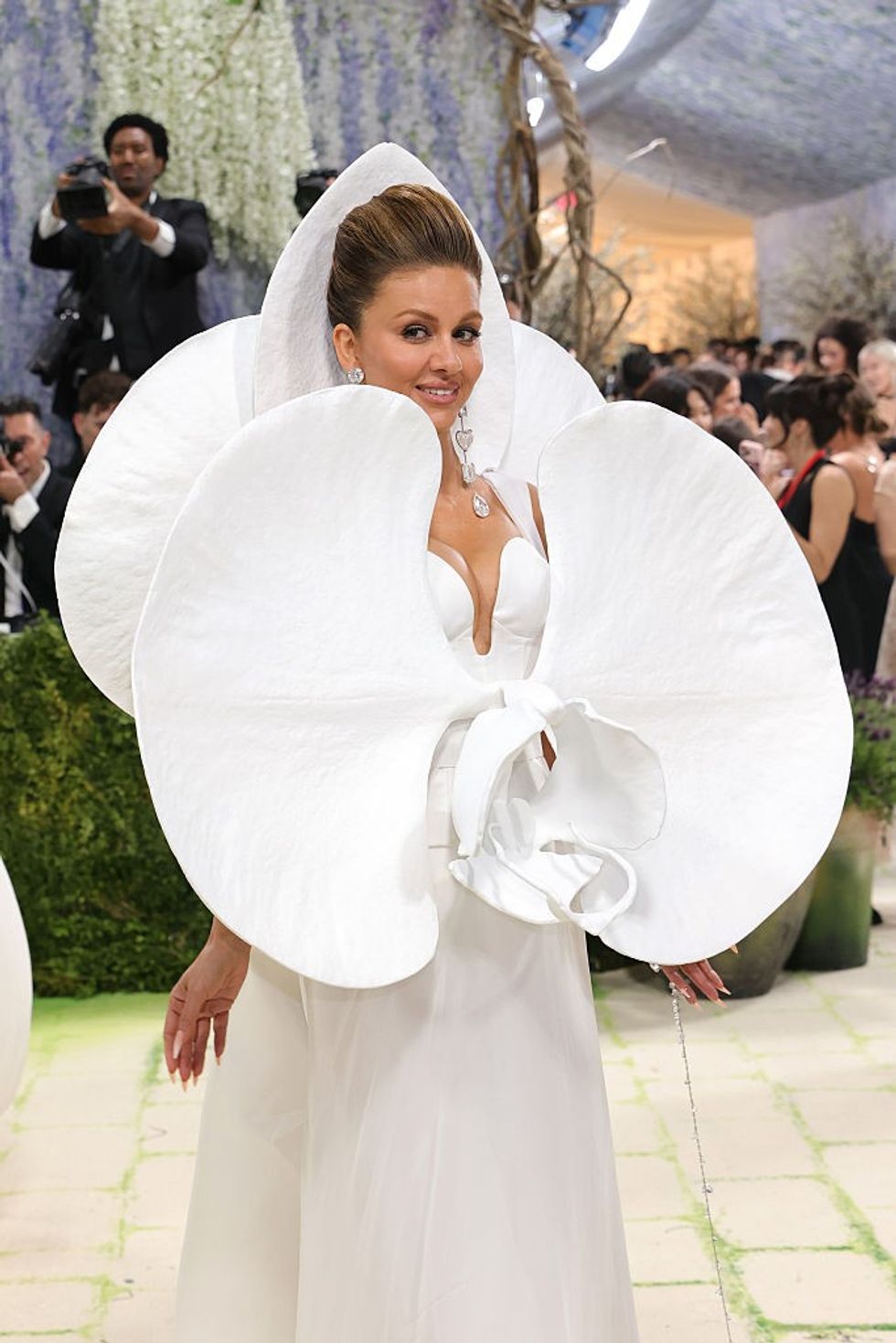 Natasha Poonawalla attends the 2026 Met Gala celebrating "Costume Art" at the Metropolitan Museum of Art on May 04, 2026 in New York City.Getty Images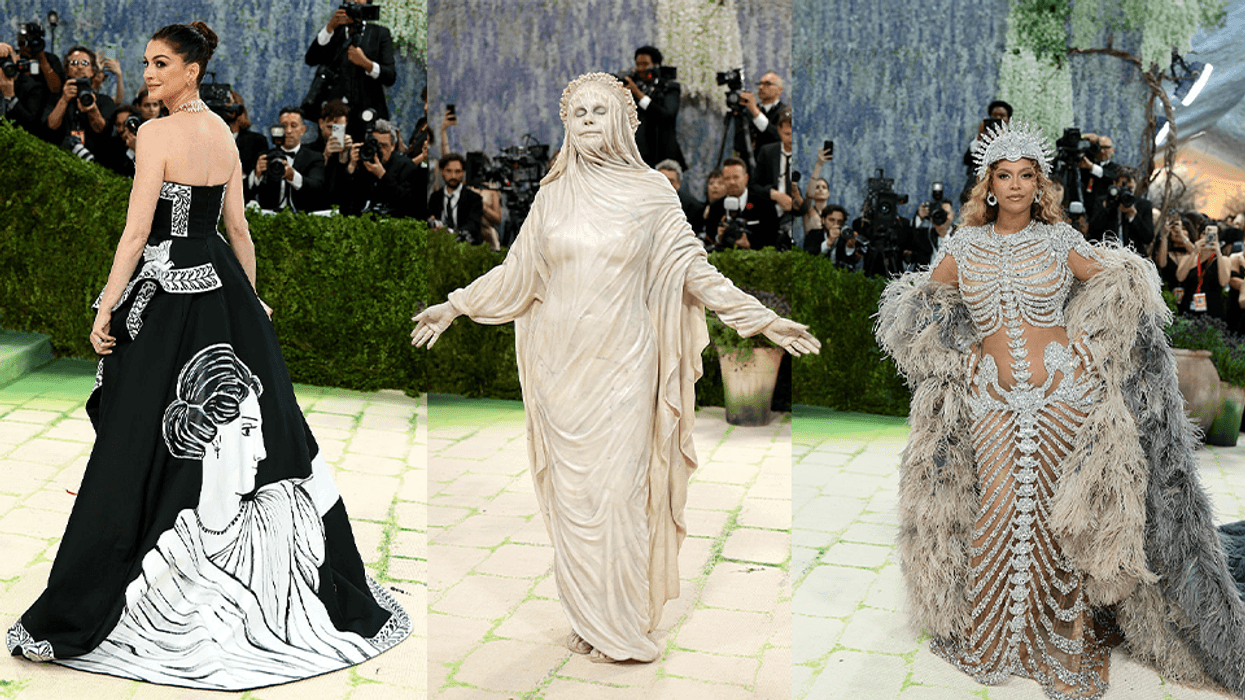
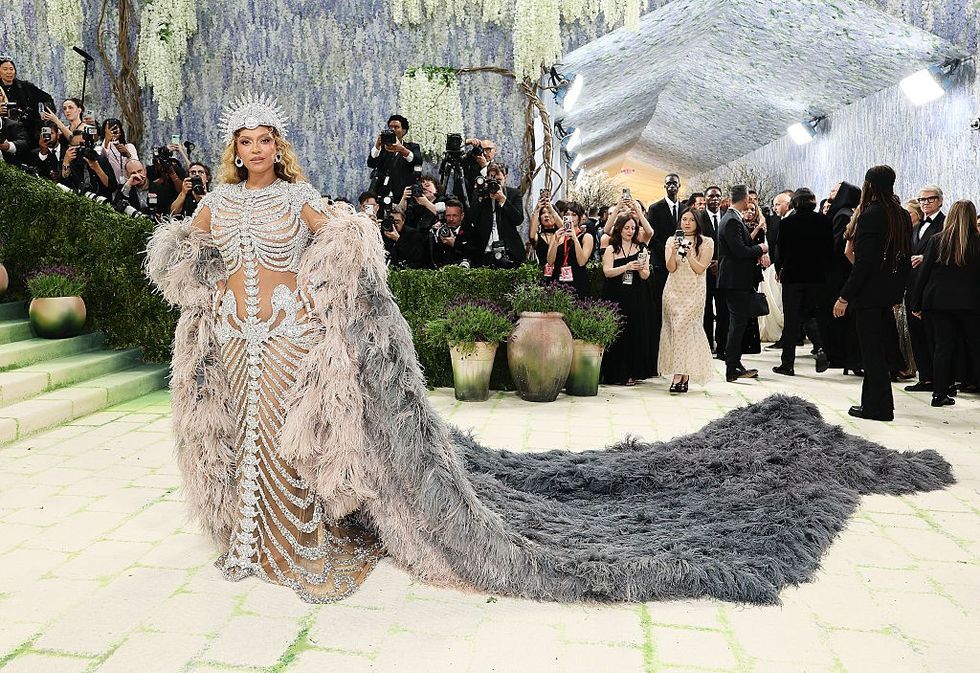 Beyoncé attends the 2026 Met Gala celebrating "Costume Art" at the Metropolitan Museum of Art on May 04, 2026 in New York City. Getty Images
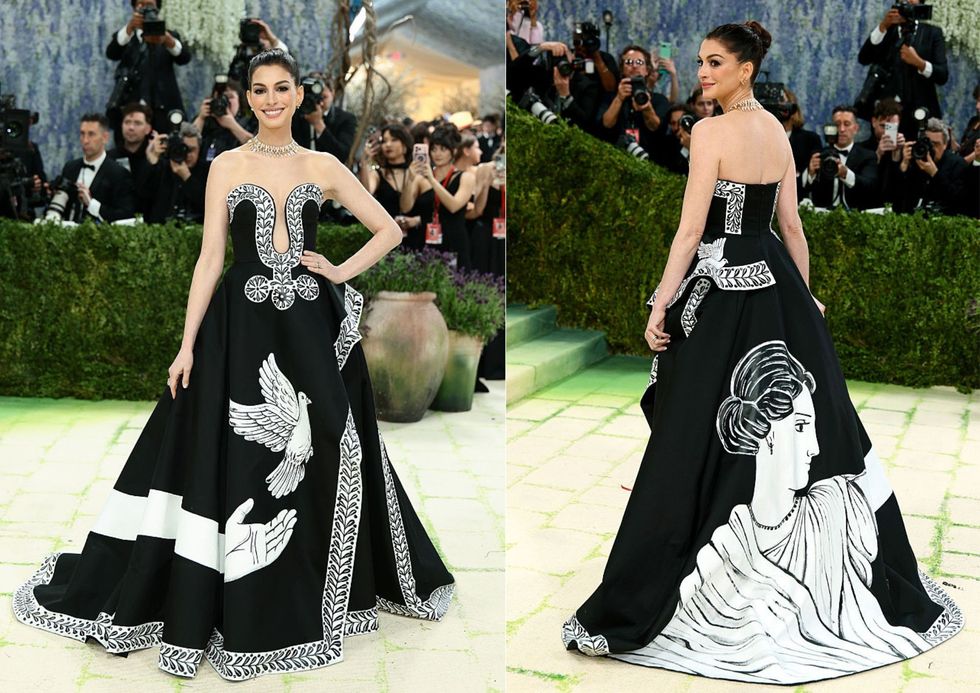 Anne Hathaway attends the 2026 Met Gala celebrating "Costume Art" at the Metropolitan Museum of Art on May 04, 2026 in New York City.Getty Images
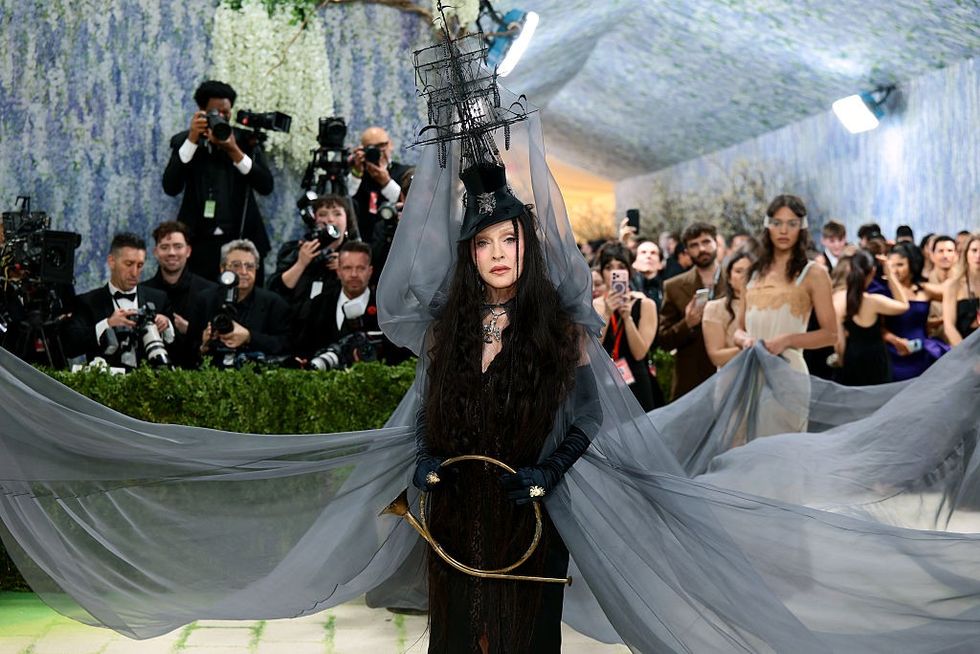 Madonna attends the 2026 Met Gala celebrating "Costume Art" at the Metropolitan Museum of Art on May 04, 2026 in New York City.Getty Images
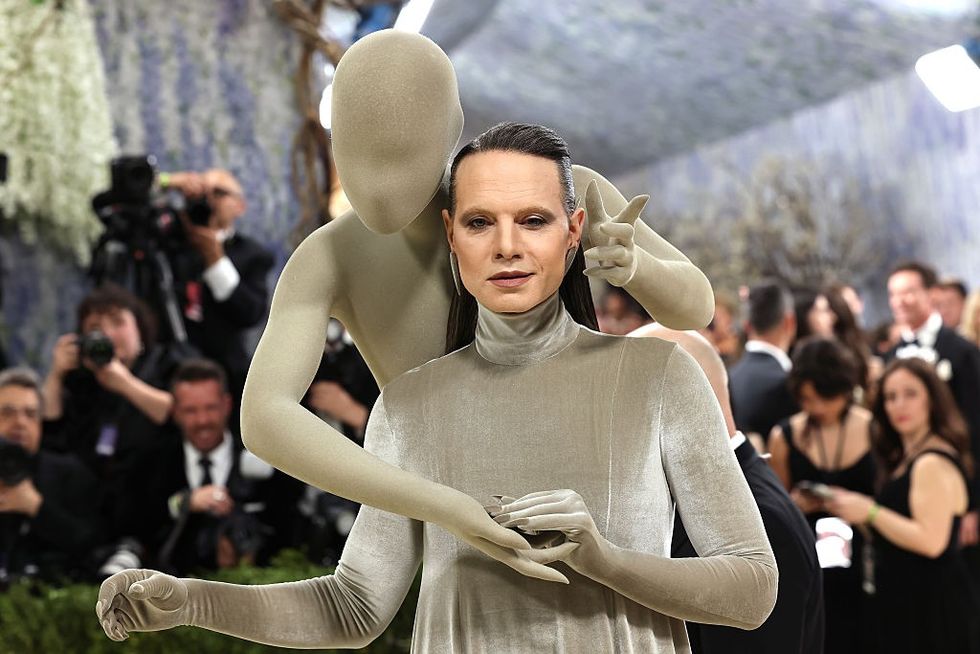 Jordan Roth attends the 2026 Met Gala celebrating "Costume Art" at the Metropolitan Museum of Art on May 04, 2026 in New York City. Getty Images
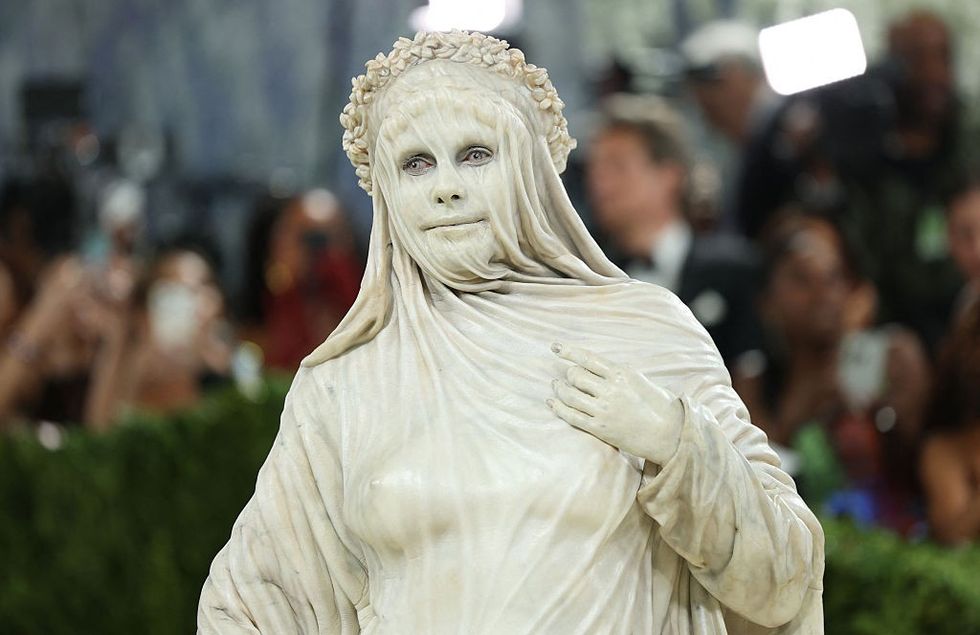 German model Heidi Klum arrives for the 2026 Met Gala celebrating "Costume Art" at the Metropolitan Museum of Art, in New York, on May 4, 2026.Getty Images
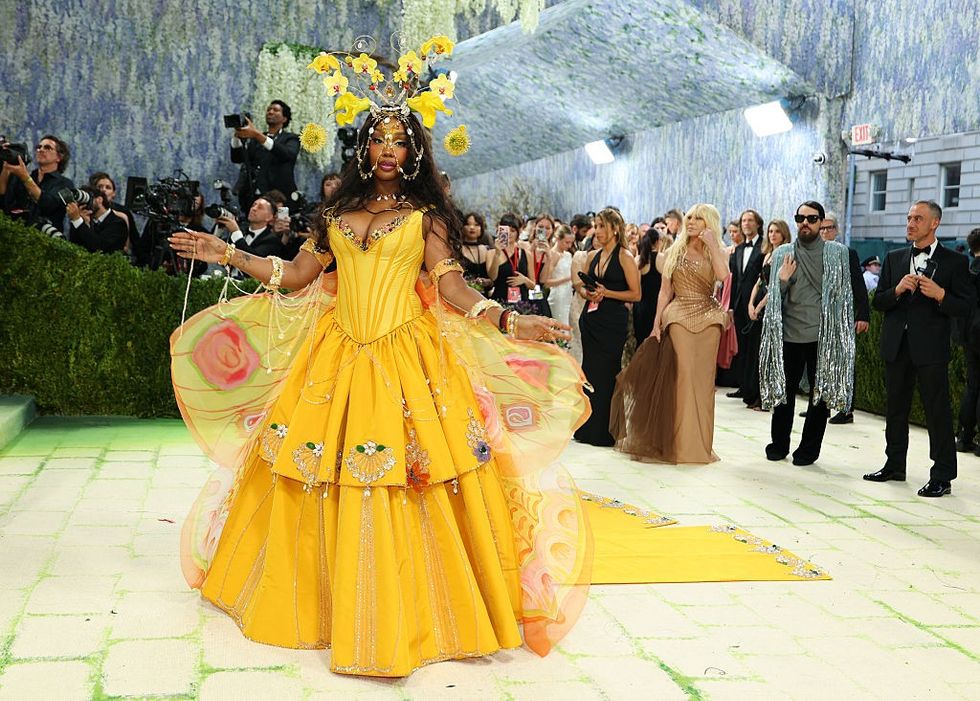 US singer Sza arrives for the 2026 Met Gala celebrating "Costume Art" at the Metropolitan Museum of Art, in New York, on May 4, 2026. Getty Images
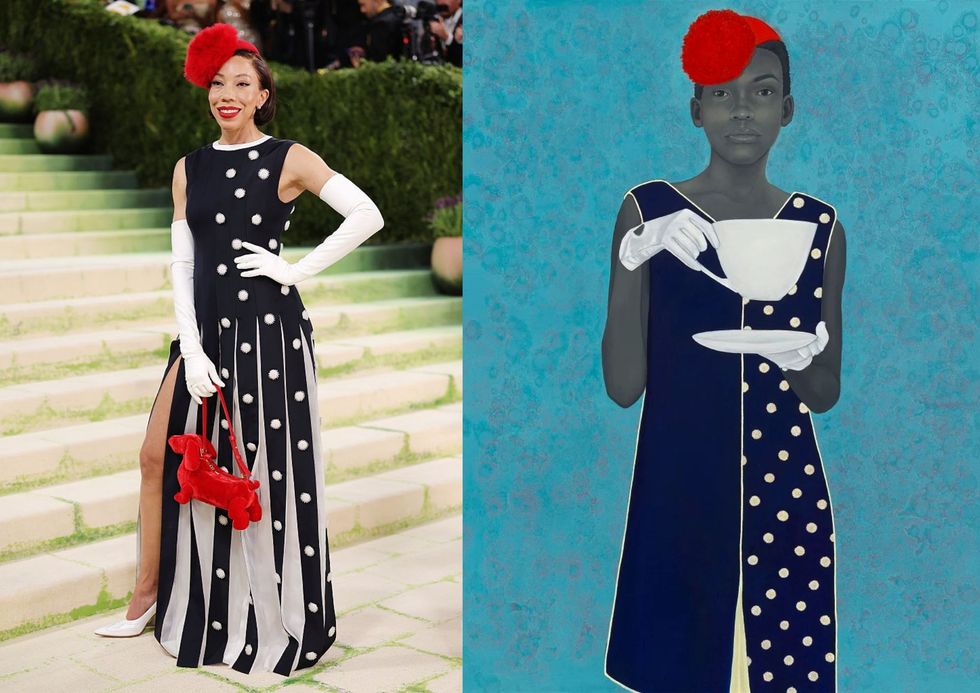 Amy Sherald attends the 2026 Met Gala celebrating "Costume Art" at the Metropolitan Museum of Art on May 04, 2026 in New York CityGetty Images & National Portrait Gallery
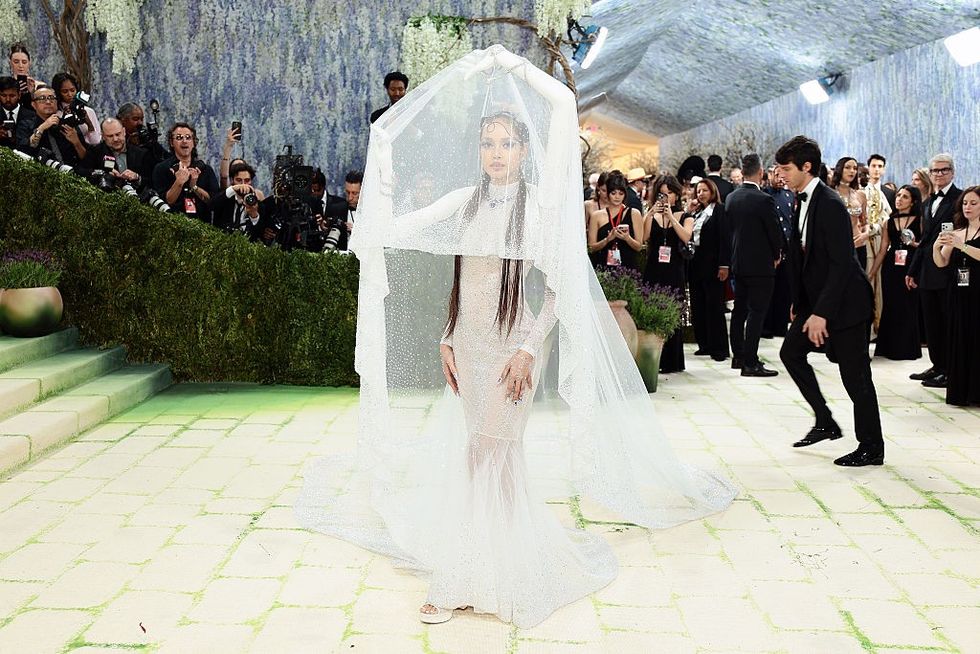 Lisa attends the 2026 Met Gala celebrating "Costume Art" at the Metropolitan Museum of Art on May 04, 2026 in New York City. Getty Images
 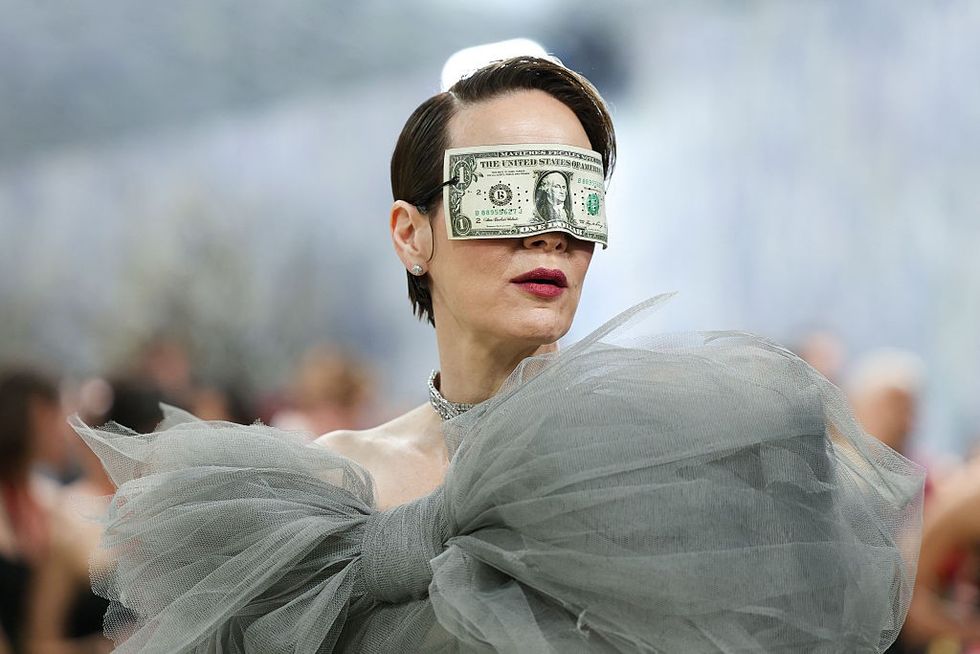 US actress Sarah Paulson arrives for the 2026 Met Gala celebrating "Costume Art" at the Metropolitan Museum of Art, in New York, on May 4, 2026Getty Images
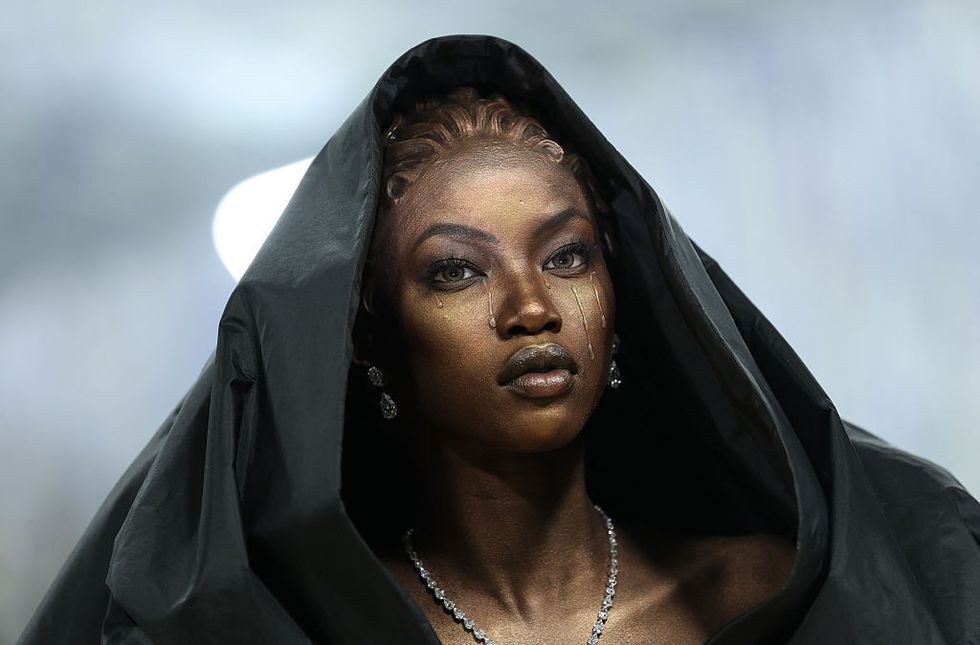 Sudanese-US model Anok Yai arrives for the 2026 Met Gala celebrating "Costume Art" at the Metropolitan Museum of Art, in New York, on May 4, 2026.Getty Images