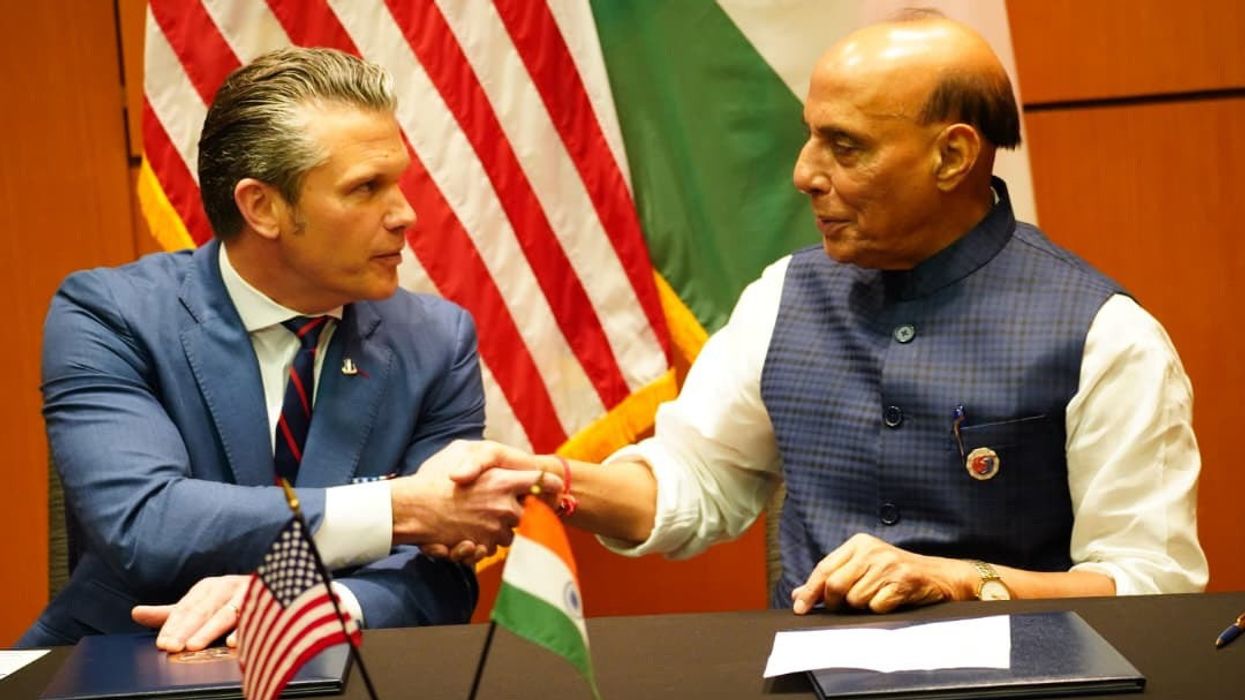

The United States has welcomed the signing of a new 10-year defense framework with India, describing it as a landmark agreement that significantly strengthens bilateral relations and supports long-term stability across the region. The pact highlights the deepening strategic alignment between the two democracies as they address shared security challenges in the Indo-Pacific.
US Secretary of War Pete Hegseth said the agreement represents a cornerstone of regional deterrence and security cooperation. According to him, the framework will enhance coordination between Washington and New Delhi, improve intelligence and information sharing, and expand collaboration in defense technology and innovation. He emphasized that the deal reflects how defense ties between the two countries are stronger than ever.
“This agreement advances our defense partnership, a cornerstone of regional stability and deterrence,” Hegseth said in a statement shared by the US Embassy. He added that closer coordination, improved intelligence sharing, and stronger technological cooperation will enable both nations to respond more effectively to common security threats.
The 10-year Framework for the US-India Major Defense Partnership was formally signed on October 31, 2025, in Kuala Lumpur. India’s Defense Minister Rajnath Singh and his US counterpart Pete Hegseth signed the agreement on behalf of their governments. The framework renews and expands earlier defense arrangements that have shaped cooperation between the two countries over the past decade.
The agreement outlines a shared vision to deepen defense ties across a wide range of areas. It places strong emphasis on improving military interoperability, expanding the scale and sophistication of joint military exercises, and strengthening mechanisms for intelligence and information sharing. These steps are aimed at ensuring closer operational coordination between the armed forces of both nations.
The pact also seeks to further expand defense trade, which has already surpassed $20 billion. It promotes co-development and co-production of defense equipment in line with India’s “Make in India” initiative. By encouraging joint manufacturing and technology transfers, the framework aims to strengthen India’s domestic defense industry while enhancing supply chain resilience.
In addition, the agreement supports advanced technology cooperation through platforms such as the Initiative on Critical and Emerging Technologies (iCET), including collaboration in defense innovation, research, and next-generation military capabilities.
Overall, the new 10-year defense framework underscores the growing strategic trust between the United States and India, positioning their partnership as a key pillar of security, stability, and deterrence across the broader region.