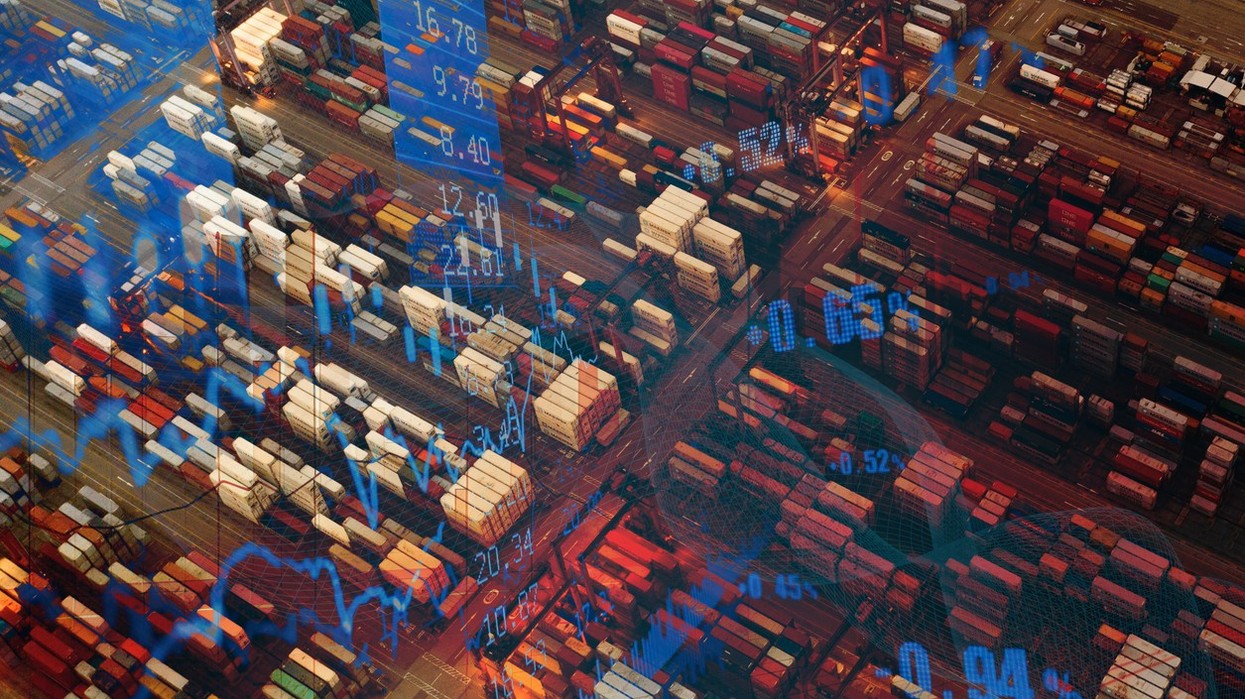

- The US trade deficit widened to $88.6 billion in July, marking its highest level since March 2025.
- Total imports rose 2.8 per cent to $399.3 billion, fueled by a record wave of capital goods and AI hardware.
- Total exports dropped 2.1 per cent to $310.7 billion due to declining shipments of crude oil and gold.
- Record goods trade deficits were logged with key partners, including a $20.7 billion gap with semiconductor hub Taiwan.
- The Trump administration is weighing targeted semiconductor tariffs to encourage domestic chip production.
The US trade deficit expanded sharply in July, increasing 24.4 per cent from June's revised figure to reach $88.6 billion. This widening gap was driven by a combination of rising imports and falling exports. Total imports climbed to $399.3 billion, pushed upward by an insatiable domestic appetite for technology.
Conversely, exports slipped 2.1 per cent to $310.7 billion, largely dragged down by reduced international shipments of industrial supplies like crude oil and nonmonetary gold.
This broad shift shows a persistent imbalance in the world's largest economy, where robust domestic consumption continues to outpace overseas sales. Economists note that while domestic demand remains resilient, it is increasingly being satisfied by foreign-produced goods, placing immediate strain on the national ledger and setting back recent efforts to close the gap.
The AI hardware surge
The core catalyst behind the import spike is the nationwide build-out of artificial intelligence infrastructure. Capital goods imports jumped by $14.4 billion to hit a record of $140.3 billion. This was heavily concentrated in computers, computer accessories, and advanced semiconductors. As businesses race to scale up their technological capabilities, they are heavily relying on foreign-made hardware, creating massive trade imbalances with major manufacturing centers like Taiwan, which hit a record $20.7 billion deficit in July.
Other record trade gaps were also logged with nations including Mexico, Vietnam, Thailand, South Korea, and Malaysia. This heavy reliance underscores how deeply embedded global supply chains are in the modern tech sector, making rapid domestic substitution nearly impossible in the short term.
Policy pushback and tariff strategy
The widening trade deficit highlights a central contradiction for the Trump administration, which has aggressively deployed sweeping tariffs and trade investigations to curb foreign dependency. Despite these protective measures, businesses have rushed to front-load imports ahead of further duties, amplifying monthly volatility. Commerce Secretary Howard Lutnick recently signaled that the administration plans to roll out targeted semiconductor tariffs designed with a clear carve-out: if tech companies manufacture their chips domestically within the United States, they can bypass the duties entirely.
This carrot-and-stick approach attempts to force high-tech manufacturing back onto American soil, though industry leaders warn that building out local fabrication plants requires years of lead time and billions in capital expenditure.
Economic growth and future outlook
Beyond policy debates and political maneuvers, the widening trade deficit threatens to act as a persistent drag on broader macroeconomic growth moving into the autumn months. Because international trade previously subtracted 1.14 percentage points from GDP growth during the spring quarter, when the broader economy expanded at a modest 1.5 per cent annualized rate, analysts warn that continued reliance on foreign technology imports could further pressure economic expansion in the third quarter.
As the administration balances domestic manufacturing goals against immediate global supply chain realities, upcoming trade figures will face intense scrutiny to determine whether proposed tariffs can successfully reverse these historic trade gaps without choking technological progress.










 A mud-covered building following a flash flood at Trishuli in Nuwakot district, Nepal, August 26, 2026.Reuters.
 Sergio Gor and Brendan LynchX/Sergio Gor
 Jamieson GreerReuters
 Ajay SrivastavaLinkedin